Ok, new nation idea. Alchemical scientists studying bizarre phenomenon figured out that the universe isnt purely made of matter, but another kind of matter interacts weakly with physical matter and allows the creation of alloys and stuff, this other matter is usually pretty much invisible and tends to be alive, some of it is sapient. The sapient "othermatter" beings can under certain conditions interact with human neurochemistry allowing them to communicate with the people of the nations if they drink special potions created by the alchemists/
Sounds like a rather weird retro sci-fi idea, about on par with HG Wells. There are two problems with this, though. First being this flowerly and needlessly complicated explanation makes it kinda ridiculously advanced. Second, what the hell this thing is even good for? You didn't specify anything which makes it hard to judge.
@gorgenmast Spaceship manager, huh? I am not sure this truly counts as a nationgame here but well, this didn't stop somebody trying this before. I participated in that and wonder if my old stealth ship is fine.
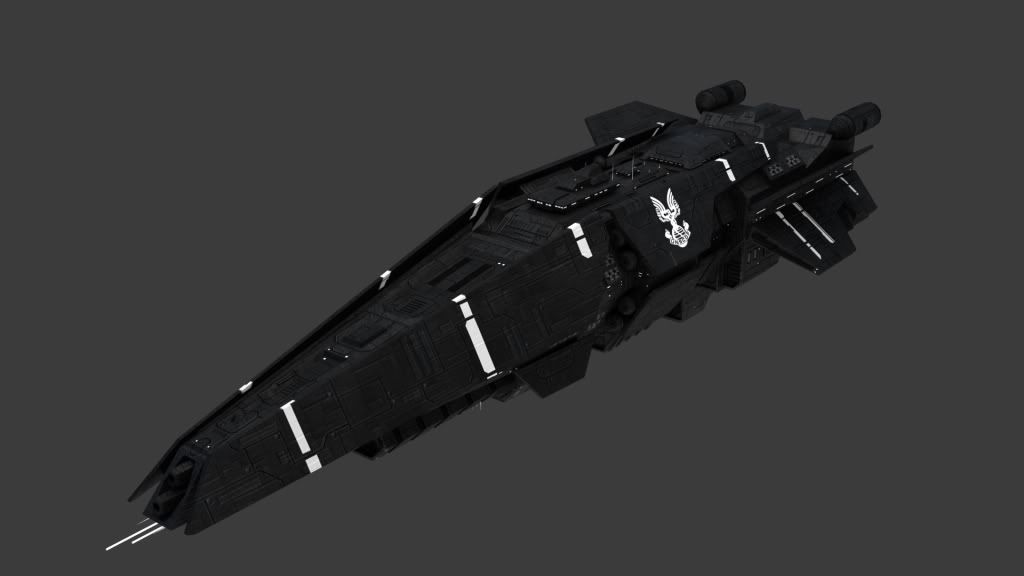
HSV The Vulture's Claw YV-7220 Stealth Destroyer
YV-7220 is a new experimental class of destroyers developed by the Ixythl Conglomerate. They feature many new or even experimental technologies and currently 12 units are lent to Haegemony Starfleet for extensive field testing. YV-7220 has advanced lightweight BNNT-Iridium composite X-Frame™ hull which along with the advanced propulsion systems gives it a fair degree of maneuverability, fuel-economy and great acceleration for emergencies. Its main armament is the previously only theoretical Warp Catapult, a spinal mounted mass accelerator system which uses the warp mechanism to launch projectiles faster than light. It also has standard torpedo and somewhat less standard point defense systems. The ship is classified Stealth Destroyer and with a good reason. It's equipped with a XGV-Y981A3 Controlled Singularity Engine which along with supplying power also allows the ship to enable technologies which normally would be difficult to accomplish. first off the spinning micro-blackhole acts like a gyroscope and allows the ship to perform turns without using its propulsion systems. Second it makes the Boundary System possible. Simulating the event horizon of a black hole the Boundary System absorbs all signals thus when fully enveloped it makes the YV-7220 completely invisible. Unfortunately this also comes at the cost of double blindness since not even the YV-7220's sensors can penetrate this field. Still, the YV-7220's technology is potentially opening a new chapter in the book of space warfare.
Ship Name: HSV "The Vulture's Claw" Hull Classification: YV-7220.7 Ship Class: None (this is an experimental vessel, if it has any that's "Project Umbrella-CSX-1017.I4") Crew: 456 (27 Officers, 245 Haegemon Navy Crew, 30 Non-Combatants, 54 XC Science Crew, 100 PMC security personnel) Length: 456 m Beam: 91.2 m (longest width with the stabilizers is 137 m) Height: 124.7 m Standard Mass: c. 123,000 metric tons
PRIMARY ARMAMENT
EWAC-X11 Warp Accelerator Gun x 2 Large spinal mounted weapon run for almost the entire length of the ship. It uses the YV-7220's Alcubierre Drive to boost a 1200mm warp-assisted-projectile (WAP) up to 270 times the speed of light. This is only possible because the projectile is outfitted with warp-sustainers, a special device which allows an object to retain its superluminal travel speed for a while. Curently the 1200mm WAP can maintain superluminal travel for 66.6 seconds after which it rapidly but still safely decelerates until it reaches sublight speed within 86 miliseconds. As such the projectile's maximum effective range is 36 astronomical units, a truly shocking distance which allows the ship to target enemies from almost anywhere within a star system. Albeit 36 AU range is a mere technicality and in actual combat situations the YV-7220 needs to get much closer to score a definite hit. 1200mm WAP is a complex and rather expensive projectile. Still over 90% of its volume is nothing but solid tungsten giving it the overall mass in the excess of 48,000 kg. The 1200mm WAP has two settings, direct fire and area suppression modes. The latter variation is tampered to sabotage its own warp-sustainer after a certain time past, resulting in the projectile compressing into a micro-singularity and explosively decay within microseconds. The EWAC-X11 is a powerful weapon without a doubt but its limited ammunition and slow rate of fire may even make it an overkill. Also as a spinal mounted gun anything beyond 1.7 degrees of traverse requires the entire ship to move with the aim. This makes the weapon uncomfortable in close combat. After firing the gun the barrel temporarily experiences vacuum energy depletion which makes successive fire unsafe. For this reason the YV-7220 has two EWAC-X11 systems in order to maximize its rate of fire.
SECONDARY ARMAMENT
850mm Mark 88 Torpedo Bays x 8 Powerful front-mounted torpedo systems mounted at the side banks of the ship. It has several different guidance systems including composite AI control and multiple potential warheads. Nuclear demolition warheads, nuclear-tipped shaped charges and even bomb-pumped X-ray laser options are available.
TERTIARY ARMAMENT
VLB-72C Multi-Missile Pods (80 tube cells) Small-bore 200mm missile launchers with diverse range of loads used for interception and all-around coverage. They are effectively cheaper and smaller torpedoes launched only with minimal initial velocity. Missiles are usually the most effective at medium range.
QUATERNARY ARMAMENT
200 MJ Pulse Lasers x 16 Small-scale AI controlled defensive lasers fit in flexible ball-mounts and shooting 200 MJ laser bursts with the adjustable rate of 6000 to 360,000 cycles per minute.
DEFENSE/PROTECTION
3600-8900mm X-Frame™ Protection System Lightweight advanced composite armor using several different layers to achieve optimal protection with the least mass added to the frame. X-Frame is trademarked by the Ixythl Conglomerate and its main components are heavy iridium layers, aerogel and tough Boron-Nitride Nanotube plates suspended in a highly elastic gel base. Yet even with this the YV-7220's protection is at best considered average by destroyer standards. The entire armor is filled with nanite-regenerative layers, allowing the hull to gradually repair itself.
GEHMS-X09A1000 Boundary System The YV-7220 has the capability to form a field of boundary which emulates the characteristics of a black hole's event horizon. The system is the most efficient at blocking energy or low-mass particles while dense projectiles penetrate the barrier better than they do plasma shielding (especially when compared against low-velocity slugs). Another drawback is that the boundary layer is absolute and even blocks the sensors and communication signals from the origin. As such the Boundary System is rarely used to protect the ship from all directions. Even at full capacity the system is configured to leave small tactical gaps for operational purposes. Albeit unlike plasma shielding, the boundary field is practically invisible to typical sensor sweeps. When engaging stealth the ship tunes the field to cover even these gaps and become practically invisible to most forms of detection. The field is set on low strength during stealth for safety reasons and also the ship crew is suffering from "double blindness". YV-7220 can practically disappear from all sensors yet only at the cost of also rendering all of its sensors useless. During stealth the crew is forced to operate completely blind, navigating via nothing but the computer's predictions. It's possible to lower the field on a tiny section of the ship to release probes, laser comm messages or perform other means to receive fresh update about the battlefield. Yet actions like these always pose the small risk of being found out.
Point-Defense Lasers The YV-7220 has overall 16 pulse laser cannons, arranged in a way that no matter the direction the firing angle of at least 6 cannons are overlapping with each other.
Interceptor Missiles Using the missile pods the YV-7220 can unleash a surprisingly thick cloud of various interceptor missiles. Blast, fragmentation, kinetic kill, multi-kinetic, beehive, angled burst, EMP and even more types of missiles are available.
Electronic Countermeasures Aside from the general jamming equipment via alternating radar and sensor waves the YV-7220 also has 13 advanced subspace EM projector dishes to directly jam the targeted guidance systems or target locks from any direction. Another alternative is to use the boundary field system like a portable wall to block the enemy's sensory feed on the ship.
POWERPLANT/PROPULSION
XGV-Y981A3 Controlled Singularity Engine Complex system which holds and contains a tiny microblackhole of submicroscopic size and control its boundary area to regulate the rate of energy gain. The microblackhole is rotation-stabilized which has the side effect of it can act like a gyro to turn the ship. Seemingly inertialess propulsion is possible with this system but compared to the typical engines or thrusters it's considerably less efficient thus only relied for maneuvers and during emergencies. This power system is rated 0.981YW.
Backup Fusion Reactors x 8 They are well-dispersed intermediate size reactors allowing the ship to be run on minimal capacity even without its main engine. They are initiated either by lasers or small amounts of antimatter and each have 2EW power.
Gravity Scoop The YV-7220 raises a conical field of pseudogravity to attract interstellar matter like trace amounts of hydrogen. This material then can feed its blackhole engine or more often this could be used as its main propellant. By the sheer velocity it attracts matter the Ramscoop also acts as a propulsion system, contributing to about 10% of the thrust.
Gravitic/Plasma Hybrid Engines x 4 The YV-7220 has an unique duel function engine. Normally it accelerates the matter caught by the gravity scoop and contributes to 75% of the maximum thrust for the vessel. This method is cheap and highly efficient but in case the gravity scoop is malfunctioning the engines can also use up the singularity's own matter to generate plasma and propel the vessel via plasma implosion mechanism. Both process can be also performed in reverse to use the same engines to decelerate.
Auxiliary Engines x 4 Plasma Engines mounted away from the hull and capable of vectored thurst to aid maneuvering. Due to their less efficient methods the auxiliary engines are rarely used for forward thrusts but if they do these add 10% to the maximum attainable acceleration.
Gravity Gyro-Rudder Special system which uses the blackhole's gyroscopic properties to maneuver the ship. This is a reactionless pure energy based mechanism and one of the key technologies of the YV-7220. Aside from improving maneuverability and adding up to 5% of the maximum thrust for the vessel this is also the only way of propulsion which remains useful while the ship is on full stealth. This also effectively means that the ship's acceleration is roughly 1/20th of normal while cruising hidden.
Alcubierre Drive Standard FTL drive with only a few modifications to prevent interference with the blackhole. While the prospects are great currently there's no way to link together the Boundary System with the Alcubierre Drive, thus stealth is only possible outside FTL cruise.
COMPUTER SYSTEMS
TBA
HANGAR
TBA
[to be continued...]
Wow, I actually never finished the last part, huh? Anyways, is this type of ship fine to you or not? I can tweak this a lot but first I need to know if you are okay with the ship's tech. It's built on the setting of a different game, afterall.
Posted my NS in the characters page. I still lack my trademark exhaustive detail on my military units and I need to add about five more paragraphs to my history but otherwise I am pretty much finished. @Lauder
Menel Ndor en'Yllendthyr (Heavenly Empire of Yllendthyr) is an ancient empire ruled by elves. Used to be an isolationist country which then suddenly grew into a major colonial and marine power. In spite of that Yllendthyr is past their prime and with the new century they were stuck with a number of issues. This might change in the future as currently Yllendthyr is undergoing changes and rapid modernization, attempting to reclaim their old spot in the world.
Geography
Aside from the mainland of Yllendthyr (darker blue) the Empire has a number of vassals and colonies. For starters they are in personal union with their neighbors, the Galhonore Commonwealth. The two countries are separate entities but they share ruler. In addition several island states became Yllendthyr's vassals, technically independent yet under the empire's control. Lastly Yllendthyr also took various colonies in the New Continent, albeit some of these declared independents and are no longer under their rule.
History
Yllendthyr is an ancient culture with roots that can be dated back to what others describe as the ancient times. Elves were the first sentient creatures of Arda, blessed with grace and capabilities to be apex predators. Unlike humans who were struggling against the forces of nature the elves learned to live with it. Consequently they had little incentive to develop beyond the bare necessities. Thousands of years passed and elves still continued their hunter-gatherer lifestyle while humans made kingdoms and empires. Elven perception of time radically differed from that of humans. They were content to live in their isolated forest communities while entire human nations surrounded them. Yet eventually clashes between humans and elves were inevitable. While elves were viciously effective with the advantage of home ground their isolated tribes were met with superior numbers and weapons. For the first time elfkind learned war which had yet unprecedented effect. In the following centuries the humans murdered and displaced countless elves. Untold number of tribes were lost along with their language thus all their culture and history. Some claim these frightening news forced elfkind to develop writing. The fleeing elven tribes banded together with their neighbors and strengthened their relations, forming the first nations. The precursor of Yllendthyr was one of these.
The ancient times continued being painted with bloodshed as the emerging elvish nations fought no holds barred wars of vengeance with the neighboring races. The Sotoa Peninsula was perhaps the most notable, birthing more than a hundred elvish grand tribes. Their success can be attributed to their numbers as well as taming and breeding a mighty mount, the Gryffhn (Griffon). Conquering the skies with their griffon riders the elvish tribes rapidly grew into a menace. Among them Yllwé was the most warlike by far, growing with each spring. As time went on the wars of revenge transformed into rush for conquest. Elvish territories grew and thus the requirement of manpower. Humans were no longer just slain when opportunity was present but turned into their slaves. By the early middle ages the Wstern Sotoa Penisula was dominated by 27 elvish warlords and their enslaved masses. (To be continued...)
Society
Government Yllendthyr's governmental structure is rather complex and maybe even confusing for the outsiders. The mainland of Yllendthyr is a federal semi-presidential constitutional monarchy. Their ruler is technically the Ymheodr but effectively it's lead by the Chymanfa (Parlaiment) where the governors and representatives belonging to the 27 states of Yllendthyr meet. Colonial governors and Galhonore's representatives are normally not present in the Chymanfa but they could be summoned if a certain decision involves them. The Ymheodr's role in politics is minimal and save for rare circumstances his presence in the Chymanfa isn't required. His authority is limited by the constitution and his duties are divided to various Wleidyddion (ministers). The Chymanfa is generally led by the Cyntwleidyddion (Prime Minister) although due to his busy schedule it's often taken over by the Fyswleidyddion (Vice Minister). Also it worths noting that the constitution technically allows the Ymheodr to veto nearly any decision in the Chymanfa, albeit none of them lived with this right yet. Another interesting note is that as a federal system each state of Yllendthyr has its own governor with unusual level of independence. Some states switched to entirely republican management and their "governor" is essentially just another representative.
While effectively a vassal to Yllendthyr the Galhonore Commonwealth is still a politically independent body with its own government. Like Yllendthyr it's a constutional monarchy ruled by the same emperor. On the other hand they have their own pairlament and prime minister with an overall semi-republican government. That being said the Chymanfa's decisions in Yllendthyr can bear weight on Galhonore, too. Even though Galhonore's representatives are invited to any decisions involving them their inferior numbers mean they can be generally overruled by Yllendthyr's majority. Other vassals are in a similar situation where they possess their own government yet ultimately subject to Yllendthyr.
Lastly the colonies are split to smaller bodies and lead by a governor each. While the colonial governor is technically just the representative of Yllendthyr and its emperor these territories effectively end up being small kingdoms lead by an influential noble each. Aside from occasionally reporting back to mainland, providing goods and upholding Yllendthyr's empire-wide laws they're otherwise given full reign.
Demographics According to the last year's census the country of Yllendthyr has the population of 110,027,188. Majority of them are humans (47%) and then elves (27%) while the remainder are orcs (19%) other races (11%: dwarves, gnomes, trolls and others). Due to their petite nature and massive fertility the fay are counted on a different scale measuring around 92 million within Yllendthyr's mainland alone while the Kingdom of Setra has close to a billion fay inhabitants. As fellow elvish country the Galhonore Commonwealth has similar demographics to Yllendthyr and the population around 42 million (again, not counting the fay).
The population of colonial territories have yet to be accurately measured. Instead the latest census recorded that there are over 10 million Yllendthyr and Galhonore citizens who asked for permanent residency in off-world colonies.
According to the studies of Charles Dwarfling from the last century elves evolved from the prehistoric birds and they're said to share a distant relation with the various Griffin species. Archeological finds identified one of the ancestors of Elfkind named Homo Auger AKA "bird-man". Other studies theorize a more complicated origin for elves potentially including crossbreeding with prehistoric human species. Their main argument is the fact humans and elves could sire a child from one another (even if with extremely low probability).
In terms of physical characteristics elves are slenderly built and tall, averaging at over 6 feet. In contrast their slim build and hollow bones make them weight only 60% of an average human. Compared to humans they are fast and nimble, further supported by their amazing sense of balance. This is partially because the elves are said to possess something akin to "organic gyroscopes" and indeed their kind can precisely position without assistance of devices. In addition the elves are gifted with senses akin to wild animals, most notably their sight and hearing. Lastly elves have tough immune system and can theoretically live up to 300 years. They are resistant to many toxins and can recuperate from wounds faster than humans. While these qualities may make elves seem superior their advantages come at a cost. Elves are thinly built and can only carry half as much weight as a human could. Also their lightweight bones are made to withstand strain only from certain directions. Bone fractures are common, especially for young elves. For this reason during their youth elves learn to move with precision and grace to avoid accidents. Similarly their fragility means that falls and vehicle crashes could leave elves with at least grievous injuries if not outright lead to death, lucky accidents are almost unheard of. The heightened smell and hearing also makes elves more sensitive to loud noises or repugnant smells. Their sense of touch makes everything feel rougher so a cloth of wool may as well be sandpaper to an elf. While elves can resist many poisons better than humans the ones which they couldn't are extremely dangerous to them. Elven immune system is more robust but less adaptable than a human's. Lastly elves are plagued with low fertility and more frequent miscarriages. while modern medicine aided them considerably elven population growth is still drastically lower than human's. In addition elven children grow slower with youths turning to adults only at the age of 30 (and even then they are only at the physical development of a 15 years old by human standards).
Humans and elves are capable of interbreeding, siring a half-elf. Albeit 9 out of 10 such pregnancies generally result in a miscarriage and may even threaten the mother's life. There are several complications like the half-elven child being too much of a burden on an elven mother or in reverse the child requiring and producing chemicals which the human mother doesn't have. Yet scientists found out these problems are minor compared to what came down to simple compatibility. A percentage of elven population and a percentage of human population are capable of successfully siring an offspring. Even among them there are people with high chance of conceiving a halfbreed and those who may succeed but the risks are higher. Studies show there's no clear cutoff line. Since genetics are only at the developing stage Yllendthyr has no known means to identify an "ideal mate" neither the current government is interested in such research.
That is because the topic of half-elves is a sorts of taboo. Officially no half-elves exist in Yllendthyr. They're either classified as humans or elves within the records. Half-elves of noble birth retain their status while others are considered the same as humans, if not worse. Half-elves of low status are outcasts, often shunned by both humans and elves alike. Albeit there's a certain way to change that. Half-elves who marry into noble families or otherwise gain fame or higher status can earn the right to become "honorary elves" thus jumping straight up on the social ladder. As such many half-elves pursue military career and they're often rather good at it. Half-elves can randomly inherit the abilities of both elves and humans, they're a mosaic race of both. As such it's possible for a half-elf to inherit a human's strong physique along with the senses and physiology of his elven ancestor, albeit certainly not the norm. Half-elven lifespan is difficult to determine. In general it lies somewhere between that of a human and elf. Although it worths noting that their mixed genes make half-elves susceptible to some quite dangerous genetic disorders.
Culture Yllendthyr has an ancient history and culture which allegedly dates back to the birth of the elvish race. What is certain they have many thousand years of music, art, poetry and literature. Such feat became possible through the uniqueness of the old elvish language which used traditions and constant dynamic evolution to preserve culture and history before writing was even invented. Elves live long thus have a different perception of time. This is a blessing mixed with a curse since elves find it difficult to adopt to the rapidly changing post-industrial world. Elves in general are proud and traditional people who often look down on younger races like they would be only children. For over 2000 years now elves are the rulers of the Sotoa Peninsula and for the longest time they forced the other races into subservience and even slavery. This changed after the revolution of 1648 with humans and other races gradually attaining more rights yet overall elves are the only first rate citizens. Yllendthyr also have long feudal traditions with nobles holding most power but with the industrial revolution there's a rapidly growing group of wealthy citizens with increasing influence.
Yllendor is part of the elvish language family specifically practiced in Yllendthyr. It's a difficult and melodious language with many depths and hidden meanings. The reason is because Yllendor is actually a simplified language developed to communicate with people outside their culture. Their original language (called in a simplified manner as Yllwé or Old Elvish) is lengthy and complex, with each name being unique as the speaker describes its features and past. Simple conversations on Old Elvish can last for hours because it literally doesn't leave anything to interpretation. Back in the old days elves could allow this luxury but as time went on they were forced to rely on Yllendor more and more. Many of the lower class elves don't even learn Yllwé and only know Yllendor. Nowadays old elvish is only used for ceremonial occasions and for honorary titles. Since the length of one's name in old elvish is directly equal to one's fame and importance elven nobles often make sport of comparing the length of each other's name. Of course no elf has longer name than the Emperor himself. Thankfully this habit doesn't translate to Yllendor at all.
Elves refer to the planet as "Arda" which (along with the universe) was created by Eru Illuvatar and its chorus of Ainur. Arvandor was originally a branch of this religion practiced in Yllendthyr but in the recent few centuries became the world's main elven faith. Its head are the ever ruling dynasty of the Empire and the organization is otherwise mostly reminiscent to Roman Catholicism. By using the excuse that Eru Illuvatar created Arda with the assistance of uncountable number of Ainurs Yllendthyr acknowledges the existence of all the other "gods". This effectively gives near-complete religious freedom within Yllendthyr. In spite of that 96% of the elves and in total over 78% of the population are following the Arvandor faith. As the head of religion within Yllendthyr the emperor also has complete authority to decide matters related to any faith. Albeit to avoid conflicts all emperors practiced this right with great care and only used it as the last resort.
Economy/Industry
Overview Yllendthyr has a thriving fluid economy based on their domestic products, trade and the resources of the colonies. While still a shadow of their former empire joining the industrial revolution helped Yllendthyr to regain its status as one of the major powers.Physical money is still technically the chief currency in the Empire. Elen are small coins made of mithril, they are the smallest currency. Ithil are made of silver and worth 10 Elen. Anor are made of gold and as the most expensive coin they're worth 10 Ithil. Yet effectively precious metals are almost never used and instead they rely on banknotes which signify a prescribed amount. The biggest is currently the 100 Anor note. Signature of the current Ymheodr and various alchemical procedures are employed to make these banknotes almost impossible to copy.Yllendthyr is gifted with great forests abundant lands thus their agriculture is rather decent. Albeit the growing need for industry and arable lands also lead to rapid deforestation.
Industry Yllendthyr joined late to the industrial revolution yet caught up quick. Ignoring the early and intermediary developments they could import the latest machines to revolutionize their production at breakneck speed. This change can be partially attributed to the rising human influence. Elves live long and less urgent to change. As such in the accelerated world of airships and steam engines humans steadily gain importance. Yet not even human innovations could overcome the traditions. Yllendthyr and its millennia of partnership with alchemists didn't cease. If anything with alchemists chased off by the waves of industrial revolution they appear to have made the empire their last bastion. Alchemy is a precursor to modern science. Instead of rational thinking and free sharing of information the alchemists are a secretive guild-like organization with practices closer to rituals than anything concrete. Alchemists have great influence on Yllendthyr's industry and technology with practically all facilities controlled by them.
An artifact of the development of science alchemy originates when science, philosophy and religion have yet to properly segregate. While academic science is about the free flow and exchange of information Alchemy has a mysterious and cult-like attitude. When information was scarce this kind of system indeed allowed more efficiency but since the development of printing alchemical practices fell out of favor along with the guilds. Not so much in Yllendthyr where alchemy turned out to be the main motive force of their industry. This had considerable effect on the empire's development, both good and bad. Alchemy is traditionalist and bound by various rituals which weighs them down compared to other nations relying on pure science. On the other hand Yllenthyr became the melting pot of numerous alchemical cults along with their wealth of secret knowledge. Be it effort or just pure accident the alchemists made discoveries which they never made public thus eventually benefitting Yllendthyr. Their mystic ways also occasionally imbues their creations with trace amount of magic though to what extend it's hard to determine (certainly not enough to justify all their weird rituals). As always Mithril is the most famous comparison. While Mithral ore is far from exclusive to Yllendthyr's lands the alchemic nature of Mithril production makes it generally difficult if not impossible to reproduce for other nations while Yllendthyr built their entire industry on this metal. That being said mithril is more expensive and slower to produce and overall Yllendthyr's industry is somewhat weaker than what could be expected as a result. It also worths noting that while alchemists control Yllendthyr's technology over the centuries they did adapt classic scientific and industrial measures to compensate some of their shortcomings.
Technology Thanks to their efforts Yllendthyr is currently one of the more technologically developed nations in the world. As it turns out elven physiology allows them to understand motion on the instinctual level which in turn makes elves one of the best engineers. This combined with their natural longevity allowed scientists of Yllendthyr to come up with several new inventions in the recent centuries. Flash boilers which scaled down steam engines is one of these, as well as steam cars. The latter is so popular in Yllendthyr that most nobles already own at least one. The age of steam also lead to a rising demand of coal and oil yet Yllendthyr chose an unique approach. Using their agricultural benefits they rely mostly on vegetable oil to power their machines, which overall makes them cleaner. Yllendthyr is also among the pioneers in researching aircrafts, including the utilization of Aetherite. Due to their long standing relationship with alchemy Yllendthyr also have a number of unique developments. These are often hard or even impossible to replicate by foreign nations and have various advantages. Yet the reliance on alchemy also have its drawbacks. Mithril is the best example as it's a light metal with other convenient properties yet it isn't an excuse for Yllendthyr's stubbornness to never utilize the cheaper and in some cases more advantageous iron and steel which ultimately sets back their industry.
Based on Mithral ore the Mithril is a family of metal alloys and compounds popularly used by Yllenthyr. Its density is between 2.3-2.5 g/cm^3 yet its strength is comparable to the various steels. Mithril is naturally immune to corrosion, more ductile and conductive than steel and has better elasticity. On the other hand Mithril bends easier and can support less weight by volume than steel. Mithril tubes, pipings and gunbarrels generally can handle less pressure than their common iron/steel equivalents which neccessiates either thicker walls or reduced performance in comparison. High-strength steel alloys developed nowadays are also having a decisive edge over mithril. The same thickness of military grade steel can resist a bit more than military grade mithril. Lastly due to its compoundish nature most types of Mithril cannot be just melted down and recast into different products. The heat would destroy the carbon-nanotubes. Albeit the alchemists have means to "heal" these Mithrils thus making the issue less problematic for Yllendthr itself. Still that means other nations can't just buy mithril and recast it to new shapes.
While slow to adopt gunpowder Yllendthyr quickly grew fascinated by steam engines. Alchemists used primitive steam engines for thousands of years for experiments and ritualistic purposes. Yet it required an outside impetus to inspire them to begin developing steam engines. Experimental "steam carts" were made as early as 200 years ago. Later it grew into a luxury item for the richest nobles to show off. Yet steam vehicles only gained reliability and performance to properly replace horse drawn carts at the turn of the century.
Steam cars use a lightweight body which is nowadays made entirely of mithril. This provides a slight advantage of weight compared to automobiles from other nations and gives unexpected ruggedness to the vehicles. On the other hand they also tend to have a rougher ride as a drawback. The engine is compact and uses flash boiler technology to run just seconds after the ignition. The engine starts using an automatic flintlock mechanism, spraying sparks down to a capillary filled with oil leading down to the boiler. Steam car like most compact steam engines use oil rather than coal to operate. In case of Yllendthyr though they usually rely on plant oil rather than mineral oil. To use the less efficiently burning but more energy dense raw oil export cars from Yllendthyr are usually equipped with an entirely different engine to handle it.
Military
Yllendthyr military is nowadays a mixture of many different organizations. Each state and province is allowed to possess their own defense force referred as Drefgiad (Home Guard). Their numbers are limited by law and varies per state. Colonial Drefgiad are generally less numerous while influential states sport the largest armies. While considered self-defense armies their purpose is closer to a military police. When the situation turns dire they can request aid from other states or get support from the Brascad (Common Army). The common army is Yllendthyr's main fighting unit under the Cyngorgad's (War Council) direct control who answer only to the Emperor, the Ministry of Warfare and the Parlaiment. Brascad makes up the majority of Yllendthyr's military and they're armed by the money of taxpayers. Lastly, nobles are mandated to participate in battle and allowed to field their own small armies colloquially referred as Aramegyr (Noble Sword Wielders). These are typically pure-elven fighting forces and unless sufficiently large they focus on only one kind of combat. The quality of noble armies can vary widely depending on the owner's wealth and tastes but they managed to build up the image as elite units.
Also referred as the Imperial Army or just the Yllendthyr Army by outsiders this is the main armed force of the Empire. Each state of Yllendthyr, Galhonore and the rest of the empire's vassals are required to "donate" men to the Brascad who then be armed and trained by the money of taxpayers. Out of the 5 military systems of Yllendthyr the Brascad is the largest and perhaps the most organized. Outsiders not experienced in the matters of Yllendthyr would even think that Brascad is the only military organization within the Empire. Unfortunatelly the situation is far more muddled.
In return for swearing to protect the empire the nobles of Yllendthyr are allowed to bear arms in public or even possess their own personal military units called the Aramegyr. Their roots date back zo the feudal times when a military force was formed by the nobles banding their troops together. The size of this personal military is nowadays limited by law depending on the noble's rank and status. Lowly nobles can only arm themselves while somebody like Hîr Gosodnelh en'Lóthien can have an entire division worth of troops under his direct command. It worths noting though that the law only limits the number of troops and says nothing of their equipment. Servants and assistants also don't count. The strength of one's Aramegyr became a noble's pride and sign of status. Aramegyr in battle is commonly perceived as the "elite" albeit this is rather disputable. Unlike Brascad or even Drefgiad the equipment of Aramegyr fluctuates greatly. One says there's no two similar Aramegyr unit and this claim has a sense of truth to it. Many nobles are enamored by weapons they fought with during their youth and fail to keep up with the times. It isn't rare for soldiers from an Aramegyr to have muzzle loader musketeers, archers, knights and other archaic units. On the other hand thanks to the competition between nobles they also have an arms race and a decent Aramegyr is often equipped in a way the Brascad would never afford. During peacetime some nobles also travel overseas and offer their Aramegyr up as mercenaries.
The Ymheodr (Emperor) as the mightiest lord in Yllendthyr of course possesses the largest Aramegyr by far, called the Heruntirith. As their name implies they are traditionally associated with guarding the royal capital and ensuring the Emperor's safety. Being in the Heruntirith is a great honor and many nobles are willing to surrender their lands and belongings in order to become part of the Royal Guard. Indeed, most of the Heruntirith are of noble birth (often second and third sons of a house) and being a Royal Guard grants them a chance to climb the social ladder. For the same reason there are scarcely if any non-elvish members within the Guard though exceptions like the orc Gromnash do exist. Heruntirith has equipment considered too expensive for anyone else including ceremonial armors made of pure Orchaldyn. This both serves as a symbol of status but surprisingly the Heruntirith is military force which can live up to its fame. It's been speculated that all the other Aramegyrs banded together could not take the Palace away from the Heruntirith defending it.
Each state of Yllendthr is allowed and even required to maintain their own militia. Drefgiad is sorts of a military police tasked to maintain order during peacetime and protect their homeland from invaders. The size of Drefgiads is limited by law albeit only the most developed states tend to afford to arm and pay so many people. Colonies also possess Drefgiads albeit their purpose is somewhat different. They are basically the governor's personal army and some saw this as a loophole to surpass the limitation on Aramegyr sizes. Regardless, colonial and state Drefgiads are under the same regulations and it isn't likely to change anytime soon.
As technically an independent nation Galhonore possesses their own military. Unique to this age the Thandli is entirely a volunteer army without any active conscription. As a result though Galhonore's army is relatively small and due to lagging behind the major powers somewhat undeveloped. Galhonore used to be part of the Sem Empire their military culture is nowadays shaped by both the Semid and Yllendthyr. In spite of technically not being a vasal and possessing their own military Galhonore is still obligated to donate troops for the Brascad. The Cyngorgad views the Thandli as nothing but Galhonore's equivalent of the Drefgiad. While this assesment is belittling in effect the Thandli haven't fought a war of aggression for over a century and began to rely on the power of the Brascad.
@Jotunn Draugr@SkepicThe cutoff date is 1865 for general tech AKA the end of the American Civil War. One major difference is that internal combustion engines are not invented and rather we use compact steam engines for practically anything. That's how I remember. Oh, and we can provide DC electricity for our Aetherite powered stuff via batteries and static machines.
@6slyboy6This thread went strangely silent so I wonder. Are you still in this? As for the crossover NRP on other site, I don't know which you meant but at least all of them received a few dozen replies and I am currently active in one of them.
@Theodorable@Jotunn DraugrI think that can be hastened if you post your NS to the Characters tab. You are mostly done with it, right? I still need to fill in my history and military as well as fix the geography sometime but I suppose that's not that big of a difference. Although let's hear the GM on this. @Lauder
Doesnt sound that different than my idea, oh, where does magic come from in this setting anyway? to flesh out the nation it would be best to know. One big difference was my race wasnt going to be conquerers.
It's magic. Ain't explaining sh*t. Jokes aside, it was left uncertain. You can make up a source for your magic if you want. I think magic users of this world mostly use their own power combined by absorbing ambient energies. They probably get powered up in a good area or via rituals but also they pretty much tire themselves out if they use too much magic. That's how it seems to work for all player factions I read.
Your source could be different if you want. Gods and divine sources nonwithstanding because physical deities would add loads more complications to the setting which I want to spare my players from. Choosing an interesting way to power your magic is good because: 1.) Adds character to your faction 2.) Give you a balancing factor to make your faction struggle when you want it 3.) Give you a method which if you follow you can power up your faction
As for why I suggested to make your faction conquerors? Because as a small faction with only a single flying ship you'd be kind of lost. Being an aggressive conqueror would give you a simple way to become relevant in the game. It gives you an excuse to interact with players and in a very good level. It doesn't exclude you from alliances, trade or other less hostile measures. Look at my Mongol orks. They technically used to be raiders and enslavers of nations. You just need to get your act with them down. But again, I only gave you a suggestion and an idea which I could approve. You're free to alter this and come up with something of your own. I'll look it over.
 Member

 salamimike
 Durandals