Krentasians — Species Demographics and Profile.
The Krentasians are an upright, bipedal, felinoid-descended humanoid species known for their graceful movement, acute senses, territorial instincts, and refined cultural appreciation for beauty, space, and personal discipline. To many other humanoid races, Krentasians appear elegant, composed, and faintly intimidating, combining the poise of a highly civilized people with the physical traits of an ambush predator.
Their homeworld’s warm, stable climate shaped much of their biology and society. Krentasians evolved in an environment with mild seasonal variation, abundant open terrain, and dense ecological regions where stealth, balance, and sudden acceleration were more valuable than endurance. This origin is still visible in their physiology, architecture, military doctrine, and social customs.
Species ClassificationSpecies Name: Krentasian
Male Term: Krentan
Female Term: Krentas
Average Lifespan: Approximately 115 standard years
Average Height: Around 1.6 metres, though individuals may range from roughly 1 to 2 metres
Average Weight: Around 76 kilograms
Body Type: Lithe, muscular, agile
Reproduction: Two-sex mammalian birth system
Typical Birth Pattern: Litters of two or three offspring
Diet: Primarily carnivorous, with limited tolerance for some plant-based foods
Homeworld Climate Preference: Temperate to hot
Cold Tolerance: Poor compared with many humanoid species
Swimming Ability: Very poor without assistance
Alcohol Tolerance: Extremely low; alcohol is toxic to them
General Appearance.Krentasians are immediately recognizable by their feline features. They possess fur-covered bodies, elongated mobile ears, forward-facing eyes, digitigrade-influenced leg structure, agile hands, and long expressive tails. While humanoid in stance and general body layout, their facial structure, sensory organs, and movement patterns clearly reveal their felinoid ancestry.
Their bodies are usually lean rather than bulky. Even larger Krentasians tend to look slender by humanoid standards, though this can be deceptive. Their musculature is dense, efficient, and built for explosive movement. A Krentasian may appear relaxed and almost still one moment, then cross several metres in a sudden burst of motion the next.
Most Krentasians have fur in solid colours or closely related shades. Common colouration includes sandy gold, warm tan, grey, silver-grey, tawny brown, and darker charcoal tones. Black fur is uncommon but not rare, while pure white fur is considered rare and often culturally striking.
Eye colour is usually linked to fur pigmentation. Golden eyes are the most common and are considered the traditional Krentasian norm. Black-furred individuals often have green eyes, while white-furred individuals frequently possess pale blue or almost translucent blue eyes. These rare colour combinations often carry social or aesthetic significance, though modern Krentasian society generally avoids attaching superstition to them.
Sexual Dimorphism.Krentasians have two sexes: Krentan males and Krentas females. The physical differences between the two are noticeable but not extreme.
Krentan males are usually slightly taller and broader, with somewhat heavier bone structure, stronger shoulders, and thicker tails. Their facial features may be sharper or more angular, and their voices often carry a deeper purring resonance.
Krentas females are generally a little lighter and more flexible, with slightly finer facial structure and marginally greater agility on average. Their tails are often slimmer and more expressive, though this varies between individuals and family lines.
Despite these differences, both sexes are physically capable, socially equal, and historically involved in every major profession, including governance, science, military service, exploration, engineering, and the arts. Krentasian society has maintained broad sex equality for so long that many Krentasians view rigid gender hierarchy among other species as strange or primitive.
Fur, Grooming, and Shedding.Krentasians shed lightly throughout the year rather than undergoing major seasonal moulting. Their original world’s stable orbit produced a near-constant climate, so they never evolved the heavy winter coats seen in some furred species.
Their fur is an important part of both biology and social presentation. It provides minor protection against sunlight, dust, and surface abrasion, while also assisting in thermal regulation in warm environments. Because their fur can trap heat, Krentasians often struggle in cold or wet climates, especially if their fur becomes soaked.
Cleanliness is deeply important to them. Grooming is both a personal habit and a social expectation. A Krentasian with unkempt fur may be assumed to be ill, grieving, exhausted, dishonoured, or under severe stress. Personal grooming tools, scented oils, heated washrooms, and fur-care stations are common in Krentasian homes, starships, and military vessels.
A notable involuntary response is full-body bristling. When startled, threatened, angered, or emotionally overwhelmed, a Krentasian’s fur can rise across much of the body. This reaction is difficult to suppress and is often one of the few clear emotional tells in an otherwise reserved species. Among Krentasians, visible bristling in public can be embarrassing, especially during diplomatic or formal settings.
Eyes and Vision.Krentasian eyes are adapted for low-light environments. Their pupils can dilate widely, allowing them to see in approximately 20 percent of the light required by a Human. This makes them highly effective during dusk, night operations, dimly lit interiors, and low-power shipboard emergencies.
Their irises contract in a distinctive V-shaped pattern, allowing rapid adjustment between darkness and sudden bright light. This adaptation reduces the delay that many nocturnal species experience when moving from shadow into illumination.
Their visual receptors are concentrated along a stronger horizontal axis rather than being evenly distributed. This gives them exceptional motion detection and detail recognition across their forward and side-horizontal field of view. In practical terms, Krentasians are very good at spotting movement across open ground, reading body language at a distance, and tracking multiple moving targets across a broad plane.
However, their colour perception is somewhat weaker than that of many daylight-adapted humanoids. They can see colour, but their range and saturation sensitivity are reduced. This sometimes affects how they design visual displays. Krentasian interfaces often rely more on contrast, movement, brightness, shape, and position than subtle colour coding.
Hearing and Ear Movement.Krentasian hearing is one of their most advanced senses. Their large, cup-shaped ears can rotate independently, allowing them to focus on specific sounds without turning their heads. A trained Krentasian can locate a sound source to within roughly 20 centimetres in any direction.
Their high-frequency hearing extends far beyond the human baseline, reaching up to roughly two octaves higher than Humans can detect. This makes them excellent at hearing small mechanical faults, concealed movement, distant whispers, structural stress, and ultrasonic signals used by some technologies or animals.
Their ears are also expressive. Ear position forms a major part of nonverbal communication. Forward-facing ears usually indicate attention or interest. Flattened ears suggest fear, anger, pain, or submission depending on context. One ear angled toward a speaker while the eyes face elsewhere can indicate polite attention, suspicion, or deliberate monitoring of multiple surroundings.
Because of their hearing sensitivity, Krentasians dislike loud, chaotic environments. Starships and settlements designed for them use extensive acoustic dampening, soft doors, quiet ventilation, and low-vibration machinery. On mixed-species ships, Krentasian crew often request sound-shielded quarters.
Smell and Environmental Awareness.Krentasians have a highly developed sense of smell, approaching that of an Earth canine in some respects. They can identify individuals by scent, detect stress hormones, notice illness, recognize familiar locations, and track recent movement through enclosed spaces.
This sense is not usually discussed openly among outsiders, as many Krentasians consider scent-awareness a private matter. To them, commenting on another person’s scent can be intimate, rude, or medically intrusive depending on the context.
Their strong smell sensitivity affects architecture and shipboard life. Krentasian facilities emphasize clean airflow, low-odour materials, and carefully separated waste, food, medical, and engineering sections. Heavy perfumes, alcohol vapours, smoke, and chemical cleaning agents are often deeply unpleasant to them.
Movement, Agility, and Physical Performance.Krentasians are built for stealth, balance, and explosive acceleration. Their legs naturally hold a slight resting crouch, storing potential energy and allowing them to spring into motion with remarkable speed. From a stationary position, they can accelerate faster than many similarly sized humanoids.
They are excellent sprinters, with many adults capable of reaching 40 kilometres per hour for short bursts. Their leaping ability is also impressive, with some individuals able to leap up to 7 metres under ideal conditions.
Their footsteps are unusually quiet. This is caused by the way they gradually absorb their body weight with each step rather than striking the ground heavily. Even untrained Krentasians tend to move softly, while trained scouts, soldiers, or hunters can be extremely difficult to hear.
Their weakness is endurance. Krentasians are not naturally suited to prolonged running or sustained heavy exertion. They tire more quickly than Humans or other endurance-adapted species during long marches or extended combat. This limitation can be improved with training, conditioning, and specialized diets, but it remains a biological tendency.
Tail Function and Balance.The Krentasian tail is long, agile, and highly expressive. Evolutionarily, it played a major role in balance, especially during climbing, leaping, sudden turns, and bipedal locomotion. Some biologists believe the tail was one of the key adaptations that allowed early Krentasians to become fully upright without losing their ancestral agility.
In modern Krentasians, the tail remains useful but not essential. Individuals who lose their tails can physically adapt over time, though the process is difficult and often requires rehabilitation. Tail loss can affect balance, social confidence, and emotional expression.
The tail also helps compensate for some inner-ear damage. However, the reverse is also true: Krentasians deprived of normal tail movement, or placed in microgravity for too long, may experience disorientation, nausea, and spatial confusion. Krentasian spacecraft therefore often include artificial gravity, rotating exercise chambers, or balance-training equipment.
Tail movement is also an emotional indicator. A still tail may suggest focus or restraint. A slow curl can indicate thoughtfulness or guarded curiosity. Lashing usually signals irritation or agitation. A raised, relaxed tail can show confidence or comfort. Because tails reveal emotion, formal Krentasian uniforms often include tailoring that allows full tail movement rather than concealing it.
Voice and Speech Patterns.Krentasians possess a vocal quality often compared to purring. Their speech has a soft vibration beneath the normal tone, especially when relaxed, amused, or speaking affectionately. When angry or frightened, their voices can become sharper, with sibilant sounds becoming more pronounced.
When speaking alien languages, Krentasians often roll or extend “r” sounds and elongate “s” sounds. To other species, this can create the impression of purring and hissing. A Krentasian speaking formally may train themselves to reduce these traits, but most retain some trace of them.
Their native languages likely contain tonal, breath, and vibration-based elements that are difficult for many other species to reproduce. Because of this, translated Krentasian names can sound simplified compared with their original pronunciation.
Diet, Metabolism, and Health.Krentasians have high metabolisms and naturally low body fat. Their diet is heavily meat-based, especially during childhood, adolescence, military service, pregnancy, and recovery from injury. They can digest some grains, fruits, and prepared plant matter, but excessive plant-heavy diets may leave them undernourished unless carefully supplemented.
Their young are suckled by the mother for the first few months of life before gradually being weaned onto soft meat. Once their digestive system matures, they begin eating increasingly protein-rich foods.
Their low body fat contributes to agility and speed, but it also creates vulnerabilities. They are poor swimmers, as they lack natural buoyancy. They are also vulnerable to cold environments and require insulated clothing or heated habitats in colder regions.
Alcohol is toxic to Krentasians. Even small amounts can cause disorientation, vomiting, respiratory stress, neurological symptoms, or death depending on concentration and individual tolerance. As a result, Krentasian society never developed alcohol-based social customs. In mixed-species diplomatic events, serving alcohol near Krentasian guests is considered careless unless strict separation and ventilation are provided.
Rest and Sleep.Krentasians require a minimum of around four hours of rest per day, but this is considered survival-level rest rather than healthy routine. When given the choice, most prefer closer to ten hours, often divided into one main sleep period and several shorter rest cycles.
They are naturally suited to alert rest. A Krentasian may appear asleep while still partially aware of changes in sound, scent, or vibration. This trait made them effective sentries in pre-industrial societies and remains useful aboard starships.
Their quarters usually include warm bedding, enclosed sleeping alcoves, soft flooring, and low lighting. Krentasians dislike being disturbed during deep rest, and waking one suddenly without cause is considered extremely rude.
Reproduction and Family Structure.Krentasian young are born in litters of two or three. Single births occur but are less common, while litters larger than three are rare and medically demanding.
Infants are born relatively helpless, though they develop quickly during the early years. Their senses sharpen rapidly, and young Krentasians begin using their tails and ears for balance and expression before they fully master spoken language.
Family bonds are strong but not always openly displayed in public. Krentasian parents are protective, attentive, and deeply territorial regarding their homes and offspring. However, public affection is restrained. Outsiders may mistake this restraint for coldness, when in reality Krentasians consider loyalty and duty more meaningful than visible emotional performance.
Children are taught emotional control early. Anger, panic, and uncontrolled aggression are treated as dangerous failures of discipline. Young Krentasians learn grooming, spatial manners, quiet movement, and respect for personal territory alongside language and basic education.
Temperament and Psychology.The average Krentasian is calm, composed, and measured. They are not emotionless, but they are culturally trained to control outward emotional displays. Anger is considered shameful unless justified by extreme circumstances. Violence is viewed as a last resort, acceptable only when required by duty, defence, or grave personal offence.
This restraint can make them seem aloof to more expressive species. They may not smile often, may not casually touch friends, and may not openly celebrate personal attachments. Their emotional lives are usually private, revealed through subtle gestures, tail movement, ear position, scent, and tone rather than dramatic statements.
They are territorial by nature. Personal space, private quarters, family homes, sacred spaces, and ecological preserves are all treated with great seriousness. Overcrowding, cramped living conditions, and constant intrusion can cause stress, irritability, insomnia, and social withdrawal.
Because of this, Krentasian starship design differs from many humanoid standards. Even military vessels try to provide slightly larger personal quarters, quiet recreation areas, open observation decks, and environmental simulation rooms.
Social Behaviour and Relationships.Krentasians rarely show obvious affection in public, even toward mates, close friends, siblings, or children. A mated pair may stand beside each other without touching, speak formally in public, and reveal little to strangers. This does not mean the bond is weak. In Krentasian culture, loyalty is proven by consistency, protection, shared space, and private trust rather than public display.
Some Krentasians may appear flirtatious to outsiders. This is not always romantic. In many cases, charm, teasing, or graceful social play is used as a shield to hide discomfort, vulnerability, or deeper emotion. Among diplomats, spies, artists, and officers, this controlled flirtatiousness can be a deliberate social tool.
True intimacy is often shown through acts that outsiders may overlook: allowing someone into private quarters, grooming another’s fur, sharing a sleeping space, presenting a handmade ornament, or permitting another person to touch the tail or ears. Such gestures are deeply personal.
Beauty, Art, and Material Culture.Krentasians have a deep cultural appreciation for beauty, especially beauty found in nature. They admire forests, deserts, storms, rivers, rock formations, volcanic light, animal movement, and the night sky. Even destructive natural forces, such as lightning storms or wildfires, may be viewed as beautiful expressions of balance and power.
Their cities are often smaller than those of other advanced species, but they are famous for elegance. Architecture tends to blend with landscape rather than dominate it. Buildings often use terraces, open courtyards, vertical gardens, warm stone, polished metal, water channels, and carefully framed views of the natural world.
Art commonly imitates nature. Sculpture, textiles, metalwork, architecture, music, and holographic design often draw from wind patterns, leaf structures, flowing water, animal movement, or stellar phenomena.
Jewellery is an important form of personal expression. Gold is rarely used because it often blends poorly with common fur colours and is considered visually excessive by many Krentasians. Bronze, steel, iron, titanium, dark alloys, and brushed metals are preferred. Gemstones are common, especially red and blue stones.
Mated pairs traditionally wear matching anklets, similar in role to Human wedding rings. These anklets may be simple, ceremonial, or highly elaborate depending on status, wealth, and family tradition.
Religion and Belief.Traditional Krentasian religion centred on the worship of the Goddess, a divine figure believed to have created the universe and maintained the balance of nature. She was not only a creator deity, but also a symbol of harmony, restraint, beauty, fertility, death, and renewal.
Worship was historically private rather than public. Personal shrines were kept in the home and often contained intricately carved statues of the Goddess. Offerings might include polished stones, flowers, carved wood, scented oils, or symbolic representations of natural forces.
In modern times, very few Krentasians actively practise this ancient religion. Contact with more technologically advanced civilizations accelerated a cultural shift toward scientific and secular thinking. Many Krentasians now view the Goddess as a cultural symbol rather than a literal deity.
However, even secular Krentasians often preserve religious imagery in art, architecture, poetry, and family rituals. To them, abandoning literal belief does not necessarily mean abandoning reverence for nature.
Cities and Population Distribution.Krentasian cities are small by galactic standards. This is not due to technological limitation, but cultural preference. Krentasians dislike overcrowding and place great importance on ecological preservation, personal territory, and access to open space.
Urban centres are usually decentralized, with multiple smaller districts connected by fast transport rather than one vast megacity. Green belts, protected habitats, and quiet residential zones are common. Industrial sites are carefully isolated to reduce noise, smell, pollution, and ecological damage.
Their need for space has driven extensive colonisation. Rather than concentrating their population on a few densely packed worlds, Krentasians prefer founding many smaller colonies across suitable planets and moons. These colonies are often planned with strict ecological limits, wildlife corridors, and controlled population density.
A typical Krentasian colony may have fewer people than equivalent colonies of other species, but it will usually be highly self-sufficient, well-defended, aesthetically designed, and environmentally stable.


 2x Thank


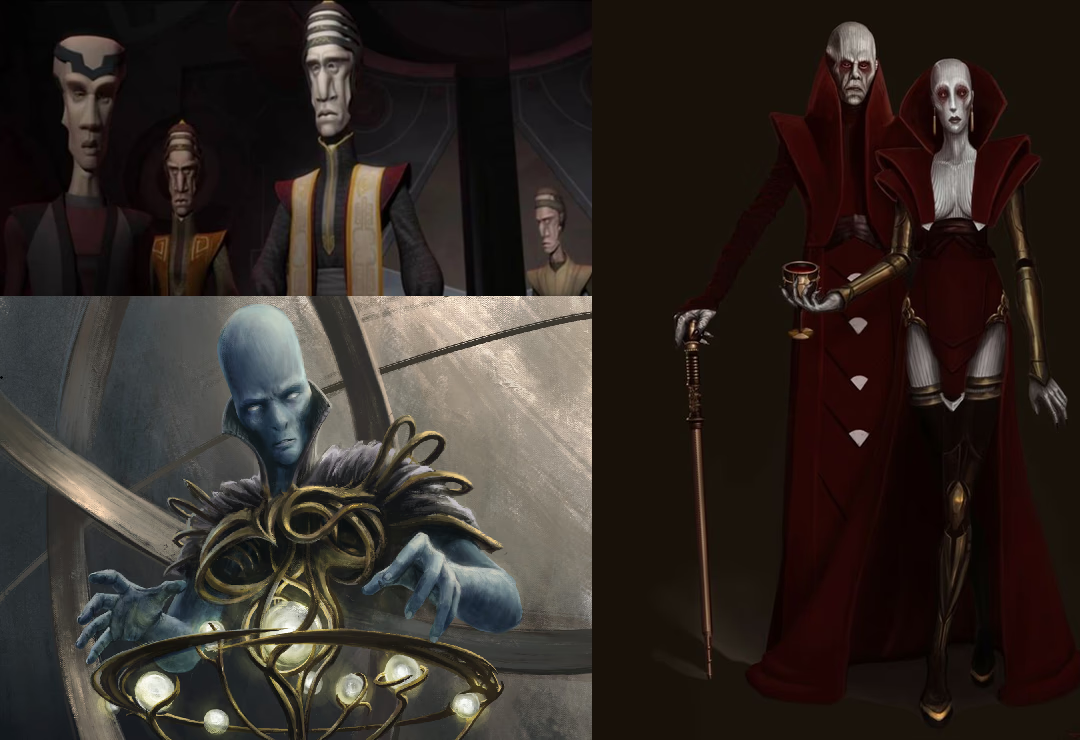

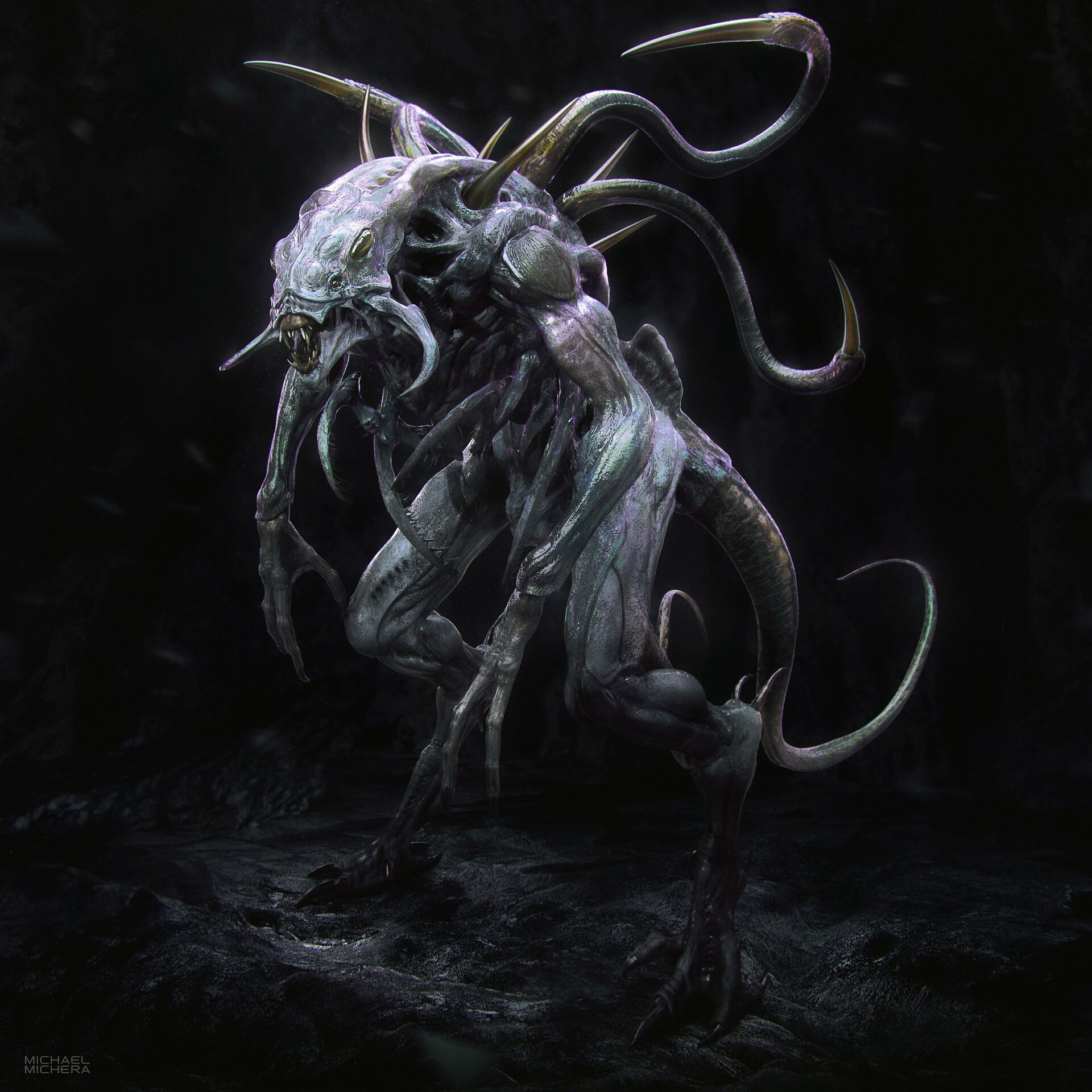
























 An offshoot of the Yrrani, the Twei are an ethnic minority that are most easily distinguished by the fact that they have longer ears. They are usually fair skinned, pale even, but can be darker skinned. Much like their cousins, the Twei are blessed with longevity, general physiological resilience, unnatural beauty as well as graceful aging, and generally keen minds. They are also noted as possessing great spacial awareness and reflexes, both of which are often further enhanced by cybernetics.