Back when dinosaurs ruled the Earth, I got started with writing online on the Spore forums. Man, those were the days. We're talking like 12 years ago 2010-ish!
I've been here on and off for almost as long, and have GM'd a bunch of different things to varying success.
Heavenly Sage, Patron of Civilization, He Who Stole the Wind, Traitor to the Gods
In the dawn before time in a world before this, Promus emerged as a nascent god among a pantheon of disparate and volatile lords. As he grew older he did not interject himself into their feuding in favor of furthering his own mind through reflection and philosophy, and so in the end he was beloved by all for his great foresight and sage counsel.
There finally came a day when the pantheon decided to create mortal beings in their own image to act as servants, and in following the decree of his brethren, Promus crafted a folk of large, wild, shaggy men with unkempt hair and small horns. They frolicked with the beasts of the wilderness and lived at one with nature; Promus named them the Ur and in time he began to see them as his own children.
For his beloved children he would do anything, even if it meant crossing his betters. Upon one night when his brethren were quarreling, Promus ascended to the Celestial Sphere and dared to steal the Wind from the God of Gods, Hurricane of the Heavens, Lord of Near and Close. His great crime unnoticed for the time, Promus returned to the realm below and gifted the Wind to the wild Ur, thus granting them the power of speech. For this great act, the Ur began to use the speech in prayer and worshiped Promus, and Promus alone, as their One True God.
When the lord of the pantheon discovered this treachery, he was furious. No amount of brotherly love spared Promus, and he was chained to the highest mountain of the world and left exposed to the raging elements for a thousand years. But eventually the vengeful lord of the heavens was overthrown, and as the voices of the Ur continued to drift up to Promus' prison, the power of their prayers enabled him to finally break free of his shackles.
Overjoyed at his return, his brethren bid the sage to spread knowledge and civilization among the Ur and all the other civilizations that they had seen fit to create since his imprisonment. So to those other peoples that were his nephews and nieces, children of his brethren, he granted speech also; but he quickly returned to the Ur, and to them he taught many more things: poetry, song, law, writing, and ritual. Where their Creator-Gods had demanded sacrifices of flesh and blood, Promus taught them to offer bones and fat of their livestock and to keep the best cuts of meat for their own consumption. Once more the mortals turned their backs upon the other absent gods and worshiped Promus alone, and once more that (combined with his blatant favor for the Ur) drew the ire of the pantheon.
Promus was bound to the ground and a hundred smoking mirrors were placed about him. When dawn came, the light of the day fell upon his exposed flesh and the mirrors bathed him in the heat of a hundred suns. As the days went on, his flesh always burned away until nought but bone remained, only for the night's respite to enable his divine nature to take hold and regenerate his form that the next day bring suffering also.
But now Promus is free once more and he has come to a new realm. Soon, the Ur will follow in his wake.
Dᴏᴍᴀɪɴ & Pᴏʀᴛꜰᴏʟɪᴏ
Civilization (Speech)
As patron of Civilization, many responsibilities are bestowed unto Promus. It is under his direction that the mortals must rise from beings of the wild to primitive societies, and from those chaotic and primitive societies into more organized ones bound by law. Civilization encompasses those things that separate man from beast: everything from the fundamentals like agriculture and construction, to the institutions like written language, to even the finer things like philosophy and art can fall under civilization and therefore fall to Promus if none of his brethren patron such concepts first.
Speech is Promus' first portfolio, for in stealing the wind of a great god in the time before time, he became the only one capable of bestowing unto mortals the gift of speech, and with it the things like prayer, song, and ritual that speech can bring. Promus is especially attuned to verbal prayer, and he listens to each and every one uttered by mortals in his name (and sometimes to those prayers uttered in others' names).
Aʟɪɢɴᴍᴇɴᴛ
Chaotic Good
Thousands of years as a god have left Promus wise, and in some ways he may be wisest among the pantheon. But with that wisdom has not come cowardice, and despite his two past transgressions and the terrible punishments that they brought, he would not shy from angering the mighty once again if it meant protecting or raising up the mortals that he loves so.
All that he does is motivated by this love: he is good and a force of order in that he elevates his children above their origins as mere beasts and seeks to make them into something better, and he has no love for war. At the same time, he is also a force of evil and chaos in that he holds little respect for the authority of his peers. He has already shown himself willing to transgress upon the domains of even the most powerful of divines, disobey the orders of other gods and betray their trust, and to usurp them so as to be the One True God in the eyes of mortals.
Pᴇʀsᴏɴᴀʟɪᴛʏ
To all mortals, he is a fatherly and kind figure; a sort of watchful shepherd.
To his divine brethren, he is more detached. He still aches from the old wounds inflicted by the flaying winds and searing fires of his prisons; they are reminders that he is not the strongest of gods. He now knows that he must battle with his wit, as well as with the backing of the countless mortals that worship him and whose combined power can move mountains. He is ever regal and polite (as he would say such a temperament is the only one becoming of a god) and will give counsel freely to any who might ask, and may even go out of his way to offer it to those that earn his respect or have goals in alignment with his own. To those bestial demons that play at being gods and seek to upheave all that he does, he still shows a facade of reverence and respect even as he plots behind their backs.
Aᴘᴘᴇᴀʀᴀɴᴄᴇ
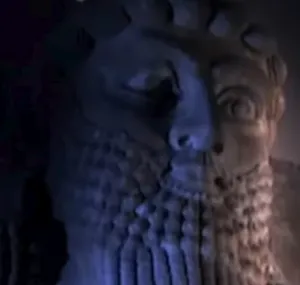
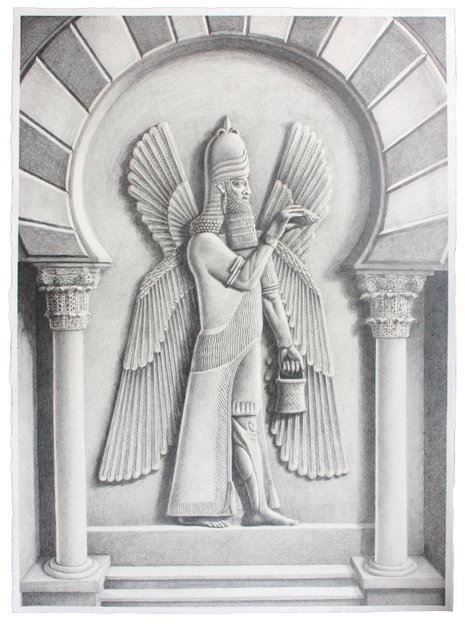
Promus is not one to hide from mortals and work his power in subtle ways. From his appearance his divine nature is nigh always apparent, yet not overpowering. Intimidation is not his goal; he projects an aura of order and wisdom. He often appears as a four-winged man of great beauty, wearing a kingly robe and carrying a bucket with which to water the crops and offer respite to the thirsty.
Other times he may take on a similar form that comes closer to his true nature, and appears an odd mix of bird and man as befits one who flies between the Heavens and what lies below.
To those fellow gods that are capable of perceiving his true nature, he does not try to hide his naked and purest form.
Heavenly Sage, Patron of Civilization, He Who Stole the Wind, Traitor to the Gods
In the dawn before time in a world before this, Promus emerged as a nascent god among a pantheon of disparate and volatile lords. As he grew older he did not interject himself into their feuding in favor of furthering his own mind through reflection and philosophy, and so in the end he was beloved by all for his great foresight and sage counsel.
There finally came a day when the pantheon decided to create mortal beings in their own image to act as servants, and in following the decree of his brethren, Promus crafted a folk of large, wild, shaggy men with unkempt hair and small horns. They frolicked with the beasts of the wilderness and lived at one with nature; Promus named them the Ur and in time he began to see them as his own children.
For his beloved children he would do anything, even if it meant crossing his betters. Upon one night when his brethren were quarreling, Promus ascended to the Celestial Sphere and dared to steal the Wind from the God of Gods, Hurricane of the Heavens, Lord of Near and Close. His great crime unnoticed for the time, Promus returned to the realm below and gifted the Wind to the wild Ur, thus granting them the power of speech. For this great act, the Ur began to use the speech in prayer and worshiped Promus, and Promus alone, as their One True God.
When the lord of the pantheon discovered this treachery, he was furious. No amount of brotherly love spared Promus, and he was chained to the highest mountain of the world and left exposed to the raging elements for a thousand years. But eventually the vengeful lord of the heavens was overthrown, and as the voices of the Ur continued to drift up to Promus' prison, the power of their prayers enabled him to finally break free of his shackles.
Overjoyed at his return, his brethren bid the sage to spread knowledge and civilization among the Ur and all the other civilizations that they had seen fit to create since then. So to those other peoples that were his nephews and nieces, children of his brethren, he granted speech also; but he quickly returned to the Ur, and to them he taught many things: poetry, song, law, writing, and ritual. Once more they turned their backs upon the other absent gods and worshiped Promus alone, and once more that (combined with his blatant favor for the Ur) drew the ire of the pantheon.
Promus was bound to the ground and a hundred smoking mirrors were placed about him. When dawn came, the light of the day fell upon his exposed flesh and the mirrors bathed him in the heat of a hundred suns. As the days went on, his flesh always burned away until nought but bone remained, only for the night's respite to enable his divine nature to take hold and regenerate his form that the next day bring suffering also.
But now Promus is free once more and he has come to a new realm. Soon, the Ur will follow in his wake.
Dᴏᴍᴀɪɴ & Pᴏʀᴛꜰᴏʟɪᴏ
Civilization (Speech)
As patron of Civilization, many responsibilities are bestowed unto Promus. It is under his direction that the mortals must rise from beings of the wild to primitive societies, and from those chaotic and primitive societies into more organized ones bound by law. Civilization encompasses those things that separate man from beast: everything from the fundamentals like agriculture and construction, to the institutions like written language, to even the finer things like philosophy and art can fall under civilization and therefore fall to Promus if none of his brethren patron such concepts first.
Speech is Promus' first portfolio, for in stealing the wind of a great god in the time before time, he became the only one capable of bestowing unto mortals the gift of speech, and with it the things like prayer, song, and ritual that speech can bring. Promus is especially attuned to verbal prayer, and he listens to each and every one uttered by mortals in his name (and sometimes to those prayers uttered in others' names).
Aʟɪɢɴᴍᴇɴᴛ
Chaotic Good
Thousands of years as a god have left Promus wise, and in some ways he may be wisest among the pantheon. But with that wisdom has not come cowardice, and despite his two past transgressions and the terrible punishments that they brought, he would not shy from angering the mighty once again if it meant protecting or raising up the mortals that he loves so.
All that he does is motivated by this love: he is good and a force of order in that he elevates his children above their origins as mere beasts and seeks to make them into something better, and he has no love for war. At the same time, he is also a force of evil and chaos in that he holds little respect for the authority of his peers. He has already shown himself willing to transgress upon the domains of even the most powerful of divines, disobey the orders of other gods and betray their trust, and to usurp them so as to be the One True God in the eyes of mortals.
Pᴇʀsᴏɴᴀʟɪᴛʏ
To all mortals, he is a fatherly and kind figure; a sort of watchful shepherd.
To his divine brethren, he is more detached. He still aches from the old wounds inflicted by the flaying winds and searing fires of his prisons; they are reminders that he is not the strongest of gods and must battle with his wit and with the backing of the countless mortals that worship him, whose combined power can move mountains. He is ever regal and polite (as he would say such attitudes are the only ones becoming of a god) and will give counsel freely to any who might ask, and may even go out of his way to offer it to those that earn his respect or have goals in alignment with his own. To those bestial demons that play at being gods and seek to upheave all that he does, he still shows a facade of reverence and respect even as he plots behind their backs.
Aᴘᴘᴇᴀʀᴀɴᴄᴇ
Promus is not one to hide from mortals and work his power in subtle ways. From his appearance his divine nature is nigh always apparent, yet not overpowering. Intimidation is not his goal; he projects an aura of order and wisdom. He often appears as a four-winged man of great beauty, wearing a kingly robe and carrying a bucket with which to water the crops and offer respite to the thirsty.
Other times he may take on a similar form that comes closer to his true nature, and appears an odd mix of bird and man as befits one who flies between the Heavens and what lies below.
To those fellow gods that are capable of perceiving his true nature, he does not try to hide his naked and purest form.
That abominable @Kho convinced me to let go of my pride and join even though I said I wouldn't. So I humbly offer this
ℙℝ𝕆𝕄𝕌𝕊
Heavenly Sage, Patron of Civilization, He Who Stole the Wind, Traitor to the Gods
In the dawn before time in a world before this, Promus emerged as a nascent god among a pantheon of disparate and volatile lords. As he grew older he did not interject himself into their feuding in favor of furthering his own mind through reflection and philosophy, and so in the end he was beloved by all for his great foresight and sage counsel.
There finally came a day when the pantheon decided to create mortal beings in their own image to act as servants, and in following the decree of his brethren, Promus crafted a folk of large, wild, shaggy men with unkempt hair and small horns. They frolicked with the beasts of the wilderness and lived at one with nature; Promus named them the Ur and in time he began to see them as his own children.
For his beloved children he would do anything, even if it meant crossing his betters. Upon one night when his brethren were quarreling, Promus ascended to the Celestial Sphere and dared to steal the Wind from the God of Gods, Hurricane of the Heavens, Lord of Near and Close. His great crime unnoticed for the time, Promus returned to the realm below and gifted the Wind to the wild Ur, thus granting them the power of speech. For this great act, the Ur began to use the speech in prayer and worshiped Promus, and Promus alone, as their One True God.
When the lord of the pantheon discovered this treachery, he was furious. No amount of brotherly love spared Promus, and he was chained to the highest mountain of the world and left exposed to the raging elements for a thousand years. But eventually the vengeful lord of the heavens was overthrown, and as the voices of the Ur continued to drift up to Promus' prison, the power of their prayers enabled him to finally break free of his shackles.
Overjoyed at his return, his brethren bid the sage to spread knowledge and civilization among the Ur and all the other civilizations that they had seen fit to create since then. So to those other peoples that were his nephews and nieces, children of his brethren, he granted speech also; but he quickly returned to the Ur, and to them he taught many things: poetry, song, law, writing, and ritual. Once more they turned their backs upon the other absent gods and worshiped Promus alone, and once more that (combined with his blatant favor for the Ur) drew the ire of the pantheon.
Promus was bound to the ground and a hundred smoking mirrors were placed about him. When dawn came, the light of the day fell upon his exposed flesh and the mirrors bathed him in the heat of a hundred suns. As the days went on, his flesh always burned away until nought but bone remained, only for the night's respite to enable his divine nature to take hold and regenerate his form that the next day bring suffering also.
But now Promus is free once more and he has come to a new realm. Soon, the Ur will follow in his wake.
Dᴏᴍᴀɪɴ & Pᴏʀᴛꜰᴏʟɪᴏ
Civilization (Speech)
As patron of Civilization, many responsibilities are bestowed unto Promus. It is under his direction that the mortals must rise from beings of the wild to primitive societies, and from those chaotic and primitive societies into more organized ones bound by law. Civilization encompasses those things that separate man from beast: everything from the fundamentals like agriculture and construction, to the institutions like written language, to even the finer things like philosophy and art can fall under civilization and therefore fall to Promus if none of his brethren patron such concepts first.
Speech is Promus' first portfolio, for in stealing the wind of a great god in the time before time, he became the only one capable of bestowing unto mortals the gift of speech, and with it the things like prayer, song, and ritual that speech can bring. Promus is especially attuned to verbal prayer, and he listens to each and every one uttered by mortals in his name (and sometimes to those prayers uttered in others' names).
Aʟɪɢɴᴍᴇɴᴛ
Chaotic Good
Thousands of years as a god have left Promus wise, and in some ways he may be wisest among the pantheon. But with that wisdom has not come cowardice, and despite his two past transgressions and the terrible punishments that they brought, he would not shy from angering the mighty once again if it meant protecting or raising up the mortals that he loves so.
All that he does is motivated by this love: he is good and a force of order in that he elevates his children above their origins as mere beasts and seeks to make them into something better, and he has no love for war. At the same time, he is also a force of evil and chaos in that he holds little respect for the authority of his peers. He has already shown himself willing to transgress upon the domains of even the most powerful of divines, disobey the orders of other gods and betray their trust, and to usurp them so as to be the One True God in the eyes of mortals.
Pᴇʀsᴏɴᴀʟɪᴛʏ
To all mortals, he is a fatherly and kind figure; a sort of watchful shepherd.
To his divine brethren, he is more detached. He still aches from the old wounds inflicted by the flaying winds and searing fires of his prisons; they are reminders that he is not the strongest of gods and must battle with his wit and with the backing of the countless mortals that worship him, whose combined power can move mountains. He is ever regal and polite (as he would say such attitudes are the only ones becoming of a god) and will give counsel freely to any who might ask, and may even go out of his way to offer it to those that earn his respect or have goals in alignment with his own. To those bestial demons that play at being gods and seek to upheave all that he does, he still shows a facade of reverence and respect even as he plots behind their backs.
Aᴘᴘᴇᴀʀᴀɴᴄᴇ
Promus is not one to hide from mortals and work his power in subtle ways. From his appearance his divine nature is nigh always apparent, yet not overpowering. Intimidation is not his goal; he projects an aura of order and wisdom. He often appears as a four-winged man of great beauty, wearing a kingly robe and carrying a bucket with which to water the crops and offer respite to the thirsty.
Other times he may take on a similar form that comes closer to his true nature, and appears an odd mix of bird and man as befits one who flies between the Heavens and what lies below.
To those fellow gods that are capable of perceiving his true nature, he does not try to hide his naked and purest form.
@Muttonhawk Hummm, pre-Xerxes is good by me, but pre-Realta would be somewhat problematic - that would mean that Gadar's ants were not around to witness her murder (and so he through them come to know of her) and eventually aid her escape the grave.
Temporal anomalies are to be expected from the god of Memes(Time). Nobody has noticed that ants can timetravel because who pays attention to ants anyays.
My point wasn't to complain per se about the lack of interaction, but rather to counteract what was brought up before: that having lots of little islands will lead to people grabbing them for themselves and remaining really isolated until the invention of (very) good sailing technology. Just having an all land planet ironically causes more isolation both in the early stages and in the later ones when there's sailing.
Then there was the lesser point that having an all-land planet results in huge swathes of empty space on the map.
We've tried it both ways now between this and Mk. 1, and I have to say that in this iteration starting with all dry land was probably a mistake. It needn't be a 100% oceanic planet like in Mk. 1, but just having mostly oceans would go a long ways towards making a more natural-looking map if nothing else.
The problem with our current Divinus is that there's just so much vacant space.
I filled in a huge swathe by making the Sparking Sea, then the huge Firewind + Golden Barrens, and then this got expanded by the addition of the Great Steppe (you'd have to ask Kho what the difference between that steppe and the Golden Barrens would be) and the Venomweald. More recently there was also the canonization of that empty spot south of the Venomweald and east of the Firewind as being like the plains of North America and inhabited by a bunch of Hain tribes.
Even so, this whole "blessed land" as djinn/Zeph/Vetruvians refer to the area is still essentially an island. Due to the sheer distances involved and the fact that neither Vetros nor Rukbany do much on the seas, it's not meaningfully connected to Alefpria or Loralom or Mesathalassa.
This is the issue with having so much land available; it makes the map artificially huge and unless there is a concerted effort to concentrate a lot of civilizations in the same general area, you end up like in this RP where we're 20 pages in and there's still been very little meaningful contact between most of the big hubs of civilization.
Ironically it'd probably feel better if it was 80% ocean with two or three continents, so that each island could have a coherent theme and the nations on it could interact more with one another.
Back when dinosaurs ruled the Earth, I got started with writing online on the Spore forums. Man, those were the days. We're talking like [s]12 years ago[/s] 2010-ish!
I've been here on and off for almost as long, and have GM'd a bunch of different things to varying success.
[center]Word of my splendor:[/center]
[hider=My messenger's letter][img]https://img.roleplayerguild.com/prod/users/019b0090-4706-75b9-bfe5-fd4ef6737466.webp[/img][/hider]
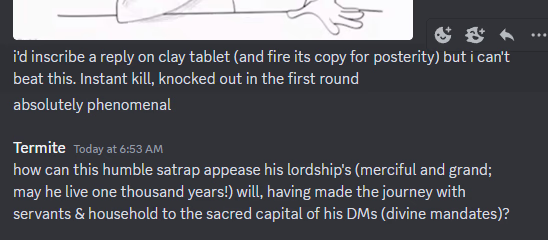
[hider=My fellow monarch's response][img]https://img.roleplayerguild.com/prod/users/019b0090-a418-774f-a117-1ae23ac670fd.webp[/img][/hider]
<div style="white-space:pre-wrap;">Back when dinosaurs ruled the Earth, I got started with writing online on the Spore forums. Man, those were the days. We're talking like <span class="bb-s">12 years ago</span> 2010-ish!<br><br>I've been here on and off for almost as long, and have GM'd a bunch of different things to varying success.<br><br><div class="bb-center">Word of my splendor:</div><br><div class="hider-panel"><div class="hider-heading"><button type="button" class="btn btn-default btn-xs hider-button" data-name="My messenger's letter">My messenger's letter [+]</button></div><div class="hider-body" style="display: none"><img src="https://img.roleplayerguild.com/prod/users/019b0090-4706-75b9-bfe5-fd4ef6737466.webp" /></div></div><br><div class="hider-panel"><div class="hider-heading"><button type="button" class="btn btn-default btn-xs hider-button" data-name="My fellow monarch's response">My fellow monarch's response [+]</button></div><div class="hider-body" style="display: none"><img src="https://img.roleplayerguild.com/prod/users/019b0090-a418-774f-a117-1ae23ac670fd.webp" /></div></div></div>
 Lord Zee
 Vec
Vec JFK
JFK Fetzen
 Thayr
Thayr BingTheWing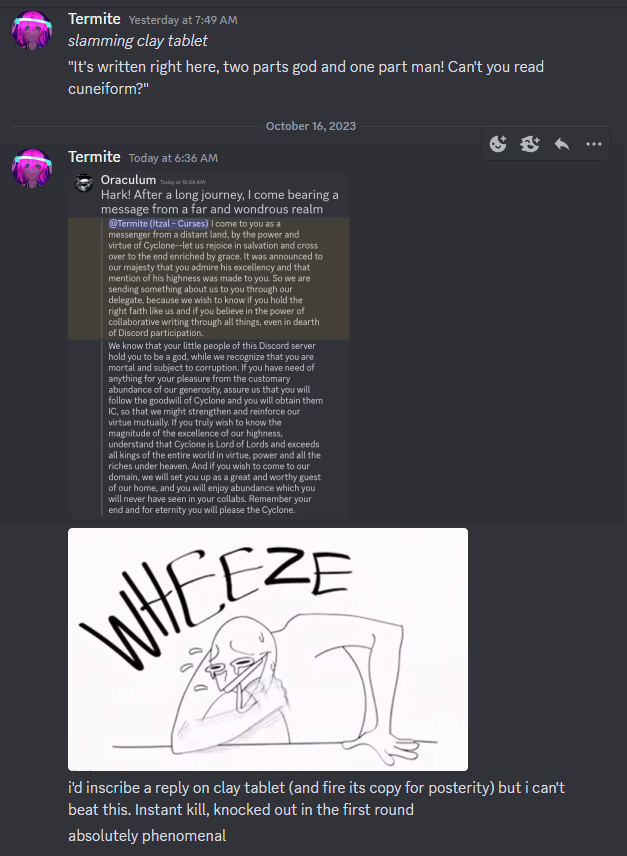
 Member