Dinh AaronMk
 Member
my beloved (french coded)
STATUS: As an American [user could not afford rest of post] 1 yr ago
- Last Seen: 10 mos ago
- Joined: 12 yrs ago
- Posts: 7860 (1.75 / day)
- VMs: 13
-
Username history
- Dinh AaronMk 12 yrs ago
-
Latest 10 profile visitors:
-
Most recent →
 AliceAbigail,
 Scrawl Banditta,
 Wilted Rose,
 mickilennial,
 Ekreture,
 Supermaxx,
 erikh
erikh
Status
Recent Statuses
1 yr ago
Current
As an American [user could not afford rest of post]
6
likes
3 yrs ago
Never spaghetti; Boston strong
3 yrs ago
The last post below me is a lie
1
like
3 yrs ago
THE SACRIFICE IS COMPLETE. THE BOILERMEN HAVE FRESH SOULS. THEY CAN DO SHIFT CHANGES.
2
likes
3 yrs ago
Was that supposed to be an anime reference
Bio
Harry Potter is not a world view, read another book or I will piss on the moon with my super laser piss.
Most Recent Posts
So based on recent points in posts I thought I'd toss this out as a representation of what is around my nation, or at least what has been named or referenced.
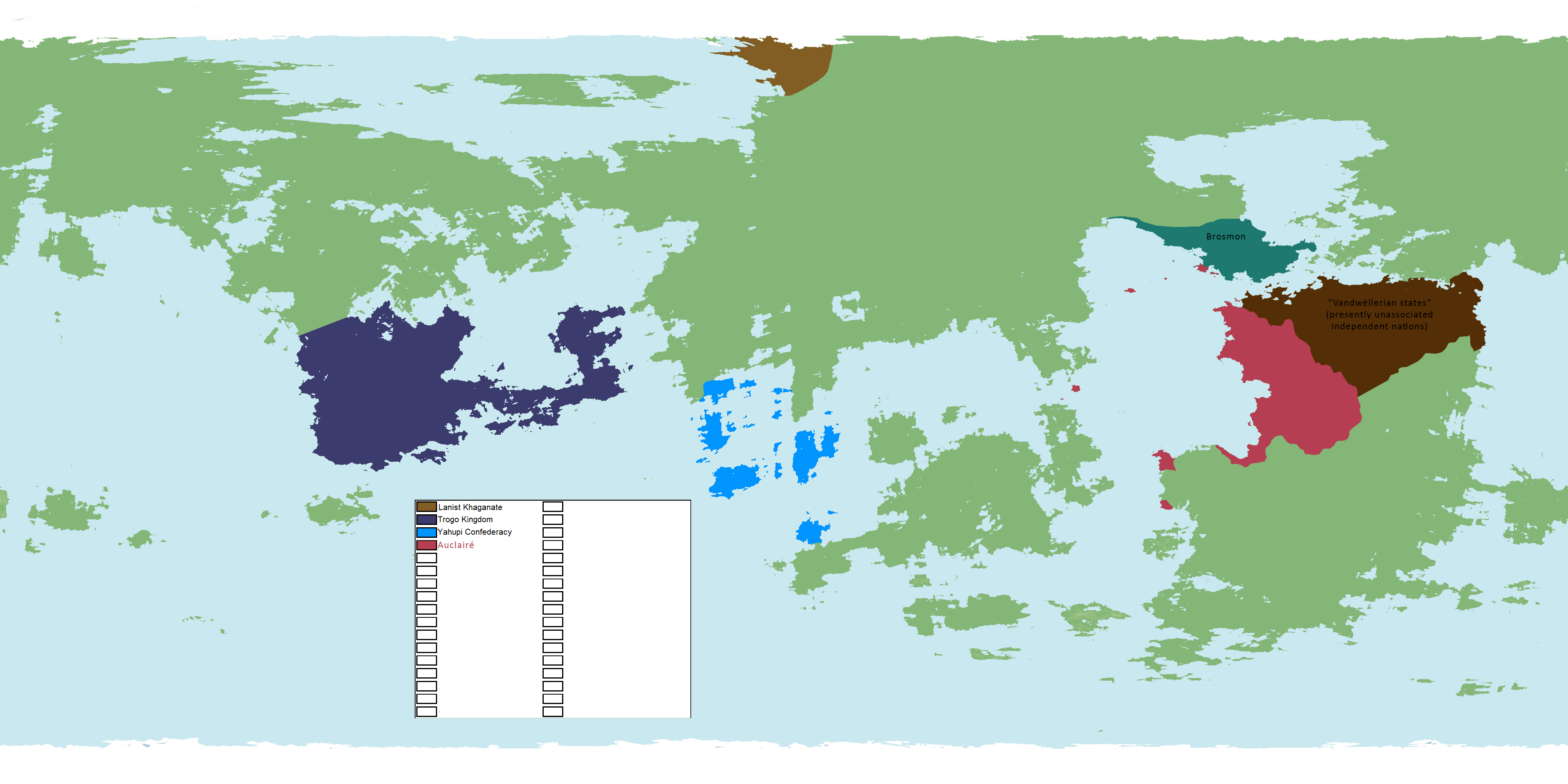
And it is not to say that I believe these are the only nations near Auclairé, there's certainly others but I haven't dropped names since I don't think they are particularly relevant to the stories I'm telling at this present moment, and I'm bound to fill them up in time. Neither does this map assert the Vandwëllerian region is a coherent political entity, it's not. I'm not opposed to anyone picking up a piece of it as their own nation in the future, or of Brosmon. But would appreciate you sit down with me and deeper lore can be worked out. For the time being, imagine the Vandwëllerian as being like a collection of statelets akin to the HRE, or even after any imperial authority was destroyed by Kaiser Frederich to spite Napoleon. The situation there is like a perpetual post-HRE and pre-modern German in that regard. City-states, ducal-sized states, stuff the size of the Netherlands and centuries settled into this pattern.
And it is not to say that I believe these are the only nations near Auclairé, there's certainly others but I haven't dropped names since I don't think they are particularly relevant to the stories I'm telling at this present moment, and I'm bound to fill them up in time. Neither does this map assert the Vandwëllerian region is a coherent political entity, it's not. I'm not opposed to anyone picking up a piece of it as their own nation in the future, or of Brosmon. But would appreciate you sit down with me and deeper lore can be worked out. For the time being, imagine the Vandwëllerian as being like a collection of statelets akin to the HRE, or even after any imperial authority was destroyed by Kaiser Frederich to spite Napoleon. The situation there is like a perpetual post-HRE and pre-modern German in that regard. City-states, ducal-sized states, stuff the size of the Netherlands and centuries settled into this pattern.
Auclairé
Deparmon fo Aubre, Celemsville
The alarm buzzed shrilly and stirring in his bed Hox rose to silence it. Dawn had barely broken outside his window and the orange fingers of day break were just beginning to spread her hand out from beyond the horizon. For now though, the light was still cool. On the street outside the silver glow of florescence shone in the thin river-born mist that had spread into the city and obscured the world beyond his bedroom window. It had been cool, but not unpleasantly outside and as Hox threw the sheets off of him he realized how much cooler it had gotten. Naked, he shivered in the nonseasonal summer's chill and shuffled across the dimly lit bedroom floor to his wardrobe and began picking through his clothes. He was dressed in a minute, spurred on by the insistence of the chill air.
Fully dressed, he moved on his heels to the bathroom and flicked on the light. A soft orange glow overtook the cool dark light that permeated the room and Hox leaned into his bathroom mirror. Looking back him was a broad-shouldered, square-shouldered young man. His dark brown hair curled every which way, made worse by his bed head. Most of it had been tamed by shaving it close along the side of head and making the sort of crown atop his head that had become fashionable. But after months of it being untended it had began to grow back out and was reclaiming its natural fullness. As he looked at his reflection he wondered briefly if he should get it all cut evenly, and let it grow back out naturally.
But he dispensed with the notion as quickly as it had come, instead going about his normal routine. He turned the water on, and the chrome faucet poured out cool water. His kitchen counter though was without a bowl, in instead flowed back towards the well as if guided gently and gurgled down a seam-thin drain along the back. He sighed as he splashed the cold water against his face and washed away the sleep from his eyes. He looked back up at himself in his mirror, his green eyes looked back in a dull expression.
Finally with a resigned expression he pulled on the mirror, opening his medicine cabinet and grabbed his brush and tamed his hair. Followed by his toothbrush and tooth paste.
Hox's home was a three-floor townhouse in the middle of town, and as he brushed he strolled out onto the narrow terrace, entered through a door alongside his bed and looked down on the garden courtyard shared in common between he and his neighbors. He had inherited the home from his grandparents, his own parents who lived across town had no need for it, and the arrangement had begun with him renting it out from him. But as he begun his career and advanced through it he was able to negotiate with them for it to be moved into his name. It was not a direct transfer by any means, but to say he had inherited it was an easy way to describe it.
The building was close to three-hundred years old, and parts of it were still surfaced it what had to be the original plaster. In his memory the terracotta shingles had been replaced once in his lifetime, if only after a sudden hailstorm. The windows and the terrace he leaned off of were framed in cast iron, painted a dark black, and in the case of the windows this cast-iron framework became a cage on the outside of the glass, on a warm day he could remove the windows entirely and not fear his home being invaded by the birds.
The neighbor on the other side of the square inhabited a house very much like his own. And while theirs was painted a bright blue, his was a lemon's yellow. But both stood like towers alongside the third between them, his roof had been flattened and was like a small garden, the vines and ivy he grew on his rooftop patio trailing over the stone railing into the courtyard behind. He had no door opening into their courtyard and was not thought in the same way a neighbor but Nox or his neighbor opposite. From behind the ivory though was an old fading, chipped fresco of some country scene.
Walking back inside, Nox walked back into his bathroom.
Interior wise, the home was not far different from what it was outside. The walls were plastered over, the yellow turning into a soft metallic blue framed and bordered from the yellow with white door and window frames. The wood floors were old, and no matter how much wax was applied still retained the many decades, centuries, or scuffs and marks from furniture and foot. His bed was big enough for two, though he was the only one that lived there, and on the top floor he had only three rooms, his bed room and another room that would have been one had he had a guest, but was converted into a study. The furniture that filled any room had a flea market quality, old and aged with burnishing shades off from one another.
Cleaned up he headed down stairs, running his hand along the smooth polish of the hand rail as he galloped down the rounding wooden stairwell to the bottom landing. The living room, a forest green of the spring afternoon variety lit up with morning light as the light switch was flicked and it came to light. The old wooden floors dark, moody, and cool under socked feet. The pale, off-white purple sofas and armchair covered in loose papers and magazines that had not found their way to the low coffee table. There was a card table under the stairs with the chairs pushed in, and a television set mounted to the wall opposite. A broad arched doorway opened into a dining room with much the same motif and around the corner the kitchen, its walls a flush rosy red.
As he moved along, he picked up a remote from the counter and pressed a button. From the living room, out of site the TV turned on and the news went on to play. Providing a background noise as he went about preparing breakfast. Hanging on the wall over the kitchen racks of pans and implements hung off hooks, and he grabbed what he needed, turning on the gas stove and setting everything up. From a ceramic container he scooped out a slice of butter from the soft golden block there, and from a basket nearby an egg. He cracked several into the pan.
The pans, spatulas, and large spoons and ladles were not the only thing to hang from the walls, and under the cupboards next to the oven hung bundles of dried herbs he pulled apart with his fingers and tossed into the frying pan. Turning down the gas, he let the eggs simmer as he stepped aside to the fridge and took out sausage and threw them in with the eggs. Using the spatula he chopped them up on the spot, and tossed them in with the breakfast already there until they had cooked enough.
All things cooked and lightly browned, he deposited the breakfast onto a plate and walked out into the living room, grabbing his cellphone next to where the remote was. Throwing aside loose sheets of paper he sat down, putting the plate onto the table and began to scroll through his messages. There was one in particular that caught his attention, it was from late last night. Probably when he was out on the track.
“From: P. Cormoda
“Lisseur, we got a case into the office after you left. I'm too busy as it is, so I'm passing it off to you. I put it on your desk for when you come in. I don't know what you got going on still, or if you've handled the Amillo file. Last I checked the courts are still looking for the final documents on your part but it's otherwise wrapped up, unless the guy wants to appeal a noise offense.”
Hox blinked down apathetically at him, but did not delete it like the rest. He marked it and left it as is. As he finished, he leaned back and caught up on the news.
The sun was catching up as Nox stepped outside. On the doorstep he stopped to lean over and adjusted his boots around his culottes. He made last adjustments to his pants legs, pulling at them to make sure they felt smooth in the breeches. Satisfied he pulled close the black leather vest and made his way across the garden square.
On the street side, his bike stood waiting. As he always had done he mounted it, and fired it up. The purr from the engine started loud, but tapering down assumed the tone of a purr. He walked it out onto the street, and drove off. The wheels bumped gently over cobblestones worn smooth by automobile and foot traffic. It carried him down the street as if being held over the shoulders of his father when he was young.
Still early, the streets were quiet and still. Not many were out to begin their day, and the only others out stood at the side-walk, sweeping up dust and dirt from the sidewalk. Women were opening the windows, and putting on the sill or hanging from iron hooks potted plants. The range of colors of the home and storm fronts passed Hox as he drove past. Rosy reds, soft blues, cream beige and eggshell whites. The street would sometimes split, heading down narrow alleys sheltered by mason archways, the earliest signs of life manifesting in the opening of doors to let out cats, or for the first walks of the day for the dogs.
As he drew closer to the city center, the residential rhythms ebbed. Though the warming morning air drew some from the second floor apartments who chose to eat a breakfast on the terraces and porches overhead many of the street level shops still stood empty. Though those that had become most essential, the doctors, hardware stores, and greengrocers were beginning to hum with the early life of day as their clerks and owners stepped in and threw on the light. The cafes and restaurants were by now well into preparing for the new day, and their sidewalks and porches cleaned the outside tables were mid-way through being set. The wide avenues and promenades that radiated out from the middle of the city were starting to hum with automotive traffic, and coming into this nexus Nox found himself opposite of the wide grass yard opposite of the city hall, the province's central offices off behind it with its triumphal columns and memorials rising up above the gently slopped rooftops and chimneys.
And here was where he brought his commute to an end. He parked the bike to the side, and dismounted onto the side-walk. Unassuming and old, the law offices of Pierre Cormoda rose up. Here he was, at work.
Stepping into the offices the musky smell of old pipe tobacco was the first sensation to hit the nose, the rustic smells intermingling with cheery to make something of a smell that was like whiskey. And the source of the continual refreshment of this essence was there in the lobby, addressing some matters for the morning with the secretary. At the sound of the door the fat, round faced, pipe-smoking gentlemen in the wide-brimmed hat and laced woolen vest turned to see Nox.
“Ah, Noxua!” he called, “You get my message?” he asked, leaning against the secretary's desk.
“I did.” Nox answered, “What's the details on the case?”
“Oh, some woman came in the other day looking for legal counsel for her boyfriend. Apparently the police arrested him on charges of murder!”
“Murder, isn't that something a little above my board?”
Pierre Cormoda scoffed dismissively, “I think you deserve it this once. Besides, Antoine has his hands tied up with the robbery case and he started up on a few other civil cases.”
“I see, but that's what we are, aren't we? Civil law, not criminal.” Nox pointed out as he walked further into the offices.
“Usually, but I'm not particularly worried. It'll probably be an open and shut case, from the police reports the kid isn't exactly denying it.”
“So why are we needed?” Nox asked.
“To lighten the sentence, perhaps. Just because the police have him doesn't mean it's all over for him. See what you can do, why don't you?”
“I will.” said Nox, headed up the stairs to his office.
In
Age of Rebirth: The Rising Tide [Post-Apocolyptic NRP | Always open]
→
8 yrs ago
Forum: Nation Roleplay
@Nerevarine@Strange Rodent@EveryMemeAKing@Dinh AaronMk@Apollo26@Raylah
Interest checker for everybody.
Who is still on board?
All I'm doing is waiting for someone to post IC.
These are the least exciting, and least thought out war posts I have ever read.
The road conformed tight to the curves of the hillside. A solid paved path, a low stone wall the only barrier between the safety of the road and the tumultuous spill over the hillside. In the late evening sunlight the lights from the farmhouses and vineyards that covered the country hills in a blanket glimmered among the twilight darkness of olive and orange groves. The sunflowers faced west, the brilliance of their golden dials fading as they began closing their faces for the night. Somewhere distantly cocks crowed a last song in the late night and further off on the other side of a black inky river the brilliant silver lights of a town shone in reflection against the river-water and thrown a gentle haze into the sky. The lights of traffic along the major highways traveled like the stars plucked from the coal dark sky above as they traversed the motorways into and out of town.
To the racers, this road was perfect. Empty at night, and perilous enough that it made the heart beat in the chest. The flush of adrenaline would send a man into a powerful high, stronger and more exciting than most drugs to them. The effects of which would become the subject of many poems if any one were so inclined or survived. It sometimes often, in fact often enough that it was not unheard of for one of the drivers to make a poorly timed turn and crash into the low-lying moss-covered walls and fly head over heals from the seat of their bike to the blunt pulverizing boulders below, or to be tangled and torn in the branches of trees down below. Not even the softness of a meadow or moss-covered earth or tilled soil would protect the upended rider from serious injury if not death. For this reason it was not unsurprising that the police kept an eye on the road, though not always.
“Noel, the road again is clear!” a man shouted as he thundered down along the road on a cheap four-banger motorcycle. It was not a racing bike by any means but the slow moving chopper that was comfortable in the city and moved at grandmother's speed in the hills outside of town.
The men at the road-side overlook turned and smiled at him. Here was the collection of racing bikes. Fiber glass rockets on two wheels, their engines large. Their front faces and windshield reached out ahead and molded into the head ornaments of ancient wooden hulks that long ago terrorized the coast but had entered into the realm of folklore from the Kingdom of Brosmon to the north or of the federations and confederations of the Vandwëllerian of the northern border. They were not so much any longer a source of terror, but of inspiration in the popular culture. Ancient dragons, cockrels, and panthers formed great stylistic headpieces to the modern horse. Some were black, others read, some had ancient ducal seals painted onto the saddle bags of the motorbikes. The headlights were the eyes of the ancient beasts, great white gold beams that illuminated the road ahead for just shy of a kilometer ahead.
“That's good to know.” a tall towering man said with a dark complexion. He sat up off the wall and headed towards a midnight blue and kicked up the chrome stand.
“We know the rules.” the man on the cheap city-bike said, “Or was one of us new here?”
“The spit is.” someone said, referring to the small skinny kid glued nervously, but excited to the seat of his bike. It was new, used but new. It was two model years older than many of the racing bikes here and was no doubt a gift. The kid looked no younger than seventeen. The sides of his head were shaved clean and the hair left atop it was still wild and messy from a still young and virgin attachment to the helmet. The brave among many of the racers did not wear a helmet, they knew they had a high risk of dying if they failed and took a spill down the road or even along it, there was not a lot of chances to react if one spilled at the head of the pack for anyone to avoid it. It was blood sport, though everyone wanted to avoid it.
“Alright than, kid.” the man on the cheap bike said, “Rules are simple, you don't drive off the road, you stick to Monjuer road. Taking any other road from this will take you off the track, you'll end up in San Clemens if you head off down Rouboun, or down to the river if you head the other way. If you do, you might as well go home. If you see anyone crash, you tell us by the end of the race. We'll send someone down to see to the body and call an ambulance if need be, or take them to the hospital ourselves if we have to. No punching or kicking the other riders, we're civilized out here. The finish line is the Treifon scenic overlook, Clements is already there with a blue light. We have a bottle of wine in it for you. Second place buys us all cognac. Are we understood?”
The youth nodded.
“Then we're good to go. I'll be taking up the tail.”
At those words the men began to move to their bikes. Patting the first time on the shoulder an older man in his mid-twenties gave him a brief affirmation and mounted his bike. This man, stepping ahead felt no tension or anxiety. Simply an indifference, a practiced feel for what was about to happen. He had won his bottle of wine, generally always cheap. And he had also bought everyone the round of cognac. He was looking forward more to the celebration at the bar after, where everyone would cheer and celebrate the lack of death or injury on the track that night. Never once in his seven years on the country hill roads had he had to suffer through the injuries or fatalities said to be so common here. The worst he had witnessed was a road rash, when a rider at the finish line jerked his bike too hard to the side in stopping, and was thrown across the gravel peeling the skin of his forearms and scratching his face as he tumbled and slid. That man still wore his scars.
Mounting his bike he tossed the throttle and revved the engine. It grumbled underneath him, the stammering rumble of the engineering vibrating from his groin through his spine. There was a primitive joy he felt in it, almost sensual as he leaned into the bike and it hummed smoothly into place at the starting line. The scout rider took up a position on the road side, climbing atop a boulder with a snub-nosed revolver in his hands. Raising his hand into the air, the man fired a single blank that lit up the night as shred of burning tissue paper shot forth. The sharp piercing bang of the gun signaled the start, and was soon eclipsed by the roar of the engines as all the racers sped off.
The twenty-something sped off with the head of the pack. He leaned low, squinting to look passed the windshield as the warm night air rushed passed his head, stinging his eyes and filling his ears with not just the sound of motorbikes but of the rush of the air as he accelerated through. As he rushed along the road, leaning into each turn. The combination of acceleration and the momentum into each turn provided a sensation like flying, he felt himself pulled ever which way as he went. The faster he went too, the shorter the beam of his headlights appeared shorter. Only the red tail-lights of the bikes ahead retained any consistency.
Winning wasn't necessarily the objective here. Not any more. He had won enough that he didn't see the point. He was in it for the thrill, something to do on a weekend. He had proved himself a man early, riding aggressive. But since retired from it. Now he kept up with the flock. If he went any further than third everyone else was riding weak. He just no longer cared. Beyond that it was a competition over who would or would not be buying cognac and he would rather surrender that obligation.
Ahead the familiar blue light of the finish line shone in the darkness. The sun had fully set and now the world was cloaked in darkness. The finishing light shone like a lone star plucked from the empty sky and put on Earth, and all bikers were headed towards it. He saw it, but did not gaze on it. He glanced up at it on the distant rise and returned his attention to the road. He looked in the side-view mirror and saw someone riding too close on his tail, he could not see whose bike it was. Even racing, he felt uncomfortable with the man so close and edged aside as if it to make a pass into the third place position, as if caught in the draft of the leading bikes. As he abandoned his place the following bike filled in the empty spot and the two raced along side-by side, tightly hugging the curves. He looked at the new rider in the side of his vision. He had a helmet on, he was the new rider. He could have gunned the bike faster, but held his position and kept pace with the new comer, matching him tire-to-tire as they held the line.
A quick glance to the side of the helmeted new comer told the man he wanted to try and pass. He eased up, giving him an opening the virgin took cautiously and went on ahead. The man took his old position.
He finished the race fourth, and with a skid slid across the sand of the scenic overlook and joined in the fanning spread of riders as they came to rest at the end of the track. There was cheers from the first bike as he hollered in pride for having won. The second place winner got laughter, and the man stepped forward to congratulation the young driver for a race well done. For him, he was happy enough to have gotten fourth. He didn't need to prove perfection.
“Nice race.” the man said, walking up to the youth with an hand outreached.
“Oh, uh. Thank you, moseur.” the young boy said, “Um, if I may. What is your name?”
“Hox. Hox Lisseur.” the man said.
“Alec, DeCrase.” the young boy said, taking the handshake, “Were you the one that let me pass?”
Hox nodded, “I don't have any reason to win.” he said.
“Oh? Really? I thought that's why people, ah- race?” he sounded nervous. But his voice also rattled and stressed in excitement. Hox knew that feeling. The racing heart, the strong thudding of adrenaline. The post-race jitters had to be making him feel as high as a kite by now.
Hox laughed, smiling, “At a certain point it stops mattering. Besides, what is there to win but the cheapest wine there is.”
As the last racer's settled in they began to gather around the winner offering their congratulations, and jokingly hailing the second place man. There was casual, jovial offerings of remorse for his positions. An expression shared mutually. In the night some put out their requests for their favorite cognac. Baron Dè Moore's, Montrôusè, San Tôui.
In the celebration the race's proprietor caught up. His bike the loudest and the slowest of the group. But he was in no race to win. Catching up he shouted, “Who won?”
“Sebastian!” one in the crowd declared.
“And who was second?” the proprietor asked
“Carli!” someone else shouted.
“Well then, I like a good Trifaulgur.” the proprietor said, laughing, “Seems we all owe ourselves a round on Carli's expense and a bottle for Sebastian. Are we in for celebration at the Red Crayfish?”
There were cheers and celebrations. Everyone began mounting their bikes. Hox though, did not intend to go. Waiting idly at his bike, he watched the bulk of the others leave, Alec among them. The proprietor remained. “Are you joining us tonight, master Hox?” he asked.
Hox starred off down the night road after the riders and shook his head. “No, I don't think so.” he said. The man with the blue light joined them.
“If I didn't know better I'd say you're coming passed your prime.” he said, jokingly.
Hox laughed with him, “Sure I am.”
The man with the blue light scoffed, “Pitash. You can do well, I know that much. How about you try winning the next one. I would love to buy you a celebratory bottle.”
“Will it be San Grisio?” Hox asked.
“Don't play around, it'll be Blue Foot as always.”
“I wouldn't give that to my cat.” Hox commented.
“Well it's good enough for the winner.” the man with the blue light commented, thumbing Hox on the shoulder and walking to the four banger.
“Well if you're not coming I'm tell Carli to save some cognac from tonight.” the proprietor said, “I'll come over to your flat sometime tomorrow and leave it for you.”
“I appreciate the gesture.” Hox said.
“What are your hours, tomorrow?” the proprietor said, turning away.
“I don't know. It could go either way. Call me before you do drop anything else. If all else I'll tell you where to meet me.”
“I'll go with that. Love to life, my friend.” he said, with a final salute and rode away, with the man with the blue light.
To the racers, this road was perfect. Empty at night, and perilous enough that it made the heart beat in the chest. The flush of adrenaline would send a man into a powerful high, stronger and more exciting than most drugs to them. The effects of which would become the subject of many poems if any one were so inclined or survived. It sometimes often, in fact often enough that it was not unheard of for one of the drivers to make a poorly timed turn and crash into the low-lying moss-covered walls and fly head over heals from the seat of their bike to the blunt pulverizing boulders below, or to be tangled and torn in the branches of trees down below. Not even the softness of a meadow or moss-covered earth or tilled soil would protect the upended rider from serious injury if not death. For this reason it was not unsurprising that the police kept an eye on the road, though not always.
“Noel, the road again is clear!” a man shouted as he thundered down along the road on a cheap four-banger motorcycle. It was not a racing bike by any means but the slow moving chopper that was comfortable in the city and moved at grandmother's speed in the hills outside of town.
The men at the road-side overlook turned and smiled at him. Here was the collection of racing bikes. Fiber glass rockets on two wheels, their engines large. Their front faces and windshield reached out ahead and molded into the head ornaments of ancient wooden hulks that long ago terrorized the coast but had entered into the realm of folklore from the Kingdom of Brosmon to the north or of the federations and confederations of the Vandwëllerian of the northern border. They were not so much any longer a source of terror, but of inspiration in the popular culture. Ancient dragons, cockrels, and panthers formed great stylistic headpieces to the modern horse. Some were black, others read, some had ancient ducal seals painted onto the saddle bags of the motorbikes. The headlights were the eyes of the ancient beasts, great white gold beams that illuminated the road ahead for just shy of a kilometer ahead.
“That's good to know.” a tall towering man said with a dark complexion. He sat up off the wall and headed towards a midnight blue and kicked up the chrome stand.
“We know the rules.” the man on the cheap city-bike said, “Or was one of us new here?”
“The spit is.” someone said, referring to the small skinny kid glued nervously, but excited to the seat of his bike. It was new, used but new. It was two model years older than many of the racing bikes here and was no doubt a gift. The kid looked no younger than seventeen. The sides of his head were shaved clean and the hair left atop it was still wild and messy from a still young and virgin attachment to the helmet. The brave among many of the racers did not wear a helmet, they knew they had a high risk of dying if they failed and took a spill down the road or even along it, there was not a lot of chances to react if one spilled at the head of the pack for anyone to avoid it. It was blood sport, though everyone wanted to avoid it.
“Alright than, kid.” the man on the cheap bike said, “Rules are simple, you don't drive off the road, you stick to Monjuer road. Taking any other road from this will take you off the track, you'll end up in San Clemens if you head off down Rouboun, or down to the river if you head the other way. If you do, you might as well go home. If you see anyone crash, you tell us by the end of the race. We'll send someone down to see to the body and call an ambulance if need be, or take them to the hospital ourselves if we have to. No punching or kicking the other riders, we're civilized out here. The finish line is the Treifon scenic overlook, Clements is already there with a blue light. We have a bottle of wine in it for you. Second place buys us all cognac. Are we understood?”
The youth nodded.
“Then we're good to go. I'll be taking up the tail.”
At those words the men began to move to their bikes. Patting the first time on the shoulder an older man in his mid-twenties gave him a brief affirmation and mounted his bike. This man, stepping ahead felt no tension or anxiety. Simply an indifference, a practiced feel for what was about to happen. He had won his bottle of wine, generally always cheap. And he had also bought everyone the round of cognac. He was looking forward more to the celebration at the bar after, where everyone would cheer and celebrate the lack of death or injury on the track that night. Never once in his seven years on the country hill roads had he had to suffer through the injuries or fatalities said to be so common here. The worst he had witnessed was a road rash, when a rider at the finish line jerked his bike too hard to the side in stopping, and was thrown across the gravel peeling the skin of his forearms and scratching his face as he tumbled and slid. That man still wore his scars.
Mounting his bike he tossed the throttle and revved the engine. It grumbled underneath him, the stammering rumble of the engineering vibrating from his groin through his spine. There was a primitive joy he felt in it, almost sensual as he leaned into the bike and it hummed smoothly into place at the starting line. The scout rider took up a position on the road side, climbing atop a boulder with a snub-nosed revolver in his hands. Raising his hand into the air, the man fired a single blank that lit up the night as shred of burning tissue paper shot forth. The sharp piercing bang of the gun signaled the start, and was soon eclipsed by the roar of the engines as all the racers sped off.
The twenty-something sped off with the head of the pack. He leaned low, squinting to look passed the windshield as the warm night air rushed passed his head, stinging his eyes and filling his ears with not just the sound of motorbikes but of the rush of the air as he accelerated through. As he rushed along the road, leaning into each turn. The combination of acceleration and the momentum into each turn provided a sensation like flying, he felt himself pulled ever which way as he went. The faster he went too, the shorter the beam of his headlights appeared shorter. Only the red tail-lights of the bikes ahead retained any consistency.
Winning wasn't necessarily the objective here. Not any more. He had won enough that he didn't see the point. He was in it for the thrill, something to do on a weekend. He had proved himself a man early, riding aggressive. But since retired from it. Now he kept up with the flock. If he went any further than third everyone else was riding weak. He just no longer cared. Beyond that it was a competition over who would or would not be buying cognac and he would rather surrender that obligation.
Ahead the familiar blue light of the finish line shone in the darkness. The sun had fully set and now the world was cloaked in darkness. The finishing light shone like a lone star plucked from the empty sky and put on Earth, and all bikers were headed towards it. He saw it, but did not gaze on it. He glanced up at it on the distant rise and returned his attention to the road. He looked in the side-view mirror and saw someone riding too close on his tail, he could not see whose bike it was. Even racing, he felt uncomfortable with the man so close and edged aside as if it to make a pass into the third place position, as if caught in the draft of the leading bikes. As he abandoned his place the following bike filled in the empty spot and the two raced along side-by side, tightly hugging the curves. He looked at the new rider in the side of his vision. He had a helmet on, he was the new rider. He could have gunned the bike faster, but held his position and kept pace with the new comer, matching him tire-to-tire as they held the line.
A quick glance to the side of the helmeted new comer told the man he wanted to try and pass. He eased up, giving him an opening the virgin took cautiously and went on ahead. The man took his old position.
He finished the race fourth, and with a skid slid across the sand of the scenic overlook and joined in the fanning spread of riders as they came to rest at the end of the track. There was cheers from the first bike as he hollered in pride for having won. The second place winner got laughter, and the man stepped forward to congratulation the young driver for a race well done. For him, he was happy enough to have gotten fourth. He didn't need to prove perfection.
“Nice race.” the man said, walking up to the youth with an hand outreached.
“Oh, uh. Thank you, moseur.” the young boy said, “Um, if I may. What is your name?”
“Hox. Hox Lisseur.” the man said.
“Alec, DeCrase.” the young boy said, taking the handshake, “Were you the one that let me pass?”
Hox nodded, “I don't have any reason to win.” he said.
“Oh? Really? I thought that's why people, ah- race?” he sounded nervous. But his voice also rattled and stressed in excitement. Hox knew that feeling. The racing heart, the strong thudding of adrenaline. The post-race jitters had to be making him feel as high as a kite by now.
Hox laughed, smiling, “At a certain point it stops mattering. Besides, what is there to win but the cheapest wine there is.”
As the last racer's settled in they began to gather around the winner offering their congratulations, and jokingly hailing the second place man. There was casual, jovial offerings of remorse for his positions. An expression shared mutually. In the night some put out their requests for their favorite cognac. Baron Dè Moore's, Montrôusè, San Tôui.
In the celebration the race's proprietor caught up. His bike the loudest and the slowest of the group. But he was in no race to win. Catching up he shouted, “Who won?”
“Sebastian!” one in the crowd declared.
“And who was second?” the proprietor asked
“Carli!” someone else shouted.
“Well then, I like a good Trifaulgur.” the proprietor said, laughing, “Seems we all owe ourselves a round on Carli's expense and a bottle for Sebastian. Are we in for celebration at the Red Crayfish?”
There were cheers and celebrations. Everyone began mounting their bikes. Hox though, did not intend to go. Waiting idly at his bike, he watched the bulk of the others leave, Alec among them. The proprietor remained. “Are you joining us tonight, master Hox?” he asked.
Hox starred off down the night road after the riders and shook his head. “No, I don't think so.” he said. The man with the blue light joined them.
“If I didn't know better I'd say you're coming passed your prime.” he said, jokingly.
Hox laughed with him, “Sure I am.”
The man with the blue light scoffed, “Pitash. You can do well, I know that much. How about you try winning the next one. I would love to buy you a celebratory bottle.”
“Will it be San Grisio?” Hox asked.
“Don't play around, it'll be Blue Foot as always.”
“I wouldn't give that to my cat.” Hox commented.
“Well it's good enough for the winner.” the man with the blue light commented, thumbing Hox on the shoulder and walking to the four banger.
“Well if you're not coming I'm tell Carli to save some cognac from tonight.” the proprietor said, “I'll come over to your flat sometime tomorrow and leave it for you.”
“I appreciate the gesture.” Hox said.
“What are your hours, tomorrow?” the proprietor said, turning away.
“I don't know. It could go either way. Call me before you do drop anything else. If all else I'll tell you where to meet me.”
“I'll go with that. Love to life, my friend.” he said, with a final salute and rode away, with the man with the blue light.
In
Precipice of War - The Big Leagues of NRP (Only generous tippers need apply)
→
8 yrs ago
Forum: Nation Roleplay
I make... PoW art.
Nation Name
Auclairé
Nation Flag, anthem

I don't like to claim existing IRL music as anthem, but since you ask
Map Location
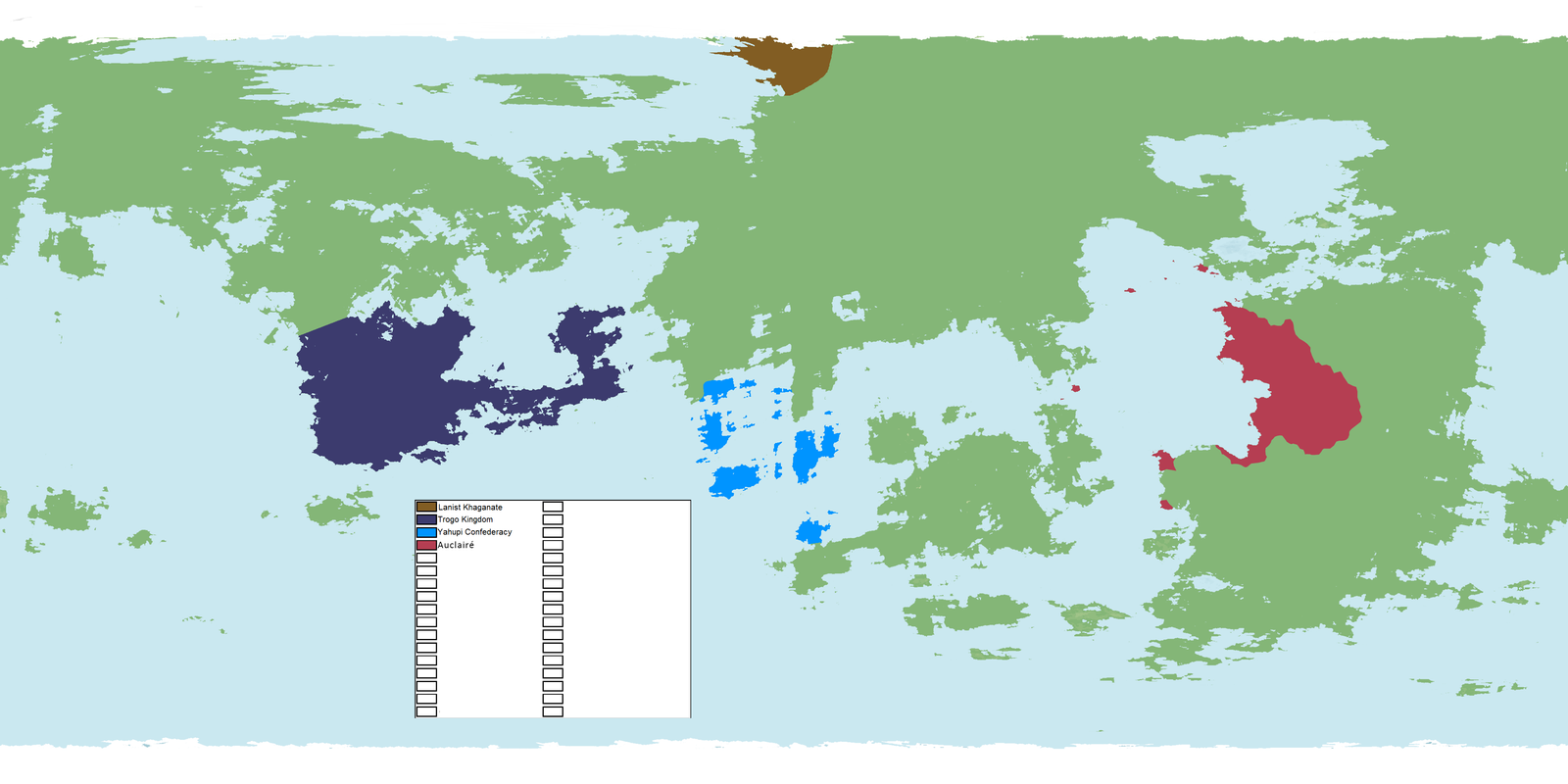
Description
Formerly a small kingdom on the Coet fe Roshé, the size and influence of the Auclairé bloomed six-hundred years ago with the Autoi fon Millé, a series of forced reforms against King Maushon of the House Debruie. The reforms of the Autoi fon Millé sought for the expansion of the rights of the merchants and the barons, who had become increasingly wealthy in the trade of spirits and in refined sugar across the continent with the importation of sugar cane from abroad into the Rouje Delta, the primary water-way at the heart of the kingdom. The expansion of rights from the king to the lesser nobility and even the merchant caste saw the formation of not just Parliamon fe Molliers, the Molliers being the title to describe barons which had expanded over time to include the wealthier urban elite who did not own rural land of their own.
The exacting history behind all of this though, is not an immediate thing.
For thousands of years the people of the region of Auclairé had lived in various degrees of prosperity and decline. Several thousand years ago the area was ruled by powerful tyrants who presided over the many independent city states and rural upland tribes. Settled primarily along the Rouje River, the Primonminne peoples existed in fluctuating periods of conflict with one another or alliance against the outsiders. The rule of the tyrant kings were soon eroded when their powers waned in internal civil disputes between the tyrants themselves and particularly powerful generals within their command. The tyrannical arrangement that had presided over many of the Primonminne cities were eroded and replaced with a broad diversity of self rule which included the rule of landed aristocracy, merchants, republics or states under direct democracy. The ascendant among them, the city of Trumine forged an alliance-turned Empire with the most prominent city-states of the Rouje lands, giving them the power to systematically extract tribute from the sister states from from the river, this organization came to be known as the Trumine Confederacy, the Trumine League, or the Trumine Empire.
To contemporary history, this became known through popular national image as the First Empire.
During the years of the Trumine Confederacy a class of intellectual aristocrats came to existence through the likes of still remembered writers and poets as Sonbarnis, Trillo, and Marcilus; though there were many others. This trifecta of poet and philosopher laureates came to define the later period of the Trumine Confederacy and founded the Academy of Trumine, or the Acadami fe Trumone which still stands today. The influence of the Academy was the education of the ruling youths to create a skilled group of bureaucrats, managers, and rulers with a firm grasp of ethics and morality to rule not just in present interests but in scope and perspective of all that had come before it, an idea which exists today still.
The Trumine were eventually dissolved after the League's defeat by the Vandwëllerian Empire from the north, which incorporated the league into its own for two centuries. But the accomplishments of the Trumine and its philosophical aristocrats were not entirely forgotten and the Empire even began to see its youths being trained at the academy. But at the closing of the Rocian Crisis the two-hundred-fifty year domination of the Rouje river lands came to an end with the collapse of the Empire and the people of the river were free again, but ushered into an era of petty kingdoms. Thus entering their dark age.
Owing to a loss in literacy through the stringent policies of feudal lords, not much had been written about this period. While a few court scribes kept a tract of history, the flourish of activity that had persisted during even imperial domination was not longer as persistent as it had been as for the next several centuries the local lords feuded over lands, or married into one another and dynasties inherited more and more land. The closing of this period came with the ascension of the House of Debruie to that of Supreme. Originating from the coastal province of Auclairé the ascension of the house gave rise to the formal Kingdom of Auclairé.
On winning supremacy of the area, King Aûbre I of the House of Debruie carried on further military victories abroad and expanded the scope of Auclairoise influence further along the river and the neighboring lands forming the Empire of Aûbre. But on his death the Empire split as his sons both took land, but could not determine which of them would reign supreme. This formed the Kingdoms of Verde in the south and the Kingdom of Môngé in the north.
And so the conditions were, until the Autoi fon Millé. After this act, the intermarriage between King Maushon of Auclairé and Queen Mary of Môngé bore the heir to both, Maushon II. Maushon II would prove to be an ineffectual ruler when he came to power, slow to act and hesitant to decide though described as being "delightfully personable and fond of wine and society". However the Parliamon fe Molliers was there to take up the slack and through negotiations were able to assume additional power to make up for the King's known inadequacies and expand their law into the new kingdom, and effectively and legally binding the two; albeit messily leaving a case in which two kings may exist in the realm at the same time.
The growth of the realm and as a fallout of a peasant's revolt known as the first Porter's War saw to a situation in which something must be done with an agitated peasant's class. The adjustment of power in the passed two generations of kings had seen the presence of political power drawn lower towards the commoner class and a mass strike by the tradesmen of Auclairé had lead to a fully armed revolt. As an answer to the question Sebastion Foluet fe Marsche recommended a bold proposal of colonization. Seeking to gain greater control of the spice and sugar trade he proposed to the Parliamon a bold adventure to seize the extent islands to the west as colonies to not only bring greater profit to the kingdom, but to dispatch many of the irritated peasant leaders as chiefs of the business ventures to the sugar and spice islands. The plan passed in large majority under the condition the colonies were established to also move much of the penal population out of country, the royal family also interceded on the pretense that the adventures be conducted as an extension of the Royal Trades Company, established by King Maushon to acquire funds for the treasury without taxation on the nobility.
The adventure started what has become recognized as the Second Empire. The colonial adventure also granted a certain naval supremacy over the southern kingdom, which in a war over inheritance saw to the annexation of the Kingdom of Verde into the fold and extension of Parliamon control over the country, seeing to not just an expansion of the Parliamon and an influx of the oligarchs of the south as replacement of the old nobility, but also the first case in which two kings of equal power came to rule in the country entering the first royal crisis, where unable to mitigate the crisis of two princes ruling as equal kings within the realm the crisis was drawn to a close after two armed battles between the competing royals and followed by threats from the Parliamon who had raised their own substantial army and threatened the estates of either if they did not comply. The legal compromise of Lesaise saw to the formation of the Royal Assembly, the organ by which the curious existence of multiple kings and of their family(/ies) may act as one if there was ever two or more existing out of ancient laws of inheritance.
For a time, the kingdom existed as-is until a major war with the northern Kingdom of Brosmon saw not just the inclusion of an additional colony to expand the scope of its vineyards, but severe debt and economic crisis. Bankruptcy was declared shortly after, and enraged at the inflation of the price of goods full revolt erupted in the nation. A full revolution was carried out and the monarchy and aristocratic Parliamon was replaced with the Nacionali Parliamon and the Offic Executif. This marked the transition of Auclairé into its modern form. Looking to break the aristocratic hold on the Acadami fe Trumone the new National Assembly and Executive ordered the mass reprinting of the academy's books in an effort to make broader the range of its education. The policy was halted though in the Counter-Revolutionary Wars in which the seven neighboring lands formed a league against the Revolutionary government bringing a twenty year war. Although the conflict was long and bloody, against all odds the Auclairmon won and not only beat its foes in the name of citizen government but expanded the borders of the nation. What might have ended the Auclairé Empire, even under its revolutionary form instead brought about its Third Empire, its current Republican Empire.
Education ambitions however came to a hold when the ascent of military notoriety in the government saw military supremacy in the state which saw the ascension of the dictatorship of Dulac Tramone. General Dulac, whose efforts had saw the widest success in the field during the wars demanded that their advantage be pressed and initiated a second massive war with the intent of establishing absolute supremacy. The war was drawn to an end when the Executive-General was killed in battle and the ramshackle government that came to power was forced to write a hasty peace agreeing to give up the immense gains made under Dulac in order to preserve the state.
In the century and a half after the war, Auclairé has existed as it had. The unforeseen consequences of the wars two-hundred years ago was the bleeding of citizen government among its neighbors. And while the reactionary kings of old may have made attempts to quash the exception to their rule, internal revolution and challenges from their own people kept them largely distracted to the point that they had assumed a model very much the same to Auclairé and not in question to itself.
Other
Auclairé economically is traditionally invested in its own vineyards and plantations. To the Auclairmon wine, sugar, and spices are the spiritual side of life manifested in physical form and it is said there is not a single Auclairmon who is unable to cook or doesn't have an opinion of at least three wines. Likewise, the consciousness of their own past as the road they traveled to the present, and the past's role in the future has left much of the country looking as it had six-hundred years ago. There is an extreme pride in the maintenance of old estates, districts, art, and so on. Though while stepping into Auclairé is like to walk into the past, it is not like the country is any less modern and in the current world they take happiness from consuming much of the same modern amenities as anyone else, computers, cellphones, cars, and airplanes. Militarily too, they are up to date and competitive with the rest. Though many of the old spice colonies they held long ago have been lost, there is still a presence of them on distant shores and the historical breadth and influence of the country means they pride themselves as being not only past-oriented, but cosmopolitan. The Acadami fe Trumone is still premiere among its universities, and in the intervening centuries has grown with the public initiatives to turn every citizen into a philosopher king.
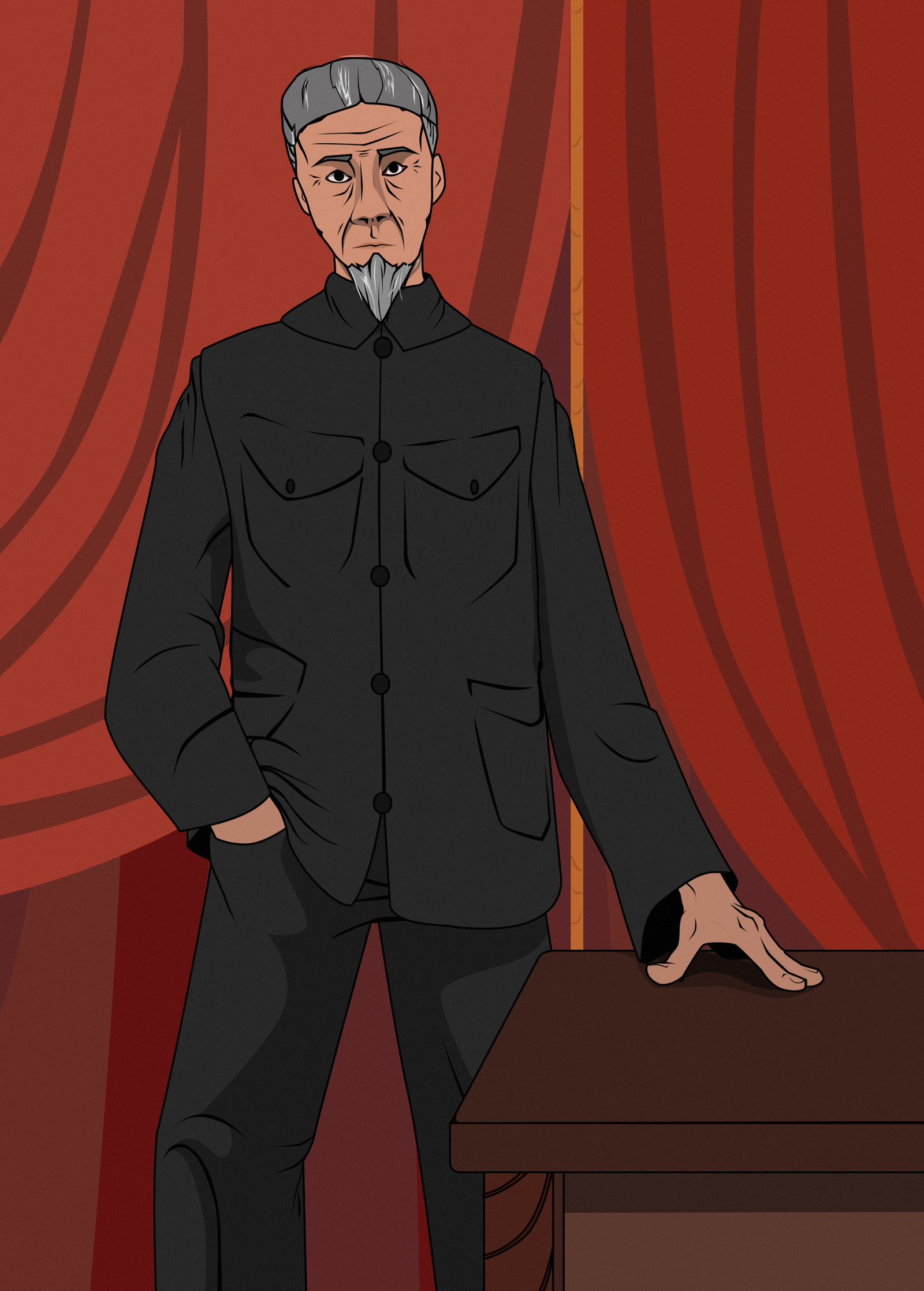
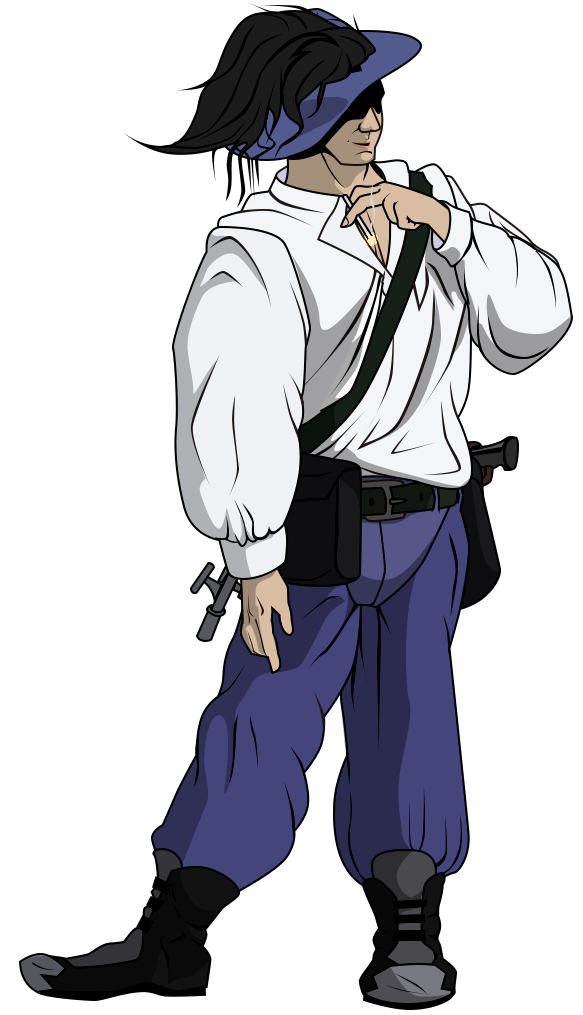
Since I'm getting ahead of myself, Auclairé "concept art":
Marinuis Gaarda:
Nation Name
Auclairé
Nation Flag, anthem
I don't like to claim existing IRL music as anthem, but since you ask
Map Location
Description
Formerly a small kingdom on the Coet fe Roshé, the size and influence of the Auclairé bloomed six-hundred years ago with the Autoi fon Millé, a series of forced reforms against King Maushon of the House Debruie. The reforms of the Autoi fon Millé sought for the expansion of the rights of the merchants and the barons, who had become increasingly wealthy in the trade of spirits and in refined sugar across the continent with the importation of sugar cane from abroad into the Rouje Delta, the primary water-way at the heart of the kingdom. The expansion of rights from the king to the lesser nobility and even the merchant caste saw the formation of not just Parliamon fe Molliers, the Molliers being the title to describe barons which had expanded over time to include the wealthier urban elite who did not own rural land of their own.
The exacting history behind all of this though, is not an immediate thing.
For thousands of years the people of the region of Auclairé had lived in various degrees of prosperity and decline. Several thousand years ago the area was ruled by powerful tyrants who presided over the many independent city states and rural upland tribes. Settled primarily along the Rouje River, the Primonminne peoples existed in fluctuating periods of conflict with one another or alliance against the outsiders. The rule of the tyrant kings were soon eroded when their powers waned in internal civil disputes between the tyrants themselves and particularly powerful generals within their command. The tyrannical arrangement that had presided over many of the Primonminne cities were eroded and replaced with a broad diversity of self rule which included the rule of landed aristocracy, merchants, republics or states under direct democracy. The ascendant among them, the city of Trumine forged an alliance-turned Empire with the most prominent city-states of the Rouje lands, giving them the power to systematically extract tribute from the sister states from from the river, this organization came to be known as the Trumine Confederacy, the Trumine League, or the Trumine Empire.
To contemporary history, this became known through popular national image as the First Empire.
During the years of the Trumine Confederacy a class of intellectual aristocrats came to existence through the likes of still remembered writers and poets as Sonbarnis, Trillo, and Marcilus; though there were many others. This trifecta of poet and philosopher laureates came to define the later period of the Trumine Confederacy and founded the Academy of Trumine, or the Acadami fe Trumone which still stands today. The influence of the Academy was the education of the ruling youths to create a skilled group of bureaucrats, managers, and rulers with a firm grasp of ethics and morality to rule not just in present interests but in scope and perspective of all that had come before it, an idea which exists today still.
The Trumine were eventually dissolved after the League's defeat by the Vandwëllerian Empire from the north, which incorporated the league into its own for two centuries. But the accomplishments of the Trumine and its philosophical aristocrats were not entirely forgotten and the Empire even began to see its youths being trained at the academy. But at the closing of the Rocian Crisis the two-hundred-fifty year domination of the Rouje river lands came to an end with the collapse of the Empire and the people of the river were free again, but ushered into an era of petty kingdoms. Thus entering their dark age.
Owing to a loss in literacy through the stringent policies of feudal lords, not much had been written about this period. While a few court scribes kept a tract of history, the flourish of activity that had persisted during even imperial domination was not longer as persistent as it had been as for the next several centuries the local lords feuded over lands, or married into one another and dynasties inherited more and more land. The closing of this period came with the ascension of the House of Debruie to that of Supreme. Originating from the coastal province of Auclairé the ascension of the house gave rise to the formal Kingdom of Auclairé.
On winning supremacy of the area, King Aûbre I of the House of Debruie carried on further military victories abroad and expanded the scope of Auclairoise influence further along the river and the neighboring lands forming the Empire of Aûbre. But on his death the Empire split as his sons both took land, but could not determine which of them would reign supreme. This formed the Kingdoms of Verde in the south and the Kingdom of Môngé in the north.
And so the conditions were, until the Autoi fon Millé. After this act, the intermarriage between King Maushon of Auclairé and Queen Mary of Môngé bore the heir to both, Maushon II. Maushon II would prove to be an ineffectual ruler when he came to power, slow to act and hesitant to decide though described as being "delightfully personable and fond of wine and society". However the Parliamon fe Molliers was there to take up the slack and through negotiations were able to assume additional power to make up for the King's known inadequacies and expand their law into the new kingdom, and effectively and legally binding the two; albeit messily leaving a case in which two kings may exist in the realm at the same time.
The growth of the realm and as a fallout of a peasant's revolt known as the first Porter's War saw to a situation in which something must be done with an agitated peasant's class. The adjustment of power in the passed two generations of kings had seen the presence of political power drawn lower towards the commoner class and a mass strike by the tradesmen of Auclairé had lead to a fully armed revolt. As an answer to the question Sebastion Foluet fe Marsche recommended a bold proposal of colonization. Seeking to gain greater control of the spice and sugar trade he proposed to the Parliamon a bold adventure to seize the extent islands to the west as colonies to not only bring greater profit to the kingdom, but to dispatch many of the irritated peasant leaders as chiefs of the business ventures to the sugar and spice islands. The plan passed in large majority under the condition the colonies were established to also move much of the penal population out of country, the royal family also interceded on the pretense that the adventures be conducted as an extension of the Royal Trades Company, established by King Maushon to acquire funds for the treasury without taxation on the nobility.
The adventure started what has become recognized as the Second Empire. The colonial adventure also granted a certain naval supremacy over the southern kingdom, which in a war over inheritance saw to the annexation of the Kingdom of Verde into the fold and extension of Parliamon control over the country, seeing to not just an expansion of the Parliamon and an influx of the oligarchs of the south as replacement of the old nobility, but also the first case in which two kings of equal power came to rule in the country entering the first royal crisis, where unable to mitigate the crisis of two princes ruling as equal kings within the realm the crisis was drawn to a close after two armed battles between the competing royals and followed by threats from the Parliamon who had raised their own substantial army and threatened the estates of either if they did not comply. The legal compromise of Lesaise saw to the formation of the Royal Assembly, the organ by which the curious existence of multiple kings and of their family(/ies) may act as one if there was ever two or more existing out of ancient laws of inheritance.
For a time, the kingdom existed as-is until a major war with the northern Kingdom of Brosmon saw not just the inclusion of an additional colony to expand the scope of its vineyards, but severe debt and economic crisis. Bankruptcy was declared shortly after, and enraged at the inflation of the price of goods full revolt erupted in the nation. A full revolution was carried out and the monarchy and aristocratic Parliamon was replaced with the Nacionali Parliamon and the Offic Executif. This marked the transition of Auclairé into its modern form. Looking to break the aristocratic hold on the Acadami fe Trumone the new National Assembly and Executive ordered the mass reprinting of the academy's books in an effort to make broader the range of its education. The policy was halted though in the Counter-Revolutionary Wars in which the seven neighboring lands formed a league against the Revolutionary government bringing a twenty year war. Although the conflict was long and bloody, against all odds the Auclairmon won and not only beat its foes in the name of citizen government but expanded the borders of the nation. What might have ended the Auclairé Empire, even under its revolutionary form instead brought about its Third Empire, its current Republican Empire.
Education ambitions however came to a hold when the ascent of military notoriety in the government saw military supremacy in the state which saw the ascension of the dictatorship of Dulac Tramone. General Dulac, whose efforts had saw the widest success in the field during the wars demanded that their advantage be pressed and initiated a second massive war with the intent of establishing absolute supremacy. The war was drawn to an end when the Executive-General was killed in battle and the ramshackle government that came to power was forced to write a hasty peace agreeing to give up the immense gains made under Dulac in order to preserve the state.
In the century and a half after the war, Auclairé has existed as it had. The unforeseen consequences of the wars two-hundred years ago was the bleeding of citizen government among its neighbors. And while the reactionary kings of old may have made attempts to quash the exception to their rule, internal revolution and challenges from their own people kept them largely distracted to the point that they had assumed a model very much the same to Auclairé and not in question to itself.
Other
Auclairé economically is traditionally invested in its own vineyards and plantations. To the Auclairmon wine, sugar, and spices are the spiritual side of life manifested in physical form and it is said there is not a single Auclairmon who is unable to cook or doesn't have an opinion of at least three wines. Likewise, the consciousness of their own past as the road they traveled to the present, and the past's role in the future has left much of the country looking as it had six-hundred years ago. There is an extreme pride in the maintenance of old estates, districts, art, and so on. Though while stepping into Auclairé is like to walk into the past, it is not like the country is any less modern and in the current world they take happiness from consuming much of the same modern amenities as anyone else, computers, cellphones, cars, and airplanes. Militarily too, they are up to date and competitive with the rest. Though many of the old spice colonies they held long ago have been lost, there is still a presence of them on distant shores and the historical breadth and influence of the country means they pride themselves as being not only past-oriented, but cosmopolitan. The Acadami fe Trumone is still premiere among its universities, and in the intervening centuries has grown with the public initiatives to turn every citizen into a philosopher king.
Since I'm getting ahead of myself, Auclairé "concept art":
Marinuis Gaarda:
In
Precipice of War - The Big Leagues of NRP (Only generous tippers need apply)
→
8 yrs ago
Forum: Nation Roleplay
-Wait, I fucked up-
© 2007-2026