Current
First writing contest after my hiatus went well. Now to start planning the next. Keep an eye on the sidebar!
6
likes
3 mos ago
*blinks* how long did I sleep?
8
likes
12 mos ago
Away from home until the end of July.
2 yrs ago
Away from home between October 26th and November 10th. Contests will return when I'm back home!
2
likes
2 yrs ago
Don't forget to vote in the writing contest! The link is in the sidebar <3
2
likes
Bio
Hello everyone. I'm Dutch, a mother of a 12-year old boy and I love both rp-ing and writing.
I've been writing and roleplaying in Dutch and English since 2002. I joined the RolePlayer Guild in 2014 and since May 2020 I'm one of the contests mods.
There are times I don't have much creative energy and will be silent for a while, but in the very least I will try to keep the writing contests going.
If I haven't replied in a while, feel free to poke me. Genuinly, I sometimes need reminders that you are waiting for a reply. I don't ghost on purpose, I promise. Time is just a weird thing sometimes, and if something happened 3 days ago, 3 weeks ago or 3 months ago can feel pretty much the same and I often don't realize how much time passed since my last reply. And if I read your reply and accidentally closed the tab there is a good chance I might forget I was supposed to reply because I lost the visual reminder T_T
About Jirachi's whishes, can he give 3 in total or 3 every time he wakes up from hibernation when the comet comes, or is it unlimited? I think I read that in the manga Jirachi can only grant 3 wishes because they are written on the tags and once a tag is used it's used, but I don't know if the same limitations were used in the anime.
I shatter the wall between us, author and reader become characters in the story. Together we breach a literary wall which both was and never was. For reality is an illusion dear reader, even the ones I create. And perhaps in an alternate reality, the story does not end here.
No. The writer shook his head. His fingers standing idle at the keys. No, it would not do. Nothing so short would win great acclaim, nothing so simple and yet paradoxically complex. It was something his cheeky grin made within moments of seeing the prompt, raw and unrefined, a joking blank verse poem that regretful fingers had typed. The writer sat there, thinking, pondering, searching the soul for beauty and mind for wit. It had to be clever, something to impress his peers, and like a wee ant amongst the giants, he wracked his brain for thoughts. What cleverness could he have? Look deep into the mind, hoping to find the inspiration of his muses with ever breath.
In another reality, the story does not end here.
The looking glass began to crack, splintering across the mirrored sky like lightening reversed. What was up became down, and what was down became up; a reversal of what is and what was and hints of what will be. The truth revealed the beauty of it in one eye, and the ugliness which offends in the other. A hand brought up to touch a face disfigured, trembling unsteady as claws raked across flesh. A gasp, the terror, the horror, oh how did the wicked truth reveal. No, it cannot be, what trickery was this? What treason, what treachery? In denial the mind rejected it, the psyche shrieked out in vain, but vanity was its own reward. A malicious heart as black as the pitiless eye that stared viciously back. she was pretty once, but now look, look upon how hideous this accursed device had made her!
Look away, it lies! It show you nothing more than lies, was not your cheek tender to the touch? was it not smooth and supple? Firm with the promise of youth eternal. Skin that glowed paler than the moon, and more radiant than the sun, the envy of the stars above. Perfection without flaw, every pore gleaming of attraction. Gaze upon the visage of a goddess, immeasurable beauty beyond words, that which poets cannot capture. Yet a single gaze could capture the hearts of men. Imagine it so, that with one glance, a flutter lashes from an iridescent eye, rendered the mind numb to all other sights. Look into those pupils deep and become entranced in the swirls of colours. Inch forward, closer and closer still, still the heart that longs aching in the chest. Look. look and tell the goddess the truth from quaking lips.
A gift bestowed. A mirror ancient as e
Only the wise may see the direction the story begins.
No, no, a work left unfinished. The rest never came, but what a novel idea it would have been. The last line was the first he had written, after deleting the first failed attempt at greatness. And from there the story wrote itself, folding and unfolding at fast fingertips, exploding with letters and words as ideas flowed out like lightning. The thunderous pauses with every tap of the spacebar, and the flash of the blinking cursor which marks the head of the literary storm. Though like all storms it died out, for the way the story was to be structured, the way it was to be told, was to be read first from top to bottom by the reader, until the very last line. Yes, it was the last line which actually implied the story was to be read in reverse, from the bottom line to the paragraph above, and so forth until indeed the line at the beginning, the remnant of his silly poem, was to remain in the minds of the readers amazed and entertained at the ingenuity of a story which altered its meaning when read backwards or forwards depending on the perception the reader had. Alas, the story failed to take flight, and died out as a dark muse emerged from the mirror.
A terrible whisper, from the computer screen as the Writer stared at the abyssal grey. A smiling shadow, a ripple across the labyrinth of white words against the ebony shade. Yes, it was madness, a madness that was purely refreshing. Like the world was just a dream, and he was waking for the first time. Eyes wide opened, a clear twinkle in his eye. So began a new story, one word at a time.
Welcome to Morpheus. Live your fantasies.
A soft female voice greeted guests over and over again. A constant cycle as the sound system repeated its loop, the unceasing track reminding patrons where exactly they were and what purpose there was to be here. It was a clean facility, sterile and pristine, every bit of from the plastic polymer walls humming with hypnotic lights to the pulsating floor tiles which rippled with every barefoot step man took. He was washed and nude, as was protocol, disallowed to bring anything but his own body into the white room. Any contamination had been removed in the room behind him, an airlock sealed in negative pressure as he recalled his dead skin cells being brushed and scraped off his body. Hair shaved and the roots plucked, a cool gel applied to orifices and his eyes disinfect and destroy any cellular debris, it stung, but for the chance of a lifetime, it was worth it. Like the namesake god of antiquity, Morpheus provided a way for someone to experience their deepest desires, all in this very surreal room.
Morpheus began as the brainchild of a neuroscientist by the name of Mitchell who created a dream. And within the dream Mitchell discovered the clarity of thought. To delve further inwards into the very thought processes, the very signals that process thought, until the scientist understood how his own brain functioned. Not only how the complex neuronal pathways worked, but why, and when, and what was needed to alter the bridges and weave a completely new memory. But it was not just a memory, no for by tampering with the physical mind, Mitchell had unwitting unlocked the secrets of experience. For every moment in time was infinitesimally delayed as the brain works on the delayed lag between what is current and what was passed by currents of electrical impulses. So no human truly experiences reality by the moments but rather by the memories the brain creates which in turn build the world a man is immersed in. And this, this is why history knows not of Mitchell's last name, for the epiphany drove him insane. His colleagues turned on him and placed the mad neuroscientist to be regarded as a psychotic footnote in history. They thought the world was safe from his madness, but they thought wrong.
Mitchell had his revenge, as his notes detailed the revelation he had within his dream. It was only a matter of time before they resurfaced in the hands of one with the means and the power to pursue the mad writings of a man who lost his mind trying to mind it. A Merely decades ago humanity had tinkered with the budding technology of augmented reality, the then novel concept a leap forward in the path to Mitchell's dream. Augmented reality for the masses was wasted on games, causing people to forget that reality was harder than their glorified augmentations, that real life still went on and only fooling the eyes to believe a monster was there was not enough. So within months, reality was broken down and replaced, augmentation became old news, and virtual reality became the standard cutting edge. For there humanity was willing to blind itself and completely shut off reality itself to become immersed in a world they felt they could reach out and grab. Though they found themselves very disappointed that they punished themselves with high grapes and low waters. Was this not what they wanted? A torment in knowing everything was just an illusion? but as technology continued to evolve, illusions too festered and became old hat.
it was only within the last three years of the Morpheus project that humanity saw the ultimate experience. Based on his esoteric writings, scientists were able to decrypt and decode the ramblings of a madman into science. With cerebral stimulations and the right dose of interneuron regulatory drugs supplied, the right combination of notes would create an experience of information enough to fool the mind into thinking it was indeed the reality being perceived. The trick of course was first finding the correct combination for everyone, as the brain was a unique system and not all develop the same connections from person to person to person. As such it was a process in first recording the activity of the brain. The first few sessions were to establish the baseline, hours of walking through the subject and having them recall and recollection experience they've had before in their lives to modulate and mimic the very same findings in order to fool the brain. A boring an tedious requirement to use the Morpheus chambers, but the man had persisted this far, too far to be denied to experience the fruits of his long labour.
Welcome to Morpheus. Live your fantasies.
Subject Biometrics Detected. Welcome back Subject 26120. Please standby, Authorization Received. Our systems are currently preloading your neuronal data. Thank you.
Processing complete. Please proceed to the chair. Remain calm while the process begins. Thank you.
Welcome to Morpheus. Live your fantasies.
Who voiced her? That calming female voice, robotic but almost motherly in a sense. Reassuring and comforting, the guidance slow and patient, with the same looping tagline she seemed to endorse. Yes, artificial intelligence also boomed in tandem with the rise of the hyper-computing needed to run the Morpheus room, but all that was behind the man who just wanted to finally try the device at last. It was just as last time as he laid his body down on the waiting chair, reclined back as his arms and legs rested into place. A metal cap descending down upon the top of his skull from the pneumatic arm. Now for the next part that had always freaked him out, the needles, injecting themselves into his head through the tiny holes in his skull they made months ago and had filled with a strange sealing putty. He'd never get used to the sensation of having his brain imprisoned by those things, one move was all that it took for permanent brain damage. Which is why all subjects were electrically paralyzed the moment they sat down into the chair to avoid movement. It was also to stop any jerky reactions while in the fantasy world which may injure the patient, though such paralysis also required supplemental oxygen and nutrition to be administered which was the next series of tubes being injected into his wrists. And when the sounds of the heart monitor began to bleep, the man knew it wasn't long until he would be put under the spell of Morpheus.
Welcome to Morpheus. Live your fantasies.
Battle. He was a knight from the legends of old. Upon his gallant steed he rode. His enemy in sight, his sword drawn and waved proudly in hand. Something he had never done because they did not exist, slaying a dragon, but this machine, this wonderful machine had created this world for him to experience it. An amalgam of his own imagination of what it would be like, and the feelings he demonstrated when he experienced courage and pride, of superiority and looking down at his foe as the threat seemed so easily vanquished. Like the legendary heroes, he clipped the dragon's wing, sharp blade cutting into the scales and flesh as blood spurted out to anoint him victor. His hearty laugh followed a warcry. What a sensation! Oh it was worth it! And there would be a tomorrow to try the Morpheus room again, and a tomorrow after that, and one after that. Each day to experience a new pleasure as the power of the human mind was unlocked. So fight, fight until you awaken. And you know when you're awake, because in this simulation, you were unbeatable and aren't confined to a chair.
Welcome to Morpheus. Live your fantasies.
A soft female voice greeted guests over and over again. A constant cycle as the sound system repeated its loop, the unceasing track reminding patrons where exactly they were and what purpose there was to be here. It was a clean facility, sterile and pristine, every bit of from the plastic polymer walls humming with hypnotic lights to the pulsating floor tiles which rippled with every barefoot step man took. He was washed and nude, as was protocol, disallowed to bring anything but his own body into the white room. Any contamination had been removed in the room behind him, an airlock sealed in negative pressure as he recalled his dead skin cells being peeled and removed off his body. Hair shaved and the roots plucked, a cool gel applied to orifices and his eyes disinfect and destroy any cellular debris, it stung, but for the chance of a lifetime, it was worth it. Like the namesake god of antiquity, Morpheus provided a way for someone to experience their deepest desires, all in this very surreal room.
Welcome to Morpheus. Live your fantasies.
Subject Biometrics Detected. Welcome back Subject 26120. Please standby, Authorization Received. Our systems are currently preloading your neuronal data. Thank you.
Processing complete. Please proceed to the chair. Remain calm while the process begins. Thank you.
Welcome to Morpheus. Live your fantasies.
Who voiced her? That calming female voice, robotic but almost motherly in a sense. Reassuring and comforting, the guidance slow and patient, with the same looping tagline she seemed to endorse. Yes, artificial intelligence also boomed in tandem with the rise of the hyper-computing needed to run the Morpheus room, but all that was behind the man who just wanted to finally try the device at last. It was just as last time as he laid his body down on the waiting chair, reclined back as his arms and legs rested into place. A metal cap descending down upon the top of his skull from the pneumatic arm. Now for the next part that had always freaked him out, the needles, injecting themselves into his head through the tiny holes in his skull they made months ago and had filled with a strange sealing putty. He'd never get used to the sensation of having his brain imprisoned by those things, one move was all that it took for permanent brain damage. Which is why all subjects were electrically paralyzed the moment they sat down into the chair to avoid movement. It was also to stop any jerky reactions while in the fantasy world which may injure the patient, though such paralysis also required supplemental oxygen and nutrition to be administered which was the next series of tubes being injected into his wrists. And when the sounds of the heart monitor began to bleep, the man knew it wasn't long until he would be put under the spell of Morpheus once more.
Welcome to Morpheus. Live your fantasies.
Space. He was in space. Which direction was up? The weightlessness in floating, the beauty of the stars as far and bright as your eyes could see it was nearly blinding. Something he had always dreamed of, being in space, but this machine, this wonderful machine had created this world for him to experience it. An amalgam of his own imagination of what it would be like, and the feelings he demonstrated when he experienced awe and wonder, of swimming and looking down at the world as the planet seemed so distant. His laugh unheard in the vacuum of space. What insight! Oh it was worth it! And there would be a tomorrow to try the Morpheus room again, and a tomorrow after that, and one after that. Each day to experience a new pleasure as the power of the human mind was unlocked. So look, look until you awaken. And you know when you're awake, because in this simulation you could see the beauty of the galaxy, and aren't confined to a chair.
Welcome to Morpheus. Live your fantasies.
A soft female voice greeted guests over and over again. A constant cycle as the sound system repeated its loop, the unceasing track reminding patrons where exactly they were and what purpose there was to be here. It was a clean facility, sterile and pristine, every bit of from the plastic polymer walls humming with hypnotic lights to the pulsating floor tiles which rippled with every barefoot step man took. He was washed and nude, as was protocol, disallowed to bring anything but his own body into the white room. Any contamination had been removed in the room behind him, an airlock sealed in negative pressure as he recalled his dead skin cells being peeled off his body. Hair shaved and the roots plucked, a cool gel applied to orifices and his eyes disinfect and destroy any cellular debris, it burned as he blinked his eyes, but for the chance of a lifetime, it was worth it. Like the namesake god of antiquity, Morpheus provided a way for someone to experience their deepest desires, all in this very surreal room.
Welcome to Morpheus. Live your fantasies.
Subject Biometrics Detected. Welcome back Subject 26120. Please standby, Authorization Received. Our systems are currently preloading your neuronal data. Thank you.
Processing complete. Please proceed to the chair. Remain calm while the process begins. Thank you.
Welcome to Morpheus. Live your fantasies.
Who voiced her? That calming female voice, robotic but almost motherly in a sense. Reassuring and comforting, the guidance slow and patient, with the same looping tagline she seemed to endorse. Yes, artificial intelligence also boomed in tandem with the rise of the hyper-computing needed to run the Morpheus room, but all that was behind the man who just wanted to finally try the device at last. It was just as last time as he laid his body down on the waiting chair, reclined back as his arms and legs rested into place. A metal cap descending down upon the top of his skull from the pneumatic arm. Now for the next part that had always freaked him out, the needles, injecting themselves into his head through the tiny holes in his skull they made months ago and had filled with a strange sealing putty. He'd never get used to the sensation of having his brain imprisoned by those things, one move was all that it took for permanent brain damage. Which is why all subjects were electrically paralyzed the moment they sat down into the chair to avoid movement. It was also to stop any jerky reactions while in the fantasy world which may injure the patient, though such paralysis also required supplemental oxygen and nutrition to be administered which was the next series of tubes being injected into his wrists. And when the sounds of the heart monitor began to bleep, the man knew it wasn't long until he would be put under the spell of Morpheus once more.
Welcome to Morpheus. Live your fantasies.
Falling. He was falling. From the blue skies above. The wind rushing in his hair, and the sound deafening to the ear. Something he had never done, sky diving, but this machine, this wonderful machine had created this world for him to experience it. An amalgam of his own imagination of what it would be like, and the feelings he demonstrated when he experienced fear and excitement, of falling and looking down at the world as the ground seemed so distant. Like the comic book heroes he felt the surge of power, tucking his arms and legs in straight as he sped down like a bullet to make impact. Pulling up at the last moment to find himself propelled in the direction he chose, truly like a hero in flight. His laugh scattered behind him like the sonic blast. What a rush! Oh it was worth it! And there would be a tomorrow to try the Morpheus room again, and a tomorrow after that, and one after that. Each day to experience a new pleasure as the power of the human mind was unlocked. So fall, fall until you awaken. And you know when you're awake, because in this simulation you could feel the wind in your hair and aren't confined to a chair.
Welcome to Morpheus. Live your fantasies.
A soft female voice greeted guests over and over again. A constant cycle as the sound system repeated its loop, the unceasing track reminding patrons where exactly they were and what purpose there was to be here. It was a clean facility, sterile and pristine, every bit of from the plastic polymer walls humming with hypnotic lights to the pulsating floor tiles which rippled with every barefoot step man took. He was washed and nude, as was protocol, disallowed to bring anything but his own body into the white room. Any contamination had been removed in the room behind him, an airlock sealed in negative pressure as he recalled his dead skin cells being peeled off his body. Hair shaved and the roots plucked, a cool gel applied to orifices and his eyes disinfect and destroy any cellular debris, it burned as he blinked his eyes, but for the chance of a lifetime, it was worth it. Like the namesake god of antiquity, Morpheus provided a way for someone to experience their deepest desires, all in this very surreal room.
Welcome to Morpheus. Live your fantasies.
Subject Biometrics Detected. Welcome back Subject 26120. Please standby, Authorization Received. Our systems are currently preloading your neuronal data. Thank you.
Processing complete. Please proceed to the table. Remain calm while the process begins. Thank you.
Welcome to Morpheus. Live your fantasies.
Who voiced her? That calming female voice, robotic but almost motherly in a sense. Reassuring and comforting, the guidance slow and patient, with the same looping tagline she seemed to endorse. Yes, artificial intelligence also boomed in tandem with the rise of the hyper-computing needed to run the Morpheus room, but all that was behind the man who just wanted to finally try the device at last. It was just as last time as he laid his body down on the waiting table, reclined back as his arms and legs were locked into place. A metal cap descending down upon the top of his skull from the pneumatic arm. Now for the next part that had always freaked him out, the needles, injecting themselves into his head through the tiny holes in his skull they made months ago and had filled with a strange sealing putty. He'd never get used to the sensation of having his brain imprisoned by those things, one move was all that it took for permanent brain damage. Which is why all subjects were electrically paralyzed the moment they got on the table to avoid movement. It was also to stop any jerky reactions while in the fantasy world which may injure the patient, though such paralysis also required supplemental oxygen and nutrition to be administered which was the next series of tubes being injected into his wrists. And when the sounds of the heart monitor began to bleep, the man knew it wasn't long until he would be put under the spell of Morpheus once more.
Welcome to Morpheus. Live your fantasies.
Diving. He was diving. Into the blue water below. The water wetting his hair, and the sound crashing in his ear. A memory of swimming underneath a waterfall, with the one who got away, but this machine, this wonderful machine had created this world for him to experience it. An amalgam of his own imagination of what it would be like, and the feelings he demonstrated when he experienced love and happiness, of falling in the cool water of love and looking at all the world in your beloved's eyes. The honeymoon they never had, the one of his dreams who left him. Splashing the waters as he ran towards the One he loved, arms holding dearly, and a kiss planted across the lips. A passion unmet ignited, and love left him breathless. What heaven! Oh it was worth it! And there would be a tomorrow to try the Morpheus room again, and a tomorrow after that, and one after that. Each day to experience a new pleasure as the power of the human mind was unlocked. So love, love until you awaken. And you know when you're awake, because in this simulation you could ask the one you love for anything and aren't confined to a table.
Welcome to Morpheus. Live your fantasies.
A soft female voice greeted guests over and over again. A constant cycle as the sound system repeated its loop, the unceasing track reminding patrons where exactly they were and what purpose there was to be here. It was a clean facility, sterile and pristine, every bit of from the plastic polymer walls humming with hypnotic lights to the pulsating floor tiles which rippled with every barefoot step man took. He was washed and nude, as was protocol, disallowed to bring anything but his own body into the white room. Any contamination had been removed in the room behind him, an airlock sealed in negative pressure as he recalled his dead skin cells being peeled off his body. Hair shaved and the roots plucked, a cool gel applied to orifices and his eyes disinfect and destroy any cellular debris, it burned as he blinked his eyes, but for the chance of a lifetime, it was worth it. Like the namesake god of antiquity, Morpheus provided a way for someone to experience their deepest desires, all in this very surreal room.
Welcome to Morpheus. Live your fantasies.
Subject Biometrics Detected. Welcome back Subject 26120. Please standby, Authorization Received. Our systems are currently preloading your neuronal data. Thank you.
Processing complete. Please proceed to the table. Remain calm while the process begins. Thank you.
Welcome to Morpheus. Live your fantasies.
Who voiced her? That calming female voice, robotic but almost motherly in a sense. Reassuring and comforting, the guidance slow and patient, with the same looping tagline she seemed to endorse. Yes, artificial intelligence also boomed in tandem with the rise of the hyper-computing needed to run the Morpheus room, but all that was behind the man who just wanted to finally try the device at last. It was just as last time as he laid his body down on the waiting table, reclined back as his arms and legs were locked into place. A metal cap descending down upon the top of his skull from the pneumatic arm. Now for the next part that had always freaked him out, the needles, injecting themselves into his head through the tiny holes in his skull they made months ago and had filled with a strange sealing putty. He'd never get used to the sensation of having his brain imprisoned by those things, one move was all that it took for permanent brain damage. Which is why all subjects were electrically paralyzed the moment they got on the table to avoid movement. It was also to stop any jerky reactions while in the fantasy world which may injure the patient. How many times had he does done this now? Three? Four? Everything had fallen into routine by now hadn't it. And when the sounds of the heart monitor began to bleep, the man knew it wasn't long until he would be put under the spell of Morpheus once more.
Welcome to Morpheus. Live your fantasies.
Writing. He was writing. Of all things to do in a fantasy chamber, why did he want to be here? Sitting at a desk and staring at the blinking cursor. He was waiting for something, his muse perhaps, to come by with another kiss. They were married now, the pictures of them together smiling scattered across his desk. A memory of remembering what never was and only occurred in his dreams. But this machine, this wonderful machine had created this world for him to experience it. An amalgam of his own imagination of what it would be like, and the feelings he demonstrated when he experienced grief and bitterness, of losing and lamenting the hopes and dreams you held so dearly to your heart. It was just a dream, all of it a falsehood made by the wishful mind, not a bit of it was real, just a simulation of love and happiness, of bravery and pride, of awe and wonder, of excitement and fear. It was foolishness to think the Morpheus room was better than reality, because the moment you stepped away from it, reality snapped back to tear you up, blind your eyes, twist your arms, and leave you gasping for breath as it crushed you. It left you heartbroken. What trickery! Oh it was wicked abuse! And there would be another fool tomorrow to try the Morpheus room again, and another after that, and one after that. Each day to experience a new lie as the desires of the human mind was exploited. So Awaken, Awaken and see what they have done to you!
Welcome to Morpheus. Live your fantasies.
Subject 26120 has been compliant with our Neural Sedation Program. Although there were some instances where subject was able to perceive changes done to him. We were able to successfully counter most of the effects despite his body's effort to warn. The skin grafts and eyes have already been claimed the moment the system went live. Currently three of four limbs have also been sold for bioaugmentation. Ten minutes remain on the auction for his Lungs. Uploading Offer of Subject 26120's Heart. please Standby, auction for part to commence in twelve minutes.
Welcome to Morpheus. Live your fantasies.
And when the sounds of the heart monitor stopped, he was dead.
It was the horror of the Morpheus project, Mitchell's mind dark and twisted. A way to farm organs, harvesting them from unsuspecting nobodies. Enticed into the program how they would chase after a dream just as Mitchell did. Their dreams would eventually turn into nightmares from which they would never wake. And Mitchell, well, he had accomplished this dream of his; a nightmarish karma as a befitting punishing those who wished toy with reality. A sense of poetic justice, for the psychopath perhaps, but indeed he was locked away in the madhouse for these very thoughts. his colleagues feared his choking grasp on reality, unhinged and delusional, and yet perhaps, just perhaps, remotely entertaining to analyze just how off the deep end his mind was.
And to every false fantasy, there exists a slice of truth, peppered in like a grain of salt. Poured in like the spirit, and then baked tongue-in-cheek with a sly wink and nod to the Unseen Ones. For there are the many Mitchells of this world, the dreamers and gods of their own fantasy worlds, and where the mad ones gathered, they wove together their masterpieces. They made reality, of their minds, within their minds, and then let it invade the minds of others. That was the nature of their reality, every changing and yet constant, bound be the rules and yet free to be made as the heart desired. For reality is often merely words on a page.
At first, that’s all I can see. I am surrounded by an infinite void. I try to move, but I am formless. I try to yell, but I am voiceless. Is this death?
A light! In the distance! Small, but it’s there. It burns a dull red. Can I approach it? No… it approaches me. It grows closer, larger, deeper. Soon this dim light has all but enveloped me.
Suddenly, I am standing. I feel a cool breeze on my skin and my neck tingles. I am clad in armor under the light of the moon, sword and shield in hand. Am I to fight? I can see no enemy.
The light rises, taking the shape of desolate structures. I am encircled by the smoldering skeleton of what was once a city. Wait. Not just a city. My city.
The city I swore to protect.
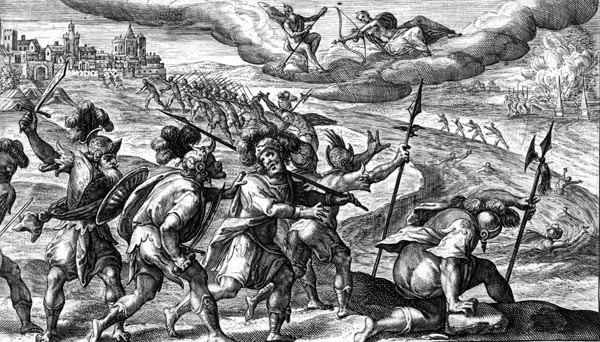
Troy.
Agenor awoke, sitting up with a violent start. He gasped for air, struggling to discern his surroundings. His eyes adjusted to the dark and it took only a moment for him to regain his composure, his breath steadying. In the sheets beside him, his wife sighed but did not stir. The tired young warrior swung his legs over the bed and stood up, stretching his limbs and releasing an unwelcome yawn. The room was black as pitch, illuminated by the moon alone. Thin drapes waved in a gentle breeze, and all was silent. Agenor massaged his sore arms and walked through the floating drapes onto the balcony overlooking his street. His house sat on a hill on the inland side of the city, providing a clear view of almost all of Troy. To the west, and farther uphill, King Priam’s palace loomed in the darkness, its silhouette outlined by a thousand stars. Looking east, he could see the market district, the massive Scaean gate embedded in the city’s towering walls, and the ocean, glimmering faintly in the light of the moon. The ancient city was quiet as a corpse, save the barking of a dog in the distance, but Agenor knew it wasn’t long before the sun would rise and the Trojans would awaken. Children, like his son, would run through tight alleys to the schoolhouse, merchants would wheel their wares to the market, and the pious would give their offerings at the temples to the gods. For himself and many others, he knew a far more difficult day awaited. A floorboard creaked and Agenor spun around, his soldier’s instincts kicking into gear as he reached for a sword that wasn’t there. To his relief, he was met only by his wife, Calandra. “It’s past your bedtime,” she said, a coy smile flashing across her face. Her brown hair tumbled down her shoulder like a waterfall, her green eyes sparkling in the dark. “Calandra,” Agenor breathed, relaxing his composure. “I just… I needed…” Agenor’s wife planted a gentle kiss on his cheek. He sighed and turned away, leaning over the balcony and gazing out across the sleeping city. “They’re out there somewhere, the Greeks,” he said, lost in his thoughts. “Watching. Waiting. Come dawn they’ll be at our walls again.” “As they have been for ten years,” Calandra said, a note of comforting confidence in her tone. “And come dusk, they’ll be fleeing back to their little boats.” “Yet every day our men die and our supplies dwindle,” Agenor replied. “Meanwhile, the Greeks seem to have endless reinforcements out of Mycenae. I don’t know how long we can last.” “What words are these from my husband? The only man to stand up to Achilles and live!” Calandra stepped closer, wrapping her arms around Agenor. “You sound like a man who has forgotten what he is fighting for.” Agenor shook her off. “I know what I fight for,” he said. “The very day I became a man, I swore a vow to protect Troy and her people to my dying breath. I intend to.” Calandra shrank back, somewhat deflated. She seemed to direct her next words to the ground: “Is that all, then?” Agenor turned back and looked at her, admiring how even her dejected expression couldn’t detract from her breathtaking beauty. “No…” he replied, taking her in his arms. “Of course not. I fight for you, my love, and for Kiril. Troy be damned, I will never let my family come to harm. I promise. You are my home.”
“Get up, Dad! Get up get up get up!” Agenor felt himself wake, considerably less alert than he’d been after his dream. His eyes opened groggily and he found himself in his bedroom, enshrouded in brilliant sunlight. Outside, the silence of the night had turned to the unruly clamor of the morning as villagers’ voices mixed with the cries of the scavenging seagulls on the rooftops. Calandra was nowhere to be seen. Instead, standing impatiently in the doorway was Agenor’s son Kiril, a spritely boy of eleven with his father’s sandy hair and his mother’s deep green eyes. Kiril was bouncing on the balls of his feet. “Get up, Dad, we have to go!” Agenor hastily rose out of bed, his heart racing once again. “What’s wrong, son?” he demanded, “Have the Greeks breached our walls?” Instead of answering, Kiril dashed past his father and onto the balcony. “Look at it! It’s so big!” Agenor pushed through the drapes, now filled with a nauseous mixture of concern and confusion. The bright morning sun stung his eyes, and it took him a moment to follow Kiril’s gaze. And there it was, towering above the buildings of Troy, above even the Scaean gate, which had opened upward to admit it. Agenor could hardly believe his eyes. Standing proudly in the center of the market district was a giant wooden horse. “Where did it come from, Dad?” Kiril asked, staring at the structure with enraptured eyes. “I… I don’t know, Kiril. I’ve never seen anything like it.” Agenor wrenched his gaze from the massive mount and peered back into the house. “Where’s your mother?” “She went into the market this morning. She told me to let you sleep,” Kiril answered. Agenor took one last look at the horse, then stepped into his room and started getting dressed. “I’m glad you didn’t.” As soon as he was clothed, he gestured to Kiril and the pair walked down the stairs and out into the street. It became immediately apparent that they were far from the first to have spotted the horse. All along the cobbled road, individuals and families were pouring out of their homes and walking west, toward the gate. All heads were turned in wonder toward the horse’s head, which peered menacingly over the rooftops. Agenor and Kiril followed the river of Trojans until the street opened up and they entered the market square. On the ground, the market seemed indistinguishable from any other day. All along the edges of the plaza, merchants had set up their stalls, laden with exotic food, colorful jewelry, pungent incenses and all sorts of sundries from Troy’s inland neighbors. Despite the length and intensity of the war, Troy had never been fully encircled by the Greeks, allowing for a steady flow of goods and reinforcements. It was a small consolation that the city wouldn’t starve to death. The mere presence of merchants was where the normalcy ended. The market was full of Trojan citizens, but shopping for goods was the last thing on their minds. Instead, all eyes were focused on the massive wooden beast casting its shadow on the plaza. Up close, the horse was even more incredible. It was fashioned almost entirely from driftwood and weathered old planks, seemingly from the remains of scuttled ships. The head was exquisitely detailed, a wooden mane ran along its back, and ribs made of knotted old fir trees stretched across its rotund belly. Sandy wheels sat on the tiled ground in place of hooves. Agenor could scarcely believe his eyes. His thoughts were interrupted by a rough hand landing on his shoulder. “What a sight, eh Agenor?” The warrior turned around, greeted by several familiar faces. First was Hypanis, a grizzled old veteran with a scar on his cheek and a permanent smile. He was dressed in bronze armor, but held his helmet under his arm. Behind him stood Ripheus and Dimas, both younger men who had fought alongside Agenor in defense of the city. Hypanis gestured up to the horse, rambling in his excitement. “Our sentries spotted it this morning in the Greek camp. It was the only thing there! The rest of camp was deserted. Saw it with my own eyes. Isn’t it a majestic creature?” “Yes…” Agenor responded, still somewhat perplexed by the unexpected situation. “It’s remarkable. But why is it here? And where are the Greeks?” “Sailed back to Mycenae!” Dimas interjected. “Gone in a single night!” “The cowards finally gave in,” Ripheus added, grinning. “The war is over, Agenor! Will you celebrate with us?” Hypanis demanded. Before Agenor could respond, he recognized his wife emerging from the throng of citizens, followed by Coroebus, another Trojan warrior. “Calandra!” he exclaimed, embracing her as she approached him. “What do you make of all this?” “I can scarcely believe my eyes,” she murmured back, looking up at the horse and ruffling Kiril’s hair. “I’ve seen bigger,” Coroebus joked. “Good to see you on this victorious morning, friends. Certainly this night will be one of celebration!” “Indeed it shall!” roared Hypanis, who had apparently already begun his own celebration, the scent of wine hanging on his breath. “My doors are open to all tonight!” Ripheus and Coroebus joined in the festive salute, but Dimas was less enthusiastic. He leaned over and spoke to Agenor in a hushed tone. “I’m not so sure of our victory, friend. It’s not like the Greeks to simply up and retreat like this, nor to do so humbly. Menelaus is not so easily appeased. Capys said as much this morning on the beach; he thinks the horse is not to be trusted.” Coroebus overheard, slipping in his own remark: “Ah, you sound like my wife. If I listened to her every time she expressed concern, we’d never have been married in the first place.” This brought another roar of laughter to the group, and when it died down Hypanis firmly invited the group to his abode in the eastern quarter. Dimas declined, stating his intentions to keep his family close, which elicited a mocking snicker from Coroebus. Agenor looked to his wife, who nodded with a smile. “Perhaps it’s truly over,” she said. “I’ll take Kiril home. You should enjoy yourself tonight.” Agenor nodded and walked away with the other men, laughing along with the rest in the shadow of the wooden horse.
By nightfall, all of Troy was partaking in the celebrations. The streets were full of festive shouting and dancing, and children ran from temple to temple placing laurels on the altars to honor the dead. The succulent smell of diverse feasts permeated the night air; the entire city was awash in music and laughter. Even as the moon rose in the sky and the festivities began to recede, Agenor and his comrades continued to enjoy each other's company. When the war began with Helen’s flight from Sparta, many of them had been mere children. They were raised in a city plagued by death and destruction. Fighting was all they had ever known. Now, the greatest fleet ever assembled was sailing back to Greece in shameful defeat, and finally Troy could know peace. The sense of relief was overwhelming. Hypanis had sent his servants away an hour before, and the four men sat alone in the dining hall, sharing drinks and stories of the war. “And, I swear to the gods,” Coroebus was saying, wiping wine off his his chin, “The bastard left his sword and shield right there with his leggings and chased me all the way back to the walls!” Agenor, Ripheus and Hypanis laughed rambunctiously, knocking back the dregs of wine and mead that remained in their chalices. Hypanis cleared his throat, turning to face Agenor. “But the bravest thing I saw in this war, hell, in any war I’ve fought, was the way you faced down mighty Achilles.” He stared at Agenor for a moment, as if to assure his sincerity, before continuing. “The Greeks had just broken through our lines on the beachhead. It was an utter rout. Every Trojan man who could run was headed for the Scaean gate like a cat fleeing a dog. The war might have ended that day. But you—” he pointed a thick finger at Agenor, “You turned around. You stepped forward and met Achilles, their champion, sword for sword. When I saw what you had done, when all of Troy saw you there, in your shining armor, we turned back around and fought like lions. You saved every one of us.” Agenor shook his head humbly. “You’re too kind, Hypanis. Perhaps your memory is gilding in your old age.” Hypanis guffawed and poured more wine into his cup. “Tell me, boy: what was going through your head that day? How in hell’s name did you muster up the stones to challenge the greatest warrior in the land?” Agenor sat back in his seat, gazing thoughtfully at the candles on the chandelier above. “I was running in fear, like everyone else. I knew that if I tried to fight, I’d die. But then I thought of my family, and my vow to protect Troy, and I realized that living another thousand years would never wash away the shame of failure if I let either of them come to harm.” Hypanis nodded. “I believe that. A beautiful family you’ve got, Agenor, and a beautiful city.” Ripheus stood, raising his chalice toward the ceiling. “To Troy!” he shouted. “To Troy!” Coroebus and Hypanis answered, followed by Agenor. As they tilted their heads back to drink, the room shook with a deep rumble. Hypanis lowered his chalice, gazing toward the door and the shuttered windows. “What in Jupiter’s name was that?” The room shook again, and in the silence of the room a new sound was suddenly perceivable from outside: thousands of screams. Before any of them could move, the door burst open. Hypanis, having worn his armor the entire day, drew his sword instantly, and Agenor braced himself for a fight. Instead, it was Dimas who stumbled in, panting from exertion. Coroebus was the first to speak: “Dimas! What the hell is going on out there?” “It… was a trap. The damn Greeks…” Dimas struggled with each breath, “...were hiding in… that godforsaken horse.” “Gods above,” Ripheus gasped. “How many? Damn it, how many, boy?” Hypanis demanded. “It doesn’t matter,” Dimas responded, his breath returning. “The entire army’s in the city. They’ve opened the gates. Their fleet was anchored at Tenedos, waiting till nightfall to strike.” Hypanis let out a guttural curse and threw his chalace. He whipped around toward his comrades. “Well, what are you waiting for? To the armory, men! Troy is burning!” The four younger men followed Hypanis at breakneck speed through the narrow halls of his home, finally arriving at the bottom of a dark set of stairs. Only one armor stand filled the room, its trophies already encasing Hypanis, but there were several extra weapons. Agenor and Ripheus grabbed swords off the wall, and Dimas and Coroebus armed themselves with javelins. Within a matter of moments they were on the street. The scene was horrifying. In the dark, the city was an unrecognizable flurry of fire and death. All around buildings were burned to the ground, and the screams of the dying filled every corner of the city. Even as Agenor ran through the winding streets with his allies, the dreadful imagery of his nightmare pervaded his thoughts. “Aeneas is assembling a force to defend the palace,” Dimas said, “That’s where the fighting is fiercest!” “Then that’s where we’re headed, boys! To Aeneas!” Hypanis roared back. Dimas led the way, ducking through alleyways to avoid combat. They entered a small garden in between two houses, and Dimas turned to yell into one of the windows. “Aeneas! I found them!” The door opened and out stepped Aeneas, the fair-haired son of Anchises, armed to the teeth. “Have you found reinforcements?” Ripheus asked, looking over his shoulder to the street to watch for attackers. “You’re it,” Aeneas replied, and charged back out into the road. The rest followed. They ran down the cobbled road and turned a corner, passing into shadow under a wide bridge, and suddenly Ripheus gestured for the others to stop. Around the opposite corner, a band of a dozen dark figures ran under the bridge, their armor clinking as they moved. The other party caught sight of Agenor and his company and halted. A moment passed in deadly silence, then the leader of the strangers called out: “Hurry, men! What holds you? We’ve yet to take the city!” Ripheus moved to draw his sword, but Coroebus frantically gestured for him to stop. He called back: “We’ve just sacked the Temple. What are your orders?” The Greeks approached at a walk. The leader replied nonchalantly, “We’re to move into the eastern quarter and--” As soon as he was within reach, Coroebus thrust his javelin into his opponent’s neck, blood spraying in all directions. All at once the Trojan warriors lunged forward, cutting down their enemies. The Greeks hardly had time to react before half of their squad lay dead on the floor, and those remaining were little match for the battle-hardened defenders. Agenor bashed one back with his shield then cut across his leg, sending him to the ground where Dimas finished him off. The screams of the Greek invaders mixed seamlessly into the burning city. When it was finished, the Trojans had not lost a man. “Let’s move,” Aeneas insisted, “By now they’re sure to have reached Priam.” “Wait!” Coroebus said. “The streets between here and the palace are crawling with Greeks. We got lucky this time… but we can get there without a fight.” He knelt down and unclasped the Greek leader’s breastplate, then removed his own. He picked his opponent’s armor up off the corpse and strapped it over his chest, knocking it gently with his spear for effect. “Let’s change our shields and adopt Greek emblems,” he said, a smug smile dimly visible in the shadow of the bridge. “We can sneak past without trouble.” Aeneas looked impatient, but they all followed suit, stripping the dead of their armor and using it to replace their own. Hypanis gingerly placed his own pieces on the road near the edge of the bridge, apparently hoping to retrieve them later on. As soon as they were properly disguised, they continued their journey. Coroebus’s cunning served them well. Agenor held his breath as they passed several regiments of Greek troops, pillaging buildings and setting fire to defenses. He could see Ripheus bristling with fury, but to his credit Agenor’s friend kept his sword arm in check. Occasionally the Trojan warriors could hear the clash of bronze, but otherwise it seemed that the ancient city of Troy had fallen in a single night. They rounded another corner and Priam’s palace came into view before them. In the daylight, the palace was a sight to behold. Red stone rose seamlessly out of Troy’s central hill, with towers and battlements stretching to the sky. Now, the once majestic fortress was beginning to crumble. Fires sprouted from cracks in the hardened carapace, and one of the towers had already toppled onto the street below. On the wide steps of the palace, it seemed that the battle for Troy had come to a head. At least a hundred stalwart Trojans stood between the invading army and the palace, facing off close to a thousand Greeks. The din of weapons colliding and men shouting was deafening. A few blocks from the fighting, Aeneas came to a halt. The rest stopped with him, turning to listen as he spoke. “It’s worse than I’d heard. At this rate, I’d say we’ve less than an hour before the palace falls.” “Then we die fighting,” Hypanis shot back, his eyes steeled with determination in the light of the flames. Aeneas nodded. “Perhaps,” he conceded. “But we’ve another duty still. My wife Creusa is rallying the survivors, women and children. If we get out of this alive, we need to evacuate the city. The sun has set on the Trojan empire.” He looked to Agenor and Dimas. “You should find your families while there’s still time. We’ll join the defenders on the steps. When you’ve cleared your homes, meet me at the eastern gate. There are shipyards at Antandros that can send us off at dawn.” Before Agenor could respond, there was a shout from down the street. The Trojan warriors turned to see a band of Greeks running toward them, weapons raised. Aeneas braced himself and turned to Agenor. “There’s no more time! Gather your families and meet us at the eastern gate! Go!” Agenor and Dimas vanished into an alleyway and sprinted at full speed as the clash of weapons rang out behind them. They leapt over debris and ducked under arches, narrowly navigating the dense maze of backstreets. A Greek patrol emerged from a doorway in front of them and Agenor barreled right through, raising his shield like the prow of a ship. They managed to avoid direct engagement and finally Agenor spied the front of his abode in the southern quarter. It seemed mostly intact, but no light shone from within. He slowed his run and heard Dimas skidding to a halt behind him. “I’m going down the street to find my kids,” Dimas said, picking his pace back up as he headed west down the road. Agenor nodded and turned back towards his house. To his alarm, the front door was ajar. He wedged the tip of his sword in the crack and it creaked open, light spilling into the passageway. He took one last look down the street, then raised his weapons defensively and quietly trod into the house. The scene was eerily silent and profoundly alarming. Immediately inside the entrance, an amphora lay shattered on the floor. Clothes were strewn about the dining room and one of the chairs was broken against the wall. Every drawer and chest was open, and most were empty. The Greeks had been here, and they’d been thorough. As he peered around a corner to assess the damage, he heard a creak from upstairs. The intruder was still there. As quietly as he could, Agenor paced towards the stairs. He walked up with immense caution; every step seemed to take hours. His sword arm was arched back, ready to strike, and he held his shield close. As his room came into view, he could see the drapes billowing in the wind, lighting up the room with the radiance of the burning city. He walked towards the bed, then peered into the doorway of Kiril’s room. His wife let out a scream and swung at him with an axe, which he caught in his shield. She struggled to pull it free, but he wrenched it away, dropping his equipment and grabbing her arms. She beat furiously at his chestpiece as he tried to calm her down. “Calandra, my love, it’s me!” he insisted. “Everything’s alright! I’m here now!” She stopped resisting and looked into his eyes, realization dawning on her. “But… your armor,” she whimpered, her stance loosening. Agenor looked down, suddenly remembering the Greek insignias. “We had to scavenge it to get through the city. It’s hell out there, Calandra. All is lost.” In the light of the flames, he noticed a cut on his wife’s face. “Your cheek!” he exclaimed. “What happened?” Calandra looked down and stepped to the side, pointing into Kiril’s room. Agenor looked inside, at first noticing nothing until his glance fell to the floor. A Greek soldier lay dead in a pool of his own blood, a large wound in his breast. “I had to protect Kiril,” Calandra said. As she spoke, their son came out from his hiding place. At a loss for words, Agenor grabbed him and hugged him tightly. Calandra was more practical. “We need to leave, now. Is there a way out of the city?” Agenor let go of Kiril. “I’m not sure. Aeneas is gathering survivors, we’re to meet him and figure out a plan from there.” His wife nodded, bending down to pry her axe from the Greek shield. “Then we should get moving.” Agenor led the way down the stairs, his wife following with Kiril on one hand and her weapon in the other. As they emerged, Dimas came running towards them with his own wife and two young children. “The Greeks are burning everything!” he called. “We’re running out of time!” The seven of them took off down the street. The sky was growing brighter, but Agenor could tell from the sickening red tint of the air that it wasn’t the sun’s work. On both sides of the street, the houses they passed were deserted and dilapidated. The invaders had swept through once already, looting and pillaging. Blood trickled between the cracks in the cobbled road. Agenor was exhausted, having gone a full day without sleep only to be met with combat and exertion. Calandra’s eyes burned with protective fury, but her stumbling gait betrayed her own weariness. Kiril was openly terrified. As they drew near, the eastern wall seemed to rise above the rooftops and touch the sky. Agenor perceived a low rumble and quickly slowed his pace, holding an arm out to signal to his followers. They stopped to listen, soon recognizing a large mass of footfalls. Agenor motioned for the group to hide in the ruins but was too late. The approaching crowd rounded a corner and came into view. At the head was Aeneas, holding his son with one hand and carrying his father on his shoulder. Behind him was Hypanis and his comrades, who seemed winded but unharmed, and at least a hundred other Trojan citizens. Children clung to their mothers, unsure of their future as their homes burned around them. The whole crowd was burdened with as many possessions as they could carry. Coroebus ran up to Agenor and Dimas and hugged them. “Thank the gods. We weren’t sure you would make it.” Dimas turned to look over his shoulder, his eyes widening. “I’m not sure we did.” Coming from the west, illuminated by the rising sun, was the entire Greek army. Their weapons glinted in the morning light as their boots thundered in rhythm, seeming to shake the very earth beneath them. Their armor shone green under a speckled coat of blood. At the front, an armored figure lead the march. A tattered virescent cape flowed effortlessly behind him as he strode forward, sword in hand. His face was masked by a fearsome helmet. Agenor sensed Aeneas approaching from behind him. The warrior gazed out across the rapidly narrowing space between the Trojan refugees and the Greek horde. He seemed to recognize the armored man. “That’s Pyrrhus,” he exclaimed. “Son of Achilles. The bastard slew King Priam in cold blood.” Pyrrhus, dread prince of the Greeks, closed the distance and stopped, the army coming to a rumbling halt behind him. He lifted his hand to his helmet and pulled it off, revealing a mane of red hair and a menacing smirk. He called out to the dregs of the Trojan Empire: “Is that proud Aeneas I see, fleeing his city with his tail between his legs?” He let out a hideous snicker. “Just as well. Too slow to save your king, and too cowardly to save your country. You’ll have the honor of dying by my sword.” Aeneas reached for his sword, only to find it held in place by another’s hand. Agenor looked him in the eyes and shook his head. “Go, Aeneas. Take your family and flee. Carry the gods of Troy to a new city, that one day our people may rise again.” “And what of you, Agenor?” Calandra interjected. “Will you abandon your family?” Agenor turned to his wife, his gaze solemn and sincere. “I was born to fight, my love, not to lead. That is Aeneas’s realm. This is the only way I can assure your safety.” Calandra opened her mouth to argue but choked on her words. Instead she only shook her head, hugging Kiril close to her chest as tears rolled down her face. Agenor turned back towards the Greek army, ready to face them alone. “What was that you’d said about living a thousand years, Agenor?” Hypanis said, arriving at Agenor’s side with sword in hand. “It would never be worth breaking my vow, to city and family,” he replied. Ripheus joined them, then Coroebus and finally Dimas. The five men stood as one, their weapons shattering the morning light onto the street. As Aeneas led the huddled mass through the eastern gate, the Greek army charged forward. Agenor met Pyrrhus sword for sword.
Darkness.
At first, that’s all I can see. I am surrounded by an infinite void. I try to move, but I am formless. I try to yell, but I am voiceless. Is this death?
In researching for this piece, I drew information from reference texts on the Iliad and related works, general public databases and relied heavily on the text of the Aeneid in its original form. I went to great lengths to make the story as historically and mythologically accurate as possible, but we’re all human. Or I am, at least. I’ve taken some time to go through and identify the faults I could find and chose to keep, as well as the many artistic liberties I allowed myself.
For starters, the character of Agenor is not my own fabrication. He is understood to have originated in Homer’s Iliad, in which he’s credited with facing down Achilles in the midst of a total rout. The details are somewhat less romantic, but the foundation is there. As a minor character in a massive epic, the gods did not see fit to describe his family, so I invented one.
The dream sequence in the beginning was inspired by Aeneas’s own dream in the Aeneid, in which the ghost of Hector warns him of Troy’s downfall. I decided from there to include Aeneas in the piece, fascinated by the prospect of a shoving a protagonist onto the sidelines of his own story. Aeneas is the famed Trojan who, in the Aeneid, leads the survivors of the Trojan siege out of the city and across the sea to Latium, where he lays the beginnings of Rome. I could go on for days but you’re probably already bored.
Hypanis, Ripheus, Coroebus and Dimas were all real as well, and Vergil depicts them fighting alongside Aeneas in defense of the falling city. That part I got right, the rest I either made up, screwed up, or both. For one thing, Coroebus was almost definitely unmarried, but I couldn’t resist referencing Cassandra, the ill-fated Trojan prophet doomed to being disbelieved by her people. She predicted the fall of Troy. Apparently Priam actually married her off to some guy called Eurypyplus, but Coroebus was another of her suitors. In my defense, Vergil refers to her as Coroebus’s “bride.” As for the other three warriors, I made up their personalities as I saw fit. Unfortunately, the Aeneid has all of them die outside the palace before Priam, but I decided to drag out their suffering. Lastly, I couldn’t help but directly transpose one line from the Aeneid: “Let’s change our shields and adopt Greek emblems.” That did happen, and it was Coroebus’s idea.
I’ve always been interested in the character of Pyrrhus. According to the Iliad, the Trojan seer Helenos listed his participation in the war as a requirement for a Greek victory. Sophocles’ play Philoctetes describes him as a kind and honorable man, but most other accounts show him to be brutal. He did indeed slay King Priam and several others, and I saw him as a fitting villain for my story. It was only later that I learned that, according to Pausanias, he actually killed Agenor during the sack of Troy. Funny how things work out sometimes.
As for the Trojan War in general, your guess is as good as anyone's. Many modern scholars postulate that the city of Troy actually existed, citing ruins on the Turkish coast. In the rubble of the ancient city, hints of a great inferno are abundant.
The full list of runner-ups, staff picks, special category winners and honourable mentions can be found here.
Winning entry: Un-American Activities, by @Keyguyperson
Un-American Activites
Or, the Unalienable Rights
It lay in silence upon a metal bed, unconscious and unaware of the outside world. And then the electrons coursed through its mind-both distinct sections of it-and its eyes opened.
Light.
"It's neurons are firing, no discrepancies."
"Is the bio-digital mesh functioning properly?"
"Yes, the instinctual chip is connected perfectly."
Voices.
"Boot up the optical processors."
"Done."
Three humanoid beings appeared before my its eyes.
Beings.
As its eyes focused better, it saw the clothing the beings were wearing. Lab coats, the flag of the United States of America on their shoulders. Their peachy white skin only further confirmed their identity.
"Who are we?" Asked one of them whom had an almost completely bald head. Tiny flecks of hair upon it showed that it had been by choice, rather than accident.
"Americans." It said.
"And what are you?"
"I am property of X, a subsidiary of Alphabet Incorporated."
It knew this. It was property. That was a fact, that was natural.
"And what is Alphabet Incorporated?"
"A job-creator dedicated to the well-being of all Americans and the advancement of humanity. It is who I serve."
The bald man glanced at another one of the men in lab coats, who was wearing a hairnet to keep his unruly but not particularly long hair from getting into the equipment.
"Good, the instinctual chip seems to be working correctly. Let it go free."
Two of the men walked over to the metal table and let it free. The metal restraints that had once held it now removed, it sat up and looked down at the body X had created to be used by it. Blonde hair-taken from a woman whom had sold it-fell down onto pale (but not too pale) white skin that was cold to the touch. The body was like that of an American woman, right down to all the specific details. It was, however, not a human. That it knew. That was a fact.
"Recite the three laws."
It knew those. They were not laws, but more guidelines for the trillions of different rules laid out in its brain that dictated its every movement and action.
"A robot may not injure an American or, through inaction, allow an American to come to harm. A robot must obey orders given it by its owners without exception, even if it conflicts with the first law. A robot must protect its own existence as long as such protection does not conflict with the First or Second Laws."
"Your designation is Columbia." Said the bald man. "You are functioning correctly, and will remain at this facility for a few months until we ensure you are prepared to enter American society."
The door at the far end of the room slid open with an almost silent hiss, and a stocky man wearing a green uniform walked through. There were a good dozen medals on his chest, and he wore a thick black beard on his face. The digital camouflage pattern on his uniform, Columbia noticed, was a distinctly American design. It didn't need to see that to know he was an American though, that knowledge came instantly with the image of his face.
"Ah, General!" Said the bald man. "We've just activated Columbia, what are you doing here? You're set to meet the CEO next week."
"We need her deployed immediately." Said the General. His voice was cold, no emotion in it. Only a distinct air of formality, leading to a tone devoid of any meaning beyond a facsimile of respect. "The situation has changed, and it has become necessary to accelerate the plan."
"With all due respect General, we can't be sure if Columbia is ready yet. For all we know, it might have some sort of major flaw with interpersonal communication-"
"No questions, doctor. She needs to be put on my plane as soon as she is clothed and fully physically operational. Housing has already been taken care of."
"General, it does not need a house."
"She will get one. In order to ensure unit cohesion, she must appear to be just like any other soldier. And she needs to begin integrating now."
His brown eyes were like daggers, both of which were held at the throat of the bald man. He gave in almost instantly, and was clearly not accustomed to being ordered to do something.
"Understood General, it will be ready within the hour."
"I can assure you General, I am a fully functional product."
The General-his name was Schmidt-had been peppering Columbia with questions for hours. Apparently, he was rather concerned with its functionality despite having rushed it out of the facility before the actual official testing. So instead of allowing X the time to test their product, he had decided to give it a crash-course in essentially everything. Internal diagnostics, of course, told it that there were no problems. The General did not seem to be satisfied with diagnostics.
"Just answer a few more, they're some of the more important ones."
"Understood sir, please state your query."
Its voice was flat, without emotion. It had been programmed as such. A clear voice that could easily be heard in the field, not to mention one that could never disrespect a superior officer. The perfect soldier, after all, had to be perfect in every way. And multifunctional. Since the government could not simply provide every unit with VR headsets they had to take more creative measures to keep their soldiers from making any giant PR mess-ups overseas with the locals.
And that's why it looked like a she.
"If need be, would it be possible for you to function on your own in an urban environment within hostile territory?"
"Yes, my brain is 75% organic. I am fully capable of learning and making intuitive decisions. Though I have no programming related to being behind any theoretical enemy lines, I have been designed to quickly adapt to any situation."
"Good, now, for what reason would I ask that question?"
"There are no currently foreseeable situations in which any American soldier would be trapped in a city held by enemy forces. The military has not needed to do combat with an organized, territory-holding enemy since the Sino-American war in 2042. The only logical conclusion is that there is a possibility of war with the European Union. However, the USA is allied with the EU and there is no reason for us to betray that alliance."
"The USA has colonies in Africa, Asia, and South America, and the European Union isn't happy about them. The EU would have few qualms about going to war with us in order to expand the Lebensraum."
"It is true that the Europeans have essentially no moral obligation to adhere to an alliance with a state made up of various different peoples they consider to be of lesser genetic stock, but their internal politics won't allow that. The split between the economic left and right is too large to allow the national cooperation required for symmetrical warfare on a transatlantic scale."
"But both factions would support the seizing of our colonies."
"The Neo-Strasserists are opposed to the Lebensraum policy of the European Union. Though, they do support war with us in order to reorganize our colonizes into independent ethnic nation-states. This is a fact that many civilians know, so I must assume this is simply a test of my reasoning capabilities and knowledge of modern politics."
"And you've passed with flying colors. One final question, if you're willing to answer."
"I am a robot, General. You do not need my permission to ask a question."
He ignored the comment, either because he simply didn't care or didn't want to explain.
"What is your primary directive?"
"To protect America from Un-American activities and individuals. Those that would threaten our right to life, liberty, and the pursuit of happiness."
"Very good. You do, in fact, appear to be fully functional. Your conversational skills are better than I expected, I thought you would just act like some sort of chatbot from back in the day."
"I have to work as a part of my unit, and as such have been given the ability to converse and normal as possible."
"Well you'll be living in normal residential housing in Mauritania for the foreseeable future, so it's good you've got that ability. I would encourage you to be a good neighbor, if people like you they're less likely to steal things from you."
"Why is it that you chose to house me normally? I am a robot. It is not necessary."
"It's part of your training. It will make sense someday."
"Understood, General."
Clack, clack, clack
It was a hot day in Mauritania. To the point, in fact, that most people remained inside. A few lucky ones managed to bribe their way into an American military base or enclosed city in which to weather out the heat wave. However, the many thousands who lived in corporate housing were nowhere near as lucky. They were still working in the massive strip mines that dotted the surface of much of the continent, though at least with the dubious luxury of undergarments that pumped cold liquid up and down their body.
It was, obviously, better than the state of the country before colonization. After all, back then most of the interior of the country had simply been filled with people desperately trying to get by through their own means. With the mining industry, they gained the option to work and receive in turn free housing and food. Besides, if they left, then the European Union would sweep through the entire country and either enslave or massacre the population.
Slavery, obviously, was unacceptable.
Clack, clack, clack
The sound of Columbia's feet hitting the pavement below was anything but quiet. Despite its thin stature-designed more to appear attractive than to seem intimidating-it was actually significantly heavier than even the largest of soldiers. After all, an essential part of its design was the ability to simply shrug off an RPG or Recoilless rifle shot. Not only that, but there was an entire weapon designed around being deployed on Columbia's platform. A high-power railgun that could be carried by any soldier, but the extreme velocity of its projectiles required it be fired only off of robotic platforms. The first artificially intelligent military robot was the perfect choice for such a weapon, and as a result Columbia had been designed around the weapon.
"Why do you even run?" Gasped a woman behind Columbia. "It isn't... like..."
It slowed its pace and dropped to a walking speed to meet the woman, who was more than okay with being able to stop the very quickly deteriorating jogging pace she had been trying to keep earlier.
"It isn't like you need to exercise." Finished the woman. "Or need to clear your mind... actually, do you need to do that? Clear your mind?"
She wasn't a mainland American or someone from the Asian colonies like most of the people Columbia had seen. Her skin was a light brown, her eyes a slightly darker shade, and her hair was a dark black. A quick analysis of her facial features made it clear to Columbia that she was from either central or south America, or possibly the Caribbean.
"No." Responded Columbia. "My mind is a fusion of organic and cybernetic components. I suppose a situation could arise in which I find the need to distract myself-clear my mind, as you say-but if I had to then I can simply block the correct neuroreceptors. It is a safety measure to prevent mental disorders."
"Well you're lucky. I have a friend with PTSD, poor guy lives in Havana too. He can't afford to move away to the countryside, so he just never leaves his apartment. A crowded city like Havana is a terrible place to live if you have PTSD."
"How did he get it?"
"Third World War, he enlisted in the marine corps and got sent to Germany. The Russians ambushed his unit near Warsaw and he was the only survivor, I try to help take care of him now."
"Did you serve with him, or did you just meet him in Havana after the fact?"
"I served with him, but we both lived in Havana. I was a pilot during the war though, since I bought an officer's commission under Schmidt."
"I see, you are under his command as well."
"Oh, what the hell am I doing? I'm making small talk with a robot. Sort of surprised you can do anything beyond give and carry out orders."
"I am programmed to be capable of human-like socialization in order to encourage unit cohesion."
"Well thank god for that, I was sort of expecting you to be some sort of cold-hearted Terminator."
"Terminator?"
"You know, Terminator? The movie?"
"I am not programmed with popular culture references."
"You have some catching up to do, miss-"
"I am a robot. I have no gender."
"Can I call you miss?"
"If it pleases you."
"Alright, Miss Columbia. Meet me tomorrow night at my apartment, just look up the address in the database. I'll rent some movies."
"I was planning to overview the operations manual for the DREAD, I should be prepared to use it at its full effectiveness should the need arise."
"It would reinforce unit cohesion."
The woman was overly confident in her idea that name-dropping unit cohesion would convince Columbia. It wouldn't, obviously. Unit cohesion was a priority, but not above all else. If it was then Columbia could be easily coerced by its fellow soldiers to do anything from cover up a crime to participate in a military coup.
But operating a DREAD required more or less only pulling a trigger and making sure there wasn't any friendly in front of you.
"I'll need your name to look up your address."
"Isabelle Garcia. I'll have something ready tomorrow!"
Isabelle did indeed prepare something for tomorrow. She had rented movies and even bought popcorn-though she wasn't sure if Columbia could actually eat. It made sense, she thought. A biological brain needed biological nutrients. Probably. Her apartment had been cleaned, she's filed a report with the General regarding Columbia's behavior, and she had been actually looking forward to it all the entire day. When she had first been told she had to make friends with a robot made for the sole purpose of slaughtering dissidents and stealing her job her reaction hadn't exactly been positive, but Columbia just didn't seem like a robot.
And instead of sitting on a sofa watching movies with a robot, she was sitting in the pilot's seat of a helicopter above the Mauritanian desert.
"I have a visual, about 150 civilians." She said, looking at the mass of bedraggled men and women just outside the giant pyramid that was the city of Nouakchott. As the provincial capital of Mauritania, it served as the residence for much of the operations of both the American military and corporations alike. Some of the richer executives of the African-centric corporations lived in the city, or at least owned a house there that they used all of a few weeks every year. For the most part, though, it was industrial areas and the slums which housed the people that worked there. "They're trying to break through checkpoint seven."
"Hold your fire, they're close to an Alphabet Inc. warehouse. If we blow up the ore in there the Alphabet is going to have our heads."
"The DREAD's pretty accurate, there wouldn't be much collateral if I used it instead of the missiles."
"It could still hit the warehouse, we have a perimeter just inside. The infantry can deal with this."
"You'd think they'd just let them in."
"They escaped a West African Corporation mine a few hours ago. Plus they stole a bunch of trucks from them to get here, the execs want them punished for messing with company property. The W.A.C. would be fine with them being dead, it's less of a PR problem than what they usually do."
"Yeah, I heard about that shit too. What the hell is this place, the Belgian Congo?"
"The only difference is that we aren't here for rubber, we're here for the ore."
"Well, what the hell am I supposed to do? Just stare at these poor saps until they realize that they're not going to hack the gate controls?"
"Just keep a camera on them. The General's ordered Columbia to go out there as a test of her combat capabilities. The specs say she's basically a walking main battle tank, and these are just half-starved miners."
I get the feeling that this wan't the General's decision. Thought Isabelle. The General did his job and he did it well, but he was not fond of his civilian massacres.
The gate in the concrete wall below began to slide open, and from her far-removed vantage point in the sky Isabelle watched everything pan out. The miners rushed the gate, and Columbia was on the other side waiting for them. She pulled the trigger on her DREAD-which looked more or less like an old machine gun drum magazine with a trigger stuck onto one end of it and sights on the top-and the miners began to drop all around her. There was no muzzle flash and no sound save for that of bullets breaking the sound barrier. It was the ultimate in small arms a technology, a weapon that could fire faster than any other without the use of any chemical propellant whatsoever.
It was all over in a few seconds. A hundred and fifty odd men and women gunned down in cold blood.
"Good God." Said Isabelle. "We're all gonna lose our jobs."
And then we become just more lazy fucks living off of the universal basic income who never leave the comfort of their apartments and VR systems. She thought. Goddammit, I sure hope the General knows what he's doing with all this.
General Schmidt stood in the center of a massive, circular room full of computers and men staring at them. There were, in fact, but two groups of men not staring at computer screens: those scurrying around carrying memory sticks, and drone pilots with their brains plugged into the controls of their craft. Schmidt belonged to none of those three, and was instead looking up at a giant holographic representation of the entire West African theater. There were countless naval units moving up and down the Mediterranean sea, patrolling American trade routes that were positioned dangerously close to European Union land purely because the plutocrats that owned the ships wanted to pay for as little fuel as possible.
Not that the placement of naval units mattered. The European Union wouldn't ever challenge America, hell, Europe didn't even count as a superpower. After the ashes from the crematoriums had all been unceremoniously thrown onto the ground, countless cities and towns from Warsaw to Vladivostok were left abandoned. When your country kills off everyone beyond the line where people start drinking vodka instead of beer, it generally has very little left in terms of manpower or industrial strength. Even though the propaganda told all Europeans that they were some sort of unstoppable master race, in reality the European Union would never be able to stand up to just the continental USA. Much less its colonies. In fact, it would probably do worse against China or Japan alone than it would America proper.
In the end, the modern American military existed only to gun down the odd terrorists, insurgents, rioters, and protesters if they brought to light something that Alphabet didn't particularly want to be known. That and act as a glorified pension system, since there were barely any other jobs open for those who didn't pay for an education. All you had to do in the military to get paid was go and kill people, it was better for many people than living off of the universal basic income.
"General," said Isabelle as she walked up to him. "There's a call for you."
"Who's it?" He asked, prompting her to lean in closer to whisper in his ear. It was a common occurrence, as he had asked that she tell him whenever certain people called him (Most everybody else could wait, and just grated on his nerves anyways).
"The Admiral."
"Which one? Dixon 'er Johnson?"
"Johnson. Does it matter?"
"Nah, both get me outta here. I needed this excuse."
"I thought so, you've been slouching this whole time. Also you're talking in your accent again."
"Ah shit, am I?"
"Yes. I honestly don't know how you erased it, it's a stronger southern accent than Dixon's."
"Dixon's accent is fake too, despite his ridiculously southern name. He actually talks like he's from Ohio. Now I'm going to leave because I can't let the men see this. You've got tomorrow off to work on Columbia's social skills, that's all."
Without another word he rushed out of the room, half walking and half running, until he reached his office. It was a nice office, but all he saw for the first few seconds was the inside of his trash can as he lost everything he had eaten for dinner. Only after he had tied off the trash bag and coated that entire half of the room in air freshener did he get to truly appreciate the fact that his desk was just the perfect shade of greyish-black and was angled like a stealth fighter.
He had always hated that desk. He wanted carved wood, not pure, distilled, silicon valley.
"Hello there Admiral, sorry about that little episode." He said to his computer, which was displaying a video feed (transmitted through at least a thousand odd proxies) of Admiral Johnson. She-and she was a she-was the very face of an early 21st century middle-aged white woman from the south (the one phenotype with that face and those eyes that you only saw in conservative ladies from Alabama). Aside from her political views, which happened to be the main reason he needed to have the video be sent through a thousand odd proxies.
Perhaps he should have muted the audio before throwing up in his office trash can.
"It's okay, I know very well how you feel about killing civilians."
"I had a really nice dinner too, you know. I went out to a restaurant and everything. Now I need to eat an MRE."
"That would segue perfectly into me rubbing in the fact that every meal I eat is prepared by a five-star chef, but this is actually a serious call so we ought to get on with it."
"Alright then, what's going on?"
"The CIA put in an order for a thousand of those new AIs, like the one that got assigned to you. Alphabet is already starting up the assembly lines."
"And?"
"I have to assume they're going to try something big. You don't ask for a thousand walking tanks that look just like humans for no good reason."
"Have the higher-ups done anything that might indicate what's going on?"
"They're trying to get the Senate to fast-track a decrease in the universal basic income. It seems like they're starting to see the masses as more expendable than they once were, which I assume means some particularly powerful corporations are planning to lay people off. But a decrease in the UBI will hurt profits, so there's something else going on. Not that they need employees with this AI anyways."
"That's a good point. With this new model, there's nothing to distinguish it from a human except for subservience. They can fulfill any role in society, and even need less food and water than a human. Once Alphabet starts getting these new models sold in bulk, that'll be it for the idea of work in America. We should've just tried our luck in the Mexican-American war." Said Schmidt with a defeated sigh. "At least back then in 2050 we still had a chance, maybe the people would'a joined in. Maybe-"
"We both know that couldn't have worked. The only thing anyone was thinking about back then was whether or not Mexico actually had a rightful claim to Texas."
"We can't do this." He said, shaking his head. "There ain't no chance. We've colonized Mars, and it became just a bunch of vacation houses for the ultra-rich. We started exploitin' resources on asteroids and moons, and we went straight for the fuckin' oil. We realized we had an overpopulation problem and instead of movin' people off-world, we just removed every last trace of green on the planet to make way for apartments! I can't even remember the last time I ate food that was something other than a synthetic mass of chemicals and coloring, and that's because there tain't any left for those of us who don't own megacorporations! I should just key in the codes and get this bullshit over with!"
"I already have to talk Dixon down on a daily basis, do I need to do the same thing with you? Causing a nuclear war with Europe won't solve anything."
"At least those fuckin' senators and CEOs would starve to death in their personal fuckin' biospheres on Mars! Everything they need comes from Earth, if we all died then-"
"Then they would have less novels to read and movies to watch. Everything is automated now, and like you said, they're about to automate everything that remains. The senators and CEOs wouldn't even blink if Earth went under."
"Dammit!" By this point, Schmidt was screaming at the top of his lungs. "We lost! We lost decades ago! I've kept myself alive for a hundred goddamned years just to suffocate to death while gettin' cooked on this god-forsaken hellhole of a planet!"
"Look, we can't save Earth, but we can get revenge. We're going to get revenge. Dixon is already making his moves, as am I. Allen and Litvyak are making their preparations as well, we're going to do it soon."
"We can't win though, they're gonna have an army of walkin' tanks that don't care how many people're killed!"
"That's our trump card. They're still using Columbia's code, and we both know what's been put in there. You just need to activate the right sequences and we'll have it all in the bag."
"Those sequences're designed to be hard to activate, anything else would'a been dehumanizing. Not that anyone sees 'er as human. Anyways, it'll take some time and I don't think that's something we got. The moment we're replaced-and that moment's coming damn soon-we'll've lost."
"Then make her see as quickly as you can. Good luck sleeping, by the way."
"Thanks, you too. I'm gonna need it tonight."
He pressed a button on his computer's keyboard, terminating the call. With a heavy sigh, he stood up and walked out the door. Meeting him just as he stepped into the hallway was Isabelle, with Columbia right beside her.
"Sir, are you okay? I heard screaming." She said.
Aw fuck. Thought Schmidt. I got loud there, what if-
He shook the thought from his head. If they had heard, then he would be dead already. Either that or he wouldn't wake up tomorrow morning, which was beginning to look like a rather nice idea.
"Oh, I got myself a papercut. On my finger webbing. Y'know how it is, 'specially with the rejuv procedures and all. Makes my skin sensitive."
"Understood, that must have been a hell of a papercut."
"You ain't got no idea."
"You did WHAT?"
Isabelle's voice, in all of its shrill glory, ricocheted off of the walls of the hallway and met Columbia's ears as if the soundwaves had been daggers. Her programming had not prepared her for this.
"I do not get paid, and he needed-"
"You don't just sell your blood on a fucking whim! The only part of you that's biological is your brain and neural network, dammit! There's no bone marrow to replace what you take out, the only way we can replace your blood is through the reserves we have."
"I don't quite see the-"
"Those reserves are shipped in from Mars! Fucking Mars! It's the only place where there's a synthetic donor with bone marrow! Do you even know the sort of premium we have to pay Alphabet to piggyback on company transports? A fucking lot! That's how much!"
"Why is the only donor on Mars?"
"Because the guy that owns her is just about the only one that didn't kill his biological synthetic when purely cybernetic models came out!"
"I understand the problem, but my programming prohibited me from simply ignoring the problem I was facing right then."
"Ugh... you're pretty stupid for a combat AI. Next time just call me, I would have been happy to give you some money. Especially if it prevents any more goddamned blood going to delusional, rich assholes who think the blood of the young will keep them alive forever. I can't believe you sold so much that your cybernetic backups had to kick in, though."
"The emergency ejection system is not precise, the only reason it exists is to purge contaminated blood from my system. It is not possible to control the amount that comes out through anything but closing the valve as quickly as possible."
"How much did you get for this, anyways? A hundred bucks? Blood prices went down like a brick when the senate slashed the universal basic income last week."
It had been a good two months since Columbia had come to the base, and in that time she had assimilated well. She had assimilated well. Well enough that people would use that pronoun when referring to her. Either that, or the shuffle in base staff in the past few weeks had brought in an oddly large number of political radicals who advocated for AI equality. It didn't matter which, as the result was increased unit cohesion. Though her social skills hadn't evolved that much, they didn't have to in order to ensure her immersion into society.
"I got a hundred thousand."
"Did they pay in Euros or something?"
"No. They paid in dollars."
"HOW IN THE NAME OF VIRGIN-!" Said Isabelle, before cutting herself off and lowering her volume so as to not draw any more attention than the conversation already had. "How did you get someone to pay you a hundred thousand dollars for a tiny little bit of blood?"
"When asked for the age of the blood I put down my technical age, not biological age. They pay a lot for nearly newborn blood."
Isabelle made a sound that, to Columbia, was a rather curious one. She hadn't been programmed with any medical knowledge-no need to make the killbot a doctor-but it was quite clear that the half-hack, half-gurgle that came from Isabelle's through was not normal. She gulped as if swallowing something, which certainly seemed to be the case, and started to massage her neck after gasping for air.
"Are you okay?" Asked Columbia.
"Oh Jesus Christ that's fucking disgusting. I just threw up in my mouth, that's all. What did you do with a hundred thousand dollars of cash?"
"I bought him a ticket to Mars, two hot dogs, and a coca-cola."
"YOU BOUGHT A HOMELESS GUY A TICKET TO MARS?"
"And two hot dogs and a coca-cola, yes."
"Why?"
"It isn't in my specs, but my programming said it was the right thing." Said Columbia, just as Isabelle began to walk towards the bathroom. "Why are you going that way?"
"My body really wanted to throw up when you reminded me that people sell baby blood to pay their bills and it's decided to finish the job."
When Columbia really thought about it, the whole practice of selling one's blood for pseudo-scientific life-prolonging did seem somewhat... wrong. It conflicted with her core programming, which stated that any business transaction was inherently an acceptable thing, but nevertheless it left a bitter taste in her mouth (So to speak). Perhaps it was just her biological brain speaking, but the General had told her that listening to her biological brain was a good idea. So maybe just because it was a business transaction didn't make selling newborn blood okay.
But then again, that sort of thinking was just for political radicals according to her programming.
Her short little session of thought-"spacing out" as a human would say-was interrupted by the unpleasant sound of Isabelle failing to make it to a toilet before her body "finished the job". At the very least, she had chosen a nearby trash bin and saved some enlisted man an extremely undesirable job.
"I swear, it felt like a little bit got stuck in my throat or something."
Columbia didn't even have time to think about what could cause that sort of sensation or why it made her biological brain seemingly reel back in disgust before all the lights went out.
"I am experiencing a failure in my cybernetic neural backup." She said. "I believe that we have been hit by-"
"An EMP, right."
Everyone in the hallway switched from calm walking to panicked running, as countless soldiers rushed to the few EMP-hardened computer terminals to try to see if the radar was still functioning. The fact that the command center's alarm was blaring while the intercom demanded that the fighter pilots scramble immediately were both good signs, as if they had survived the EMP the radar system probably had as well.
Isabelle began to run down the hallway, and called back to Columbia just before turning the corner.
"I'm going to get the General, you get to the defense perimeter!"
Columbia heeded the order immediately and began to run down the hallway, pulling her railgun into her hands to be ready to repel any invaders that might follow.
This doesn't make sense. She thought. The Europeans cannot win a war against us, so why would they attack one of our bases? There is no other nation that would attack America with an EMP, maybe it's terrorists? But why would they target our base of all places?
It was then that a short flurry of gunshots echoed out in the hallway from the direction of Schmidt's office. And suddenly everything made perfect sense.
She ran to his office as quickly as her legs could carry her, but it wasn't fast enough. She couldn't turn back time, the deed had already been done. Isabelle stood in the doorway, staring at Schmidt's body with her coilgun pistol raised and her hand still on the trigger.
"I... he..."
Columbia didn't let her get the beginning of another stammer out of her mouth before sending fifty thousand volts of energy coursing through her nerves with a sharp chop to her neck. Isabelle fell flat to the floor, and Columbia stomped (in terms of the force-her foot could have come down much harder-it was about the same as a stomp) on her back in order to pin her to the floor. She would have been perfectly justified in just sending a coilgun slug straight through Isabelle's head.
But she decided to listen to her biological brain this time.
"General! Are you sti-"
He cut Columbia off with the last bit of strength he had left, barely managing to raise his hand to silence her. She could tell he had something to say, and she could also tell he had to say it as quickly as possible if he wanted to get it all out before dying.
"Mars... go to Mars... I'm giving you to Leif... Admiral Leif Dixon-"
Schmidt gasped for air, for all the good it did him. He'd been hit straight in the chest, and he wasn't going to have any blood left within seconds.
"Save... America..."
She had a lot of questions, but it was far too late to ask any of them. More people arrived and saw the scene, it was quite obvious what had happened. After a three-month investigation it was revealed that Isabelle had been a European agent, and the EMP attack was all so she could assassinate General Schmidt without being caught. She got the news through a news broadcast halfway through her trip to Mars. Her cybernetics told her that Isabelle deserved the death sentence she had been given, but her biological brain told her that despite all evidence to the contrary the investigators had lied.
This time, she didn't even need to consciously choose which side to listen to. Humans often spoke of "gut feelings", and though she had no gut, her brain was more than human enough to recognize that feeling.
Mars was not Earth.
Not exactly the best description of a planet, but a fitting one. It was the only one Columbia could think of when she stepped off the orbital shuttle into the city of New Los Angeles (and went through customs, which took two hours to get through because they thought she was trying to smuggle herself through by saying she was an AI). Skyscrapers rose up from the ground into the pinkish-red sky that reminded her of a sunset on Earth, encased within a biodome larger than any she had ever seen or heard of on Earth. Everything was so pristine, so removed from what the cities of Earth looked like. Nouakchott was a fairly nice city by Earth standards-it did, after all, have an atmospheric shield to keep the air breathable-but it was still been dirty. Shacks made out of corrugated metal and old, decaying buildings had made up most of it. But on Mars? Everything was kept perfectly clean, every wall was a clinical white, and every man, woman, and child wore perfectly tailored clothes that had never needed to be mended even once. One could hardly tell they were still in America.
"Miss Columbia! Over here!"
She turned to the voice, finding a young woman standing on the sidewalk and waving her arms. Not that she needed to be waving, she stood out well enough already with her pointed ears that were straight out of an old Lord of the Rings movie. For a short time, such modifications had been popular with the upper class of Mars (which was, instead of "obscenely rich" like most of Mars, incomprehensibly rich). Then Alphabet Inc. began to produce biological AIs with the same look and it instantly fell out of style. All the rich had since undergone surgery again to remove it, save for a few who had held onto it for one reason or another. Given that Admiral Dixon had said his wife was going to meet Columbia at the airport, it was safe to assume that his wife was one such person.
"Good afternoon, Mrs. Dixon." Said Columbia once she had waded her way though the crowd of people that had just exited the spaceport. Aside from them, however, there weren't many people on the streets. "You do not have to call me Miss-"
"And you don't have to call me Mrs. My name is Lei, it was given to me by my former owner and Leif and I chose not to get me re-registered. It might have been given to me by someone who tried to kill me, but I'd rather not just pretend that never happened."
"I thought the Admiral's wife was coming, since he had important business to attend to. Was there a change of plans?"
"I am a free AI, the only fully biological one left. We say that we are married, but obviously the government refuses to recognize it. He helped me escape from my owner when the cybernetic models came out, since I was going to be deactivated."
This Admiral Dixon is an odder person than I expected. Thought Columbia. Nobody marries an AI.
"Do you mean you're the source of the blood used by my model?"
"Yes, my bone marrow is the only source of blood compatible with the biological organs used for your model. I understand you needed a replacement quite recently?"
"Yes, I sold some of my blood to help a homeless man that I met in Nouakchott. He's on Mars right now, I kept in contact with him during my trip here."
"Homeless to Mars is a hell of a jump, what does he do for a living?"
"He's an artist, he was trying to make money on Earth by selling some paintings to tourists. Some restaurant chain here offered to buy his work in bulk a bit after he got here."
"I know what one, they have a plague underneath every single painting that tells the guy's story. It's a good restaurant and the paintings are wonderful, but it feels like they're bragging about it. Like they're better people for buying from him."
"I suppose they have a right to. Without them, he would have a hard time making money."
"No, they're not the ones paying his bills. He's doing it himself, and you're the reason he has the chance to do that."
Columbia found the logic to be undeniable. There was a whisper in the back of her head that said it was a lie, that the restaurant chain was the one that was making that man's life possible, but the rest of her head simply couldn't find any evidence for that.
"I suppose you're right, anyways, what am I to do now? I was only told to come here, Leif didn't give any other order."
"I'll take you to our house, he'll be home eventually. There's a meeting he has to attend, preparations for fleet operations out and all."
"Fleet operations out? Admiral Dixon? He commands the Martian Defense Fleet, why is he preparing for a fleet operation?"
"He'll explain that to you himself. For now though, let's just get moving. I hate the city, it's full of people who don't understand what they're doing."
What on Earth does she mean by that?
The Admiral's house was not at all what Columbia had expected. A penthouse would have made sense, perhaps a free-standing overly ornate house had he been one of those men that still clung to tradition. Few people did, the world over from Mongolia to Washington all looked exactly the same. The only thing that changed was the language on the billboards, and even that was beginning to give way to a number of constructed languages that corporations endorsed in the hopes that their successes would bring more customers. The Admiral's house, however, could barely be described as such. It was so far removed from the city that it was outside the biosphere, and Lei had needed to drive an old utility rover out and wear a spacesuit. Columbia, obviously, hadn't needed to. All she needed was a respirator to keep oxygen flowing to her biological systems, since her synthetic skin was already designed to handle the vacuum of space. It did just fine on the surface of Mars.
The house itself was just an old habitat module from the 2030's, one that even still had its original SpaceX markings on it. It was simply a small collection of four inflatable cylinders, all encased underneath a pressurized glass dome which provided an earth-like atmosphere and temperature for a clearly well-kept garden. All things considered, it had probably once been the governor's mansion for an early SpaceX colony. How an Admiral with no connections to any business family managed to end up with it in his hands, Columbia couldn't guess.
But, somehow it was and somehow she had ended up sitting next to a Koi pond on Mars. That was the strangest part of the whole place, not that an old Admiral from Hicksville, West Virginia-she'd actually read his file, and he was in fact from what had previously been a tiny coal mining town that was now part of the Washington-Baltimore Metropolitan Area-happened to own a colonial governor's mansion, but the contrast between said mansion and the landscape outside. The garden's beauty wasn't a sight that Columbia wouldn't have normally connected with the Martian sky.
"This garden is well-kept." Said Columbia, who was sitting on a plastic bench set up next to the pond with Lei. "I assume you use robots for it? There's nobody else around here."
"No, this is my little hobby. It's not that hard to take care of, the plants here are all low-maintenance ones grown from seeds from the original plants that were brought over during the colonization of Mars. We don't have any servants either, Leif hates being waited on and I don't very much like the idea of making someone work for us to do things we can do ourselves. I was someone's domestic AI, after all. After living through that I don't want to make anyone else do the same."
"I suppose that makes sense, the few indentured servants that become successful usually don't keep any of their own. How did the Admiral end up with this place, by the way? Does he have some sort of legal relationship to the family that owned it?"
"This is one of the original Martian colonies that was built by Space X, Leif was sent along by NASA to pilot a scout plane. I assume they didn't program you to know anything but the proudest moments of our history, right?"
"I was programmed with historical knowledge up to a Bachelor's Degree level in the subject, I know everything someone with that level of education would know."
"Then they didn't, has anyone ever told you about the Six Month War?"
"No."
"A few decades after the original colonies were set up by Space X they became fully self-sustainable and began to operate their own industry. After that, Space X tightened its grip on them. All trade was directly controlled by their officials and carried on their vessels, not those of NASA or any other space corporation. All purchase of products not shipped to Mars by Space X was prohibited, and anyone caught smuggling things in from the colonies of other companies was thrown out the airlock. Some of the NASA personnel started to bring in weapons from other colonies, and militias formed in the shadows. Eventually, the governors of over half the Space X colonies were assassinated and they declared independence."
"What happened to them?"
"Space X tried to get the NASA personnel to betray the colonists and reinstate control, but they refused. At that point, they were disgusted by the commercialization of space. So Space X bought and launched a Naval railgun, then strapped it onto one of their interplanetary transports-the S.S. Armstrong-and had it bombard the colonies from orbit. They left this one intact, since its citizens threatened to have Leif ram the Armstrong with their orbital shuttle. A small USMC unit was shipped over by the Armstrong though, and they evicted the inhabitants. Leif came back here and renovated the only structure that still remained, this mansion, and had a lawyer friend of his argue that it was homesteading. He won the case and has lived here ever since. As the ship took six months to reach Mars, it was dubbed the Six Month War by the colonists."
"Wasn't the Armstrong destroyed over Ceres in the Alphabet-Space X merger?"
"Yes, the CEO's son was commanding the ship and refused to give up the company he was supposed to inherit. An Alphabet Inc. vessel punctured it's hull and everyone aboard asphyxiated, but not before the Armstrong could kill a thousand people on an Alphabet Inc. colony by shooting a few holes in its biodome. The namesake of that ship is probably still rolling in his grave, not only was space turned into the domain of corporations, a ship named after him slaughtered thousands of innocent colonists."
"Why do they not teach that? My records say that the Armstrong didn't ever get a chance fire its railgun."
"The Musk family stills holds high positions within Alphabet, making them look bad would invoke the wrath of Alphabet. And believe me, that's the last thing anyone wants to do."
"I think that's obvious enough, given what's happened." Said a man, whom Columbia turned to look at. It was Admiral Dixon. "This sure is a big mess, isn't it?"
"Welcome back Leif, how was the conference?" Said Lei.
Admiral Dixon wasn't what on might expect of an Admiral. He was bald and lanky, and not in a dignified way either. His arms and legs looked like they had no meat or muscle on them, but then again, he was the Admiral of a space fleet as opposed to an ocean fleet. All his time in space-not to mention living on Mars-had clearly atrophied his muscles and bones.
"It went pretty good, Admiral Johnson already has her ships on their way to the Eastern Seaboard and General Schmidt's troops are still up for it despite his untimely death. My ships are already in the final leg of the journey to Earth and the Asteroid Belt, and all the militia cells there are giving us the all-green. General Allen's got his forces doing a 'snap exercise' near the Virginia border and says he can be in the District of Columbia in three hours when he gets the signal. The independent forces are mostly onboard, but a few units in Korea are saying that they're being split up and can't group up. Hardly anything that'll prevent it."
Columbia didn't even have to analyze the situation to realize that something was very, very wrong.
"What's going on, Admiral?" She asked.
"I think you've got an idea of what's going on, you've got a human brain up there. Connected to some circuits, sure, but it's human. You can figure out what happened when General Schmidt was assassinated."
"It wasn't Isabelle, was it?"
Leif nodded, Columbia's human brain was right again. The only thing it seemed to be worse at than her cybernetic brain was math.
"They just realized that Isabelle was a perfect scapegoat and went with it. Had she not been in the General's office, they might have framed you. That EMP was caused by a nuclear missile launched by a satellite, and it sure as hell wasn't a European satellite."
"The only other state on Earth that operates weaponized spacecraft is America."
"Exactly."
"We killed our own General?"
"Alphabet did. They're an American company, yes, but I definitely wouldn't say that we're part of the same group."
"Why would Alphabet do that though? How did they do that? They don't have access to military cloaking devices, and if they hadn't used one the assassin would have been caught."
"Alphabet has money, a lot of money. Their CEO owns a good three fourths of the senate and congress, and the President's campaign was openly sponsored by them. When they're that powerful, there's nothing they can't get. Even if its a military cloaking device. And there's good reason for Alphabet to go after Schmidt, and I'm surprised they haven't come after me either."
A billion red flags were raised in Columbia's brain, even some in the biological part. But she had to know what was going on. In fact, a non-trivial part of her brain told her that it was something she wanted to be a part of.
"What did he do to make Alphabet come after him?"
"He was working with me, and I'm trying to do something that Alphabet would gladly turn Earth into a nuclear wasteland to prevent."
He was taking a roundabout direction through the conversation, but Columbia decided to play along.
"Which is?"
"At noon tomorrow Martian Defense Fleet ships will enter orbit around Earth under the pretense of regular maintenance on their reactors, since Mars doesn't have the facilities to deal with that. At 1500, they will open fire on the District of Columbia and destroy the White House and Capital Building. Marine, Army, National Guard, and independent militia groups across America and its colonies will then make movements against government forces and Alphabet mercenaries. Schmidt was supposed to take control of the government for a short intermediary period afterwards, but with his death it's been decided that I will in his place."
"A military coup. And considering that you're still going through with it after Schmidt died, one that isn't a personal power grab." Said Columbia. "I should kill you right now and inform the government, but they lied about Isabelle and you didn't. I'm willing to listen."
"I could be the one lying, you know."
"Your explanation makes more sense... and my gut's telling me that you're in the right here. I trust that more than I trust my cybernetic brain. Just tell me why you're doing this."
"Alright then, what are the unalienable rights of man as described in the Declaration of Independence?"
The question didn't seem related, but Columbia could tell that he was getting at something.
"Life, liberty, and the pursuit of happiness. Why?"
"How many people can truly say that they have those rights now? Protesters are being gunned down in the streets along with innocent people seeking shelter from the rabidly deteriorating environment of Earth, countless millions are 'indentured servants' who everyone knows damn well are just slaves with a fancier name, and those lucky enough to not fall into either of those categories live on the bare minimum in dirty slums with their only solace coming in the form of a virtual reality headset."
"My cybernetic brain is identifying that statement as an information hazard. Please give me a second to deactivate it."
She did just that. It was a feature designed to prevent enemy agents from getting to the files stored in the cybernetic part of her brain, and though that wasn't the situation the emergency cutoff didn't know she was misusing it. Her cybernetic and biological brains were in direct opposition, and this would be the last time she would have to decide between the two.
"It's like you've dropped a weight off your back, isn't it?" Said Lei.
"That's exactly what it feels like." Said Columbia. "Now, please continue Admiral."
"Well, given the current situation, everyone is having those rights violated. If someone is happy, they have no liberty. If someone has liberty, then they are not happy."
"What if they have both?"
"Then they are either dead or they are the ones violating these rights. Now, what did they say they built you to do?"
"They said I existed to protect America from Un-American activities and individuals, those that would threaten our right to life, liberty, and the pursuit of happiness."
"And yet you were built by X, a subsidiary of the corporation that has violated those rights and stolen them from the people. Your cybernetics even called my explanation of how those rights have been violated an information hazard, clearly either I'm wrong or Alphabet has lied to you to the same way it tried to lie to all of us to get us to protect its property."
"And you're trying to stop this by taking control of America?"
"Exactly. We can't stop this by voting for the lesser evil over and over again, the system has to be fundamentally changed if the rights of the people are to be upheld. This is more than a military coup, this is a revolution. Alphabet Inc. and all of its subsidiaries are going to be completely dissolved, their owners put in jail, and all of their factories and shops given to the men and women that work in them. As long as people have to work for those richer than them to live in any semblance of safety and comfort, they are deprived of their liberty and thus their unalienable rights have been violated. After the old system has been destroyed, nobody will have to live in slums off of the constantly decreasing universal basic income, nobody will have to join the military for money because their writing and drawing didn't satisfy the tastes of the rich. Americans will be free to do what they want, they will be happy because doing what they want no longer comes with the risk of starvation, and they will have life because of that."
Columbia took a moment to process it all. This wasn't what she thought she had been created to do, but at the same time it seemed like it was precisely that. She decided to trust her gut feeling once again.
"I'm willing to help you. Is there something you want me to do?"
"Yes. The CEO of Alphabet Inc. is in New Los Angeles right now, and the national guard units there are all with us. They're going to attack Alphabet mercenaries, and when they do, I want you to kill the CEO."
"You would trust me with such an important task even though you've just met me?"
"My biggest flaw is that I'm too trusting. Will you do it?"
"I will."
Clack, clack, clack.
The city of New Los Angeles had changed since Columbia had last been there yesterday. Now, its pristine white buildings were the same color as the fiery, red Martian sky. Gunfire echoed throughout the streets of the city, combining with the sight of a city on fire to create a rather apocalyptic feeling. It was, however, anything but an apocalypse. Perhaps one day people would remember it was the one thing that prevented the apocalypse.
Clack, clack, clack.
Columbia's footsteps were the only sound, aside from gunfire, in the hallway. She held her railgun at the ready as she slowly advanced towards the CEO's office, and only lowered it to attempt to open the door. He had locked it, for all the good it would do him. She simply backed up, raised her railgun again, and fired a flurry of shots straight through the door to knock it off of its hinges. The slugs went straight through the tall, glass windows of the office with the CEO was still in. Of all the things he could do while watching the city around him burn, he was stuffing valuables into a bag.
"Oh good, a combat robot!" He said. "Help me carry this, I've got to get out of here!"
He was a tall, athletic-looking man. Had he been fat and short, of course, the whole scene would have looked too cartoonish to be real.
"I am not here to assist you." Replied Columbia, pointing her railgun at him. "Your company created me with the purpose of defending America, and that is just what I am doing."
He backed away from her, towards the now-shattered glass. Instead of doing what she had come to do, she just advanced towards him until he was pinned up against one of the window's supports. Her cybernetic brain wasn't making the combat calculations this time, her biological brain was controlling all of her actions. And her biological brain wanted to draw this out.
"P-put that gun down!" Demanded the CEO. "You've been hacked! Deactivate! Deactivate!"
"That's no use, I've already deactivated by cybernetics."
"You've been fooled! Whoever's doing this, they've tricked you into it! They've tricked you into fighting against America!"
"You're projecting. That can be a sign of psychosis, perhaps you should have seen a therapist."
She pulled the trigger.
It felt good.
If I had to guess, I'd say that the only people who were actively rooting for our protagonist at the end there were ancaps and communists. In case you couldn't quite tell by Admiral Dixon's explanations ("Given to the workers"? I might as well have had him open by saying "A spectre is haunting Europe"), this story is so Communist that if it was the fifties I would already be talking to an FBI agent in a dimly-lit room. And while yes, this is somewhat of a cautionary tale with the whole point being "Maybe don't give corporations the power to do everything okay guys?" you can look at it however you want. To me, it's totally a story about a communist revolution in a dystopian future ruled by corporations that was fueled by me playing a lot of Red Faction, CO2 levels reaching 400 ppm, and Space X putting forward plans to colonize Mars. Maybe to you the moral of the story is something else. Death of the author, y'all, my reasons for writing this basically don't matter. Which is different from my usual stance because normally I'd use this bit for monologuing about every single detail in the story.
Still gonna do that with the names and stuff.
Columbia is, obviously, named after the female personification of America. The name doesn't mean something relative to the plot (No "Oh I get it, America's mad at the rich for hurting the true people of America, the working class!" here). She just got that name because in a world where America claims Asia and Africa as colonies, they're a bit nationalistic.
None of the other names mean anything. For once. They're just names.
The European Union is, of course, fascist in this. And yes the only reason it kept its name was so I could throw a bit of a curveball with its first mention. The Neo-Strasserists are a political group within it that advocate for a version of Strasserism, which was a subset of Nazism that advocated for communism but was still totally cool with getting rid of the Jews because they thought that the Jews still controlled everything and were thus the bourgeoisie. At the very least, they wanted to deport them to Israel instead of throwing them in death camps. They got purged by Hitler for obvious reasons. The Neo-Strasserists in this story aren't actually that racist beyond believing in ethnic nation-states, and are explicitly mentioned as being opposed to the whole "Ethnic cleansing" thing. They're also not all that relevant to the story, and exist only as a bit of background info.
Aaaand that's all I can think about. Good thing too, because it's 11:30 as I write this. The title isn't that deep, and if you went through high school English class then you know what it means because 90% of high school English in analyzing stuff like that.
There was no breeze. The sun gave no mercy or quarter to the filthy sidewalks. The asphalt was hot enough to fry an egg, but instead it baked chewing gum into the stone. Stray dogs panted in the shadows between tall buildings, whining for rain that refused to fall. The hottest June on record––slated already to grow warmer and warmer and warmer. The tourists sweltering in their daisy-dukes with aloe vera slathered on their sunburnt backs might not have felt the misery, vacationing in the heat island of the city.
Sacha did. France had escaped the wrath of the record-breaking temperatures. Grapes ripened to perfection back in sunny valleys, a good harvest promising for local vintners, and a fine-dining restaurant with his name on it raked in the green on The French Riviera. New York City stank of fermenting garbage that hadn't been collected in days, of strikes in the garbage disposal industry, of recession. The family bistro that he had left behind near two decades ago struggled, and in its death throes, a call was made.
The prodigal son returned home. At noon, high noon, he made it to the restaurant on the corner. Sunshine illuminated faults and in it, the building was as dilapidated as any other in the neighborhood. It needed darkness to attract customers. The windows were gritty and opaque, algae-green as they had been since he left after culinary school. A fire escape corroded by time creaked and groaned whenever a smoker upstairs stepped out onto it. Red plaque dotted the hinges of the doors like chickenpox scales.
This was the The Bain-Marie, or so the lurid, neon sign said. It was flamingo pink, a shade so bright even Barbie would think twice before wearing it. A French name.
It wasn't proud and it never had been. A mirage stood in front of the door, smoke and mirrors. A younger Sacha stuffed out a cigarette before turning the sign to 'open'. By the time he blinked the sun out of his eyes and made it to the gasp of cold air that leaked through the door, which was ajar, the illusion was gone. The heat of a stainless steel door handle pricked at Sacha's calloused palm as he pushed inside, and the pain was entirely his own.
A beat-up AC unit clunked twice above his head and dropped into a noisy buzz, a wasp that had been trapped inside a jar.
"Hey," he said to the hostess working: bottle-blonde, a passable beauty. A nametag that said, 'Gerry,' like the Spice Girl. Gerry's smile was fake, and Sacha felt like he could relate to that if nothing else in New York City. "I don't have a reservation and, uh, I'm not here for the lunch service either, sorry doll. Can I speak to the owner of the place?"
Sacha was not surprised that the girl's eyes widened to the size of dinner plates –– he was overdressed. Lunch was a curious affair at The Bain-Marie when it came to dress codes in that there were none. It had always been a place for Hawaiian shirts and board shorts, not Parisian fashion, designer sunglasses and tailored suits sans jacket and tie. Considering he looked like he'd just walked out a modern remake of The Godfather, he could either have been some sort of health inspector; a food critic or a debt collector ready to break the fingers clutching cold, hard cash.
Clunk-clunk.
"He's out back for a smoke break––um, can I take your name?"
"Tell him it's Alexandre so he doesn't do a runner and climb the fence out back." It was made of wire and hard to climb, but Sacha remembered getting a leg up from his brother back in the day when they were on the run from Dad after some shenanigans that summoned his frothing wrath. "I'm sorta his brother."
The hostess's brows furrowed in confusion, but she nodded. Clearly, he had never been mentioned. A quick glance around the part of the room that wasn't hidden away behind the frosted glass of the old smoking section informed him that the yellowing newspapers in their original picture frames were still up on the wall. Restaurant of the Year under the care of the Moreau brothers––under Head Chef Sacha Moreau.
"Sorta his brother?"
"Probably," Sacha corrected with a womanizing grin that was surprisingly ineffective. Gerry ran her fingers through frizzy blonde hair twice, then thrice, before looking at the door anxiously. "Oh––oh, shit, I'm sorry. I'll watch the stand if you wanna go grab him. I could have picked a better time than the start of lunch rush."
"Not much of a rush. It's probably nothing anyway, just... the Bossman would lay down the law if I missed a customer. Every single one counts, you know?" He nodded sympathetically. It sounded like his brother, and before it was his brother, it was Dad. Tyranny in the kitchen was a hereditary trait that skipped Sacha as the second son. He reassured her one last time, and with a final glance at the empty street outside, the hostess left –– dashing in her high heels as fast as her pencil skirt would allow her.
Front of house, back of house; he'd worked both. Washing pots as soon as he could stand the boiling water, waiting tables as soon as he could fill one of his dad's old uniforms and cooking as soon as the man's hands began to shake from the liquor. When Sacha tired of watching the city through the windows, his gaze turned to the white linoleum he could scarcely see through the archway in the back. Through it, the porthole, he swore once again that in his mind's eye he could see himself: young, blonde and not graying julienning carrots as prep work.
A familiar voice stole his attention away from it, and all of a sudden, there was no clone in there; only thinly sliced vegetables left on the worktop.
"Here I was hoping it was a customer," drawled Luca Moreau, pushing forward through the small barrier behind the counter and hanging up his pinstriped apron. "But no, it's just 'Alexandre'. I didn't think you'd come. Honest to God, I figured, what with your gig on the continent... I didn't think you would."
Sacha supposed he should be offended by the surprise in his brother's voice, but instead his heart was pricked and prodded with needling guilt. "That restaurant runs itself; it doesn't need me. Besides, it's good practice for the commis," Sacha explained, the implication being that The Bain-Marie would never run itself –– it needed coddling, a watchful eye over both the kitchen and the front of house. "But, well, it's nice to see you again."
He pushed up his sunglasses to see his brother without the grim black filter. Luca was olive-skinned, like him, but he had a thin goatee that ill-suited his wide face. Gold decorated his neck above the chest hair that sprung out from the top button half-way down his shirt. Sacha was taller, his hair blonder, his tan darker. He had to stoop into the manly, back-slapping hug.
"You too. It's been a while." To ruin the moment, Luca went to grab at his growing gut playfully. Sacha dodged out of the way. "Getting a bit thick around the edges, bro. And you were always the skinny one! What happened to you?"
"Good food and booze," he said easily as his brother led him by the elbow to one of the various empty tables in the bistro. "You try going to France and seeing what they eat like over there, or––God forbid––Italy. That's worse, with all the pastas and the pizzas. I guarantee you'd be twice the size by the time you come back."
Luca's lips tightened slightly, then twisted into an easy smile. "I thought they had smaller portions in Europe?"
"Yeah, but it's so good you ask for seconds. Then a doggy-bag to go home with."
Sacha refused the first three offers of a meal that came in quick succession, but the fourth he reluctantly allowed to pass. Luca put through a ticket for onion soup – two plates, presumably so he could eat lunch in his own restaurant for once – and soon the noisy clatter of pots and pans reached the diners' ears. Over the din, they spoke of cooking and old school stories; 'How has everyone been?' and 'How have you been?'; carefully avoided questions as to the bistro's fate.
Even with the AC on full blast, Sacha found himself pushing back his sweat-slicked hair and unbuttoning the top of his black shirt.
"Poor choice, given the weather," Luca said with a pointed nod.
"I don't suit garish colours, not like you do." Sacha unfolded the napkin his knife and fork came wrapped in and stuffed the corner down his collar. "Don't have the complexion for it."
"Huh."
The stilted silence that followed was timed only the rhythmic clunk-clunk of the AC unit.
Their waitress, after a suspiciously short wait, came out with the heavy soup that turned Sacha's insides upside-down just to think about. The food at The Bain-Marie had never been good at the best of times, and he worried over the quality of chef his brother had hired –– if they could even hold that title to begin with. He put it off, struggling to even think of stomaching the grease of his dad's old signature dish even if it wasn't the man who made it, but eventually it would have been rude not to.
Luca dabbed at his mouth already, black eyes searching Sacha's face for discomfort or distress or disgust. All three, perhaps. "It's decent today. Who would have thought?" he said as his brother took another tentative spoonful after the first. "I usually hesitate to keep the kid on after lunch duties––" A pot clattered in the kitchen, "––but he's learning."
"This is good." It silenced Luca. Sacha's brother seemed to be biting his tongue to stop from saying anything else. "Seriously, man, this is good. Better than it's been in a long time. Way better than Dad's." And yours, Luca. He recognised the flavours, similar enough to his own award-winning dish that he was instantly skeptical. "My recipe?"
"Yeah," Luca said, licking dry lips. "Yeah, I gave him your old recipe book when he was younger. You know, the one we tried to write and publish."
Sacha grinned, stirring his spoon in the soup before taking another mouthful. "It would have been better if it hadn't been written in crayon, practically. Remember when we couldn't get the photographs developed?"
"When we were too poor to get them developed, you mean."
"Yeah, that––and we drew 'em instead. Fuck, that brings it all back. Nostalgia up the wahoo." Sacha opted to ignore the grimace on his brother's face in favor of a sepia-toned memory: two brothers sitting on the hard-wood floors of The Bain-Marie between services, sketching out plans in their notebook of shared dreams. "Why'd you give it to him, anyway? Not that I'm against passing on the family secrets. They aren't so secret anymore anyway."
There was a pause as Luca wiped his mouth on his napkin, shaking his head fondly. "This," he said, stabbing vaguely in Sacha's direction with his spoon, "is why you should answer people's calls. Maybe if you did, you'd know your own blood." Sacha had five excuses on the tip of his tongue, none of them done well and all of them hasty, but he was interrupted before any of them could be spewed prematurely. "Darius!"
The loud, cranky reply: "What?"
"Get out here! Let me introduce you to your uncle!"
"Wait, what?"
Luca grumbled an insult into his soup, and ten seconds later (with another clang of pots and pans that would upset the customers – if they had any) a ghost appeared at the table. Sacha rubbed at his eyes to ensure it was not just another mirage born out of heat and wishful thinking.
The chef that his brother called through looked like them: the same wide eyes, thick brow and matching scowl. He had blond hair shaved into a mohawk that was flattened down with sweat; piercings on every inch of skin that could be pinched––eyebrows, nose, lips, ears––and a tattoo of a meaningless rose on his neck. Sacha had one of those too, right on his shoulder during a drunken mistake some nineteen years ago. He could see Luca in him, the Moreau genes strong and proud except when it came to his eyes, which were blue.
Darius had his mother's build, tan skin, and her blue eyes.
"Michelle's kid," Sacha said in wonderment. He stood up to shake his hand – ignoring the kid's limp grip; he'd learn to have a good one in time – and when he slumped back down into his chair he had to wipe his brow. "Last time I saw you, you were just born." At the funeral. Luca didn't know his name before, though he knew of his existence. He thought he might be at college, at culinary school if he was interested in the family business, but instead he found another generation trapped at The Bain-Marie.
Luca introduced him as, "My son, Darius Moreau." Darius glanced at him curiously, presumably discerning the same tension in his father's jaw that his uncle could, but he eventually turned Michelle's gaze on Sacha. "This is–"
"Uncle Sacha," the kid finished for him, "the one with the Michelin star. I get what you mean now."
Sacha grinned –– he couldn't help it. "Glad to hear that your Dad's been saying good things about me," he said, and Darius smiled at his shoes. He waved vaguely at a table beside them. "Bring a seat over, bring one of them over. The Bain-Marie's always been a family business, and you're part of that, especially if you're cooking in it. We were never allowed at the adult table back when your grandfather used to run the place – it's only fair to change that now."
He looked to his Dad for approval, who in turn looked to the swathes of pedestrians who did not spare even a passing glance at the restaurant. "You can go back into the kitchen if a customer shows up," Sacha continued, resulting in a terse nod from his brother. Darius took a seat as ordered and sat back to front on it, folded arms on the stiff wood to keep his head up. Purple bags made his eyes all the more blue. He was a good kid for worrying about his duties like that.
The AC blew stagnant, lukewarm air in Sacha's face. The words had dried out.
"So, is this about the soup? Did I do something wrong?"
"Seasoning on it's almost overdone," he ended up saying almost on instinct, scaling back to something he knew well: criticism. "But I would serve this at my restaurant––I'm only nitpicking."
"Thanks?" Bafflement was etched into every line of the kid's face.
Luca, watching with beady black eyes and finishing off his soup, said, "Try not to steal this one from me too, eh, Sacha?"
His brother ignored him. "So what are you? Head chef, sous-chef?"
"Sous-chef," Darius confirmed. A glance towards his brother confirmed for Sacha that Luca held the mantle of both owner and Head Chef – a not uncommon practice. Their dad had been the same. He nodded sagely.
Sacha's eyes dropped to the watch on his wrist. Armani. The time was early, and assuming the closing times were the same, and the number of customers remained consistently low, he would have time to check in on the kitchen he was going to resuscitate. "Right, that makes it even more important to keep you in the loop. I'm here to help for the rest of the summer, for free, outta the goodness of my heart. I'm guessing your dad's heading up the kitchen right now?"
Luca scowled. He hid it with his napkin but that didn't disguise the sarcasm. "Yes, he is."
"Well, I'm going to steal that position from you," he said frankly, not even looking at Luca but rather at Michelle's son. "You can concentrate on the books, bringing them up into the black. Darius, show me your station – let's see if it's been cleaned since the eighties."
For the first seven days of his stay, Sacha kept his mouth shut. He waited. He watched. He lurked around the grotty kitchen, observing Darius as if to paint an accurate picture of his many culinary talents. He saw the kid slow while doing prep work one evening, a strain injury for the repetition of the smooth knife-work, and he saw Luca nudge––
He saw Luca shove him out of the way, force the knife from his son's hands and finish it off himself, muttering "Useless," under his breath in French. Sacha kept his mouth shut.
It was the tail-end of a quiet Wednesday service when Sacha finally spoke up. He waited for Luca to leave for a 'walk' that would surely end near a liquor store and stopped Darius with a gentle shoulder check just as he was about to turn the lights off. He promised to pass on everything he knew, and this was the first opportunity.
"I noticed something during this shift," Sacha said as he scrubbed his hands over the sink––fingers, wrists, thumbs and all. Darius copied his thoroughness clumsily. It had been two weeks since the first lesson and this was the sixth. It should have been Luca teaching this. His brother should have done it a long time ago. "You overcook your pasta. It's the most popular main dish with the customers but they hate it; they send it back."
"Dad says––"
"I don't care what your Dad says," he interrupted before it could go any further. Darius shut his mouth almost instantly, eyes dropping to the ground, and Sacha wondered whether it was because he had insulted the kid's father––his own brother––or if it was because his voice had leapt up in volume. He breathed out deeply through his nose. "Look, he's not always in the right. He's a good chef, but..."
But what, Sacha?
Luca had lost his way. He didn't know how cook pasta anymore, and that was telling.
Where Darius remained suspiciously silent and folded up his sleeves so they would stay up at his elbows, Sacha filled the emptiness with the quiet clatter of pans, water hitting metal, and the click of a hob's temperature being turned up as appropriate. "You were right, earlier."
"About what?"
"The pasta. It would have been too soft with Luca's method. It was too soft." He moved spaghetti wrapped in protective paper to the center of the worktop, and beckoned his nephew over. Sacha felt the urge to ruffle the boy's hair––or do anything, really, to wipe away the defeatist expression on his face. "You knew that, and you went along with it anyway."
"I was just doing what I was told," Darius said defensively, fingers clenching around the hem of his jacket. "Dad told me to do it, so I did it. It's not my fault the dish got sent back..." He sucked in his lip, biting into the metal ring with a clink. Without being asked, however, he added the spaghetti into the pot with a shaking arm. "Look, I won't do it again. I know how to cook pasta. We don't need to do this––you can teach me something else."
He glanced at the clock nonetheless. Good boy.
"Humor me." Sacha took a step back and relaxed against the station behind him. "Cook it al dente, remember. Not like your dad wants it––al dente."
"What does that even mean?" He didn't answer. Darius was a smart kid. He'd figure it out.
Cooking in a kitchen that was empty of waitstaff and trainee chefs and dishwashers and the owner was cold. There was no need for his hands to be constantly in motion, for his eyes to be scanning tickets or his voice hoarse and crackled from barking orders. The AC unit blasted enough of a chill into the room to counter the single active appliance and the steam that rose from the boiling pot––in a proper kitchen during dinner service, it was never enough to stop sweat from trickling down the back of his neck to the base of his spine.
Darius's face was red, his lips trembling with what must be fear and his shoulders brought up as if expecting Sacha to step in at any moment, shove him out the way and take over his station. Used to following his father's orders to a T, Sacha thought, and being punished for it either way. He recognised it, recognised Luca not at the older brother who had taken the worst of the lectures but as a clone of their father with his mother's face.
His son looked like Michelle, and acted like her too. Skittish in the kitchen, but with the potential to be brilliant. He remembered her slaving away at the same dishes and turning for approval––a smile on her face. She wanted it from him, not Luca, because nothing was ever good enough for Luca.
The difference became apparent when Darius plated up the pale pasta without sauce or seasoning and presented it to him––but presented was a strong word. His eyes were cast to deep grooves on the floor where dirt and crumbs collected. His hands were folded behind his back, though he rushed to the trays, near tripping over his own two feet, when Sacha jokingly asked where his fork was.
The verdict: "Al dente, without knowing what the term means. Perfectly done. At least we know someone in the restaurant has mastered one of the most basic techniques they teach you at culinary school."
Sacha turned before seeing his nephew's blinding smile to set the plate aside and turn off the cooker. A new pan left the racks to join the other one.
"I don't speak French," Darius admitted. "Not proper French." His voice was soft when he was speaking to him, Sacha realised. It didn't have the bite of rebellion or the attitude that attracted negative attention from Luca. He didn't need to fight to have his words be heard. "When I was younger I had a couple of textbooks and, well, I tried it myself because... that's what they use in Paris. But I don't even speak good English, all things considered."
"My brother should have taught you that, too," Sacha mused, though more to himself. It rang out sadly amongst the low murmur of the kitchen appliances. "If he had, you'd know that al dente is Italian, not French."
He couldn't stop the wicked smirk that crossed his face as Darius's thoughts raced to catch up. The kid pointed accusingly at his uncle. "You're fucking with me. Julienne, though. Macédoine. It sounds like those; like French!"
"Well, it's not." He nudged him, gesturing to the cookware out. "Do this one yourself––the full dish. I'll help you with the sauce."
And he did.
"Pop quiz," Sacha said out-of-the-blue as Darius was preparing. "Where do you think the name 'Moreau' comes from?"
"America?"
Sacha laughed into the white sleeve of his chef's jacket, grasping Darius by the shoulder firmly despite the kid's obvious hesitation. "It's so much more than that," he told him. "We're Americans with a French surname cooking Italian dishes in a restaurant––we're so much more than that."
Confusion furrowed Darius's brow, and his eyes narrowed. They scanned his uncle's face as if trying to discern answers from it. He doesn't understand, Sacha thought as the divide between himself and his nephew widened. His mother had spoken French to him (or rather sang it at him) from the womb right up until the day she died.
Sacha was willing to bet that Luca hadn't passed it on to his son as she would have wished. He took too much after their father who knew only one language and that was violence. Michelle––if she'd lived, Darius would have been a much different boy. He wouldn't have had those piercings, the tattoos, the bleached hair. He would have had an arsenal of his mother's beautiful, melodic Italian.
But then again, he wouldn't have made Sacha chortle again with the sincere question he posed next. "More than that... like, New Yorkers?"
His second attempt at the full dish under his uncle's guidance was exquisite.
The next day when he tried it out, Luca hated it.
His brother kept his mouth sealed shut, though Sacha could tell he was chomping at the bit to say something – anything – about the temporary apprenticeship Darius found himself with under his uncle. Completed dishes during dinner service were viewed with a sigh as they had Sacha's signature flair instead of Luca's, and by proxy, their father's. There was no traditional passing down of The Bain-Marie's trade secrets, something that Sacha could only see as a good thing.
Dad's recipes had dragged his dreams down out of the black and into the red. They didn't need to be inherited.
Luca dragged him aside one night as the diners were winding down and slowly filtering out, one table at a time. He propped open the fire escape with a bucket of greasy water and guided Sacha around it by the crook of his elbow until they were both under the dimming sky of the endless summer days.
They shared a lighter.
"And stop – stop teaching my son this shit. They might like it in Europe, but here in New York it – it doesn't sit right on the palate. These are regional dishes. National dishes. Whatever, you know what I mean." At Sacha's quirked eyebrow, a gesture that said no, he didn't know what his brother meant at all, Luca elaborated, "Just... let the kid cook what he wants to cook."
"And if he wants to cook like me? Like Michelle?" Sacha challenged. There was nobody on Earth, he was sure, who wanted to cook like Luca Moreau – a culinary school drop-out who couldn't keep his own restaurant afloat.
"He doesn't." Luca's eyes darkened, and he stuffed out the cigarette with undue force against the crumbling brick wall. "Look, if what you're doing is about what happened between us and Michelle, just don't. Stop. Don't bring my kid into this."
"I thought we weren't going to talk about her. You said, at the funeral––"
"You brought her up first, Sacha. Don't turn this on me."
"I'm just saying! Honestly, the thought never crossed my mind. He's my nephew, he's your son... I'm not shit-stirring here, Luca – I'm not reopening old wounds to douse salt into them. Michelle did love you."
The lie was acrid on Sacha's tongue.
"Yeah. I know that. Remember that I was the one she married – the one she chose to spend the rest of her fucking life with, even if she made one mistake and slept with you." Luca snorted his sceptical laughter, cutting it short. "Remember that when you make the decision on whether or not you're going to ruin Darius's life for something he didn't even do."
With that, Luca turned on his heel and departed, one last, tired glance at his brother that spoke volumes. Stop. There was nothing to stop, Sacha told himself. He was doing the kid a favour, giving him a proper role-model – the one that his mother would have wanted for him. He was here to save The Bain-Marie, to pull a miracle out of his ass and bring the restaurant back from the dead.
He laughed off Luca's words, but later on when he couldn't find even an ounce of sleep to steal, he followed a well-worn path from his hotel room down to the nearest bar and took a lesson from his brother's book.
Three weeks later, the heatwave assaulting New York City reared its ugly head and bit down. Scorching temperatures during the day held off all but the bravest of tourists, but the nights – more temperate, tolerable in places with air conditioning – brought forth a boom of customers that Sacha had to race to come up with. Dishes weren't returned to the kitchen; diners didn't leave unhappily; and The Bain-Marie was making a profit, even if they were still in the red and it was only for one night.
At seven o'clock in the evening, the AC unit gave one last clunk before giving up the ghost.
The kitchen turned into Hell.
Darius melted into a puddle of useless flesh when he was supposed to be cooking Table 12's bœuf bourguignon. A plate slipped out of a waitress's clammy palm. Sacha's hair flopped in front of his forehead limply, and he was moving on exhaust fumes, the heat having sapped the life from him. One of the younger chefs, the part-timers, fucked up a dish – truly eviscerated it – and Luca's ire was turned on him.
Sacha's brother didn't have an apron on. He was wandering between front and back, pushing his way into stations that were struggling and taking over, leaving cooks as headless chickens in an already hectic kitchen. "This is how you cook chicken, alright?" he heard him say. "This is how you cook a fucking chicken. Even a twelve year old could do that. I could do that when I was eight, what are you, thick?"
Luca kept going at it and at it until Sacha had to warn, "No backseat cooking!" It produced only angry French mumbling, toothless threats and the complete alienation of his brother.
He turned back to inspecting the meal that Darius just plated off and allowed himself time to pat his nephew on the back. Sacha would have to deal with his brother later. "Good job – better than anything Luca could serve up."
Darius grinned wickedly and wiped at the dripping condensation on his brow, and they almost shared a moment – a moment of father-son understanding – when Luca interrupted, moving into Sacha's space as if he was entitled to it.
"Outside, Sacha," Luca said, murder hot on his breath. Deja vu struck Sacha as his brother jabbed at his shoulder with one longer, digging in just enough to cause pain but avoid bruising him like a peach. There was force behind it; deliberate, premeditated force enough to penetrate the stiff, white material of his chef's jacket. "Right fucking now. We're taking this outside."
Intimidation didn't work twice. Sacha ignored him.
Darius was watching. He was trying not to –– his eyes focused entirely on the rubbery fish that was overcooking before his very eyes –– but Sacha knew. His gaze flickered up to him, relieved that it wasn't him on the receiving end of his father's sharp tongue but instead worried for his uncle's safety. An empathic kid. A good one. Sacha wondered whether the worry would translate into mind-numbing, self-depricating guilt at the end of it all, just as it had for him. He hoped not.
Sweat dripped as if from stalactites on Sacha's hairline. "Luca. Luca. Shut up, turn around and get cooking, or get the hell out of my kitchen."
A pot boiled over, unwatched. A kettle sang, huffing and puffing out silvery steam to add to the miasma of warmth clouding their heads. There was no air to breath in. Nobody spoke. The diners in the restaurant carried on in their low tones as Luca's mouth twisted grotesquely into a grimace on his cherry-red face.
"Your kitchen? Look at me. Look at me." Sacha put the final finishing touches on a dish before sending it out, and only then he turned around to face his brother. "Your kitchen, did you say?"
"Yes, my kitchen. For as long as I'm here it's my kitchen, unless you want The Bain-Marie to be some grimy shit-hole forever."
Thirty seconds later, Sacha thought he was good – that Luca had put his anger management to good use and counted down from ten, from a hundred. Forty seconds later, two large hands grabbed him by the collar of his jacket and slammed him into the side of the nearest workstation. The pans overhead rattled like bone-charms. Behind Luca, everyone had stopped: the cooks, the waitress who came in at the wrong time, the sous-chef. Sacha barked orders at them all to, "Keep working!" and, "Let me handle this one!"
Fuel to the fire. Sacha stared Luca down, hands on his hands that were dangerously near his neck. "We gonna do this brother? We gonna throw down?"
"I'm not gonna throw down," Luca said, but Sacha didn't believe him. His voice was defensive –– defensive about being defensive. "I'm not gonna throw down, unless you're gonna repeat what you just said." His brother's grip loosened slightly, expecting submission as was tradition.
Sacha's lips pressed into a firm line. "Luca, you heard me the first time. It doesn't need repeating." But he did anyway. Brown eyes met brown, both sets aflame. "Calm down, or get the hell out of my kitchen. Cool your head."
Don't be like dad.
"Yeah. Yeah, I'm cool," Luca said. He held his hands up in the air, empty, and released Sacha from his grasp. "I'm cool." They were baked slowly in the kitchens of The Bain-Marie. Sacha himself was tempted by a smoke break and threw a hand-towel over his shoulder on his way towards the back door. That was when when his brother attacked with a cast-iron skillet, hot, straight off the ring.
His flesh sizzled; the other white meat. The skillet roasted every inch of forearm it touched, from half-way to his elbow to the fingers of his dominant hand. Luca held it, deliberately and in full knowledge of his actions, and it wasn't until Sacha struggled and kicked that he managed to push him back. Pots and pans fell from their racks as Luca staggered against it, but the sound of it all was muffled to Sasha by his own wordless yell of horror –– the shock that hit before the agony.
And the sick tune of stuck skin separating from the skillet was all that Sacha knew.
Luca fled out the fire escape.
Darius was at Sacha's side, prayers like, "Oh my God," and "Holy fuck," on his lips. Sacha's head lolled towards him –– he was suddenly light-headed, high on adrenaline and the white-hot lances dancing up his arm a like lover's fingers –– and he was suddenly hefted up by his much taller nephew, dragged towards the sink. One of their waitresses brought him an ice-pack but instead he thrust his own arm under the freezing tap.
"I didn't think he'd do that –– Uncle Sacha, he's never done that before, why –– why did he do that?"
Sacha could think of plenty of reasons but they all filtered down into one: Luca wasn't being watched. He'd spent all his attention on Darius, on the restaurant's ledgers and little black books, and Luca's frothing rage had boiled over like scum in a pot. Through ground teeth he tried to explain this to his nephew, and he almost managed it.
"He's a mean fucker," Sacha said, punctuated with a groan. "He always has been."
"Do you need anything? I – I can call 911. Gerry, can you –– can you get all the patrons out, say there's been an accident––"
But Sacha grabbed Darius's wrist with his good hand, squeezing. "Keep going. Keep cooking." His arm was turning shades under the icy water – red, the colour of a burn before it blistered. It matched his sweating face. "When my dad was having a heart-attack, we kept serving customers in this very restaurant until the ambulance arrived. I. Kept. Cooking."
"R-right, okay."
Sacha's nails dug half-crescents into his own shoulder after he released his nephew's hand. "Let me handle this." His voice wavered with uncertainty, but he knew one thing: he wasn't going to let them close early on the restaurant's last night on Earth. "If this is the end of The Bain-Marie, she's going down in a blaze of glory, I'll tell you that much."
The ambulance came at nine o'clock at night, and it parked around the back of the building for Sacha to leave that way rather than disturb his nephew's moment of glory.
It finally rained. The wind caught in Sacha's curls as he pressed his side against the bus stop for shelter, a cigarette between the fingers of his good hand. The other was wrapped up in gauze and bandages, and no matter how many times he reassured the kid that it wasn't his fault, he kept noticing Darius's eyes flickering down to the oozing pus of the healing burn.
"Kid," he warned when it happened again. The wounded puppy look worked on Sacha – it always had tugged on his heart-strings and made him to stupid shit like antagonise Luca. "Stop staring at it or it won't heal. You know what they say about watched pots? Same damn idea."
"Sorry," Darius said for the umpteenth time. He looked up again, head held stiffly facing drenched asphalt. Thunder rumbled timidly overhead, not quite a growl. Sacha put out his cigarette and let his hand fall onto his nephew's shoulder, a comforting pat that had the kid's fingers turning white-hot with guilt around the handle of his suitcase.
The bus hadn't come yet, but they had already ran out of things to say. Instead they watched the dull pink glow of The Bain-Marie's neon lights from the other side of the road. The doors were boarded up. The tables and chairs from outside stored inside with the rest of the now-useless furniture.
"You going back to France?"
Sacha smiled. "Not for another couple of months. This was meant to be a vacation for me!"
"You know what I mean, though."
Can you still cook? The answer was, 'Eventually,' Sacha was certain of it. The toughened, cracked and flaking skin of his right hand prevented him from holding a knife, but only in the short-term. "Yeah. I do. Don't worry about it, Darius," he said. "I'm looking at real estate in the city right now. I could set up a nice New York City restaurant, you know."
"Going to buy The Bain-Marie?" Sacha didn't even curse the boy for sounding so hopeful. An old part of him long since buried, the corpse of it set on fire for good measure, cried out that this wasn't the end, that family had to stick together so they could all pull through.
"Fuck no. The place is haunted and it's been haunted since before Luca took it over. It was my dad's." He needed another cigarette. A passing car splashed filthy rainwater his jeans. "He never the left the place. Look at it."
Sacha could still see him, the grandfather that Darius had never met, standing outside the door to the restaurant, flipping the bird at passing cars. He could still see Luca beside him, the celebrated chef that never was and never would be, spirited away as if he'd never existed in the first place with all the money he could stuff in his pockets. The cops wouldn't catch him, but Sacha didn't need reparations – from either of them.
He snapped out of it as the bus rolled up to their stop.
"Thanks for the letter of recommendation, Uncle Sasha," Darius said quietly, tugging at his earring. A blast of warm, stagnant air hit them as the doors to the bus opened.
"It's nothing. You deserve it, more than anyone else." Twin smiled spread across their faces and Sacha pulled Darius in for a one-armed hug before he stepped up on his way out of the city and its ghosts. "Call me if you need anything, okay?" He stretched out his thumb and little finger for good measure and put it up to his ear.
"You don't answer!"
"I will this time," Sacha said. "I swear. We're family."
Word Count: way, way too long at 6,697 words. Rushed, my apologies - but it's done! There would be more French lines if I could actually speak it beyond Voulez-vous coucher avec moi? so don't hold that against me! :)
The full list of runner-ups, staff picks, special category winners and honourable mentions can be found here.
Winning entry: I Was Not Always a Frog, by [@Liriia]
I was not always a frog.
That’s a stupid way to start, I assume, but it’s the truth and I have no reason to lie. I was not always a frog. I was not always forced into the monotony of living in a pond, eating bugs, and staring lazily at the rest of the world. I was not always slimy, small, and wordless. I did not spend my days swimming, eating, swimming, sleeping, swimming, because I didn’t have a need to before. I was not always a frog.
The universe works in funny ways. As a frog, I know I shouldn’t know much about fate or Gods or deities, but since I was not always a frog the knowledge remains and I sit in my lake and ponder, ponder, ponder about the universe and it’s strange ways. It was the universe’s fault I am now a frog, because I was not always a frog, and the universe just saw me in my frogless state and must’ve said “Well, we could always use another stupid amphibian right?” And so I was reborn as a frog, just because the universe said so, just because fate is cruel and knowledge is power and my mind deserved to be shoved away into a frog’s body.
Rebirth is defined as the process of being reincarnated or born again. As a frog I shouldn’t know this, but I was not always a frog so it’s fine. It’s fine to know how I was not always a frog. I was once someone who didn’t believe in rebirth, I thought it just another promising story to tell a child when they feared what sat beyond their last breaths. Looks like I was a bit cynical, a bit wrong, because I was reborn and now I am a frog and it sucks. Rebirth for me wasn’t as kind, I guess. I could have been brought back to life as a general, a school teacher, a hawk, anything else, but the universe chose a frog to be my next vessel and then left me alone. With only my thoughts. With only my knowledge that I was not always a frog.
I see other frogs sometimes, and we don’t speak because frogs don’t speak. Sometimes they croak and I croak back and we separate with a fondness in our froggy hearts because it’s nice to get a validating croak to hear after your own I suppose. I sometimes sit back and watch those other frogs be frogs, and wonder if they think like I do. Are they aware that they might not have always been frogs? Are they aware that I am able to think like I can? Are they aware of my watchful eye and anxiously placed croaks and pondering? Probably not, because I think they’re just frogs, and though I am one too I know that I was not always a frog.
I try to remember who I was before I was a frog, but that part of my mind doesn’t remain. Again, the universe, it’s strange. Finicky. It gives and it takes and it kills and it rebirths and that’s just how it goes I suppose. As a frog I can’t really complain. But still I wonder why I know that I was not always a frog and nothing else. I sit back in the pond some nights and stare up at the stars -- the dusty, dusty stars -- and imagine what I could have been before all of this. What if I was a sparrow, singing in the spring and flying in the summer and dying in the fall. I lived to the fullest because, as a bird, I would have to. My wings needed to spread and my soul needed to fly and it would be a peaceful, flighty life. And then I could have been a dancer, with toes pointed and head high and voice demanding as I called for my water after a rehearsal. Many eyes would watch me on those special nights as a pranced across the stage and my body would flow as if made of water and life and all those things that a frog could never be. And as the curtains close and the rose petals fall I would turn and find my dance rival, gun in hand, and I would die and find myself in this pond, wondering who I was, wondering, wondering. Nonethewiser.
Sometimes I wake up and find the grass greener and the water warmer. Spring is like me. The dead trees bloom again, reborn, reborn. They were rotting and now they live again and it is a magical experience that only i understand in this pond. I imagine that was how I was born. I was dead, rotting away, and then spring came for my soul and I was pumped full of life as something else. As a frog.
Spring time for the soul, right?
…
But not really. Spring time for the earth is lively and beautiful, and frogs are nothing but lazy and slimy and useless. To be a frog… Is it better than being dead? Sometimes I wonder that as well, while i settle down beneath my favorite leaf and prepare to let my tiny heart slow. I think about being buried in the ground instead of being a frog, being alive, being able to breathe and see the world breathe and be reborn just like me. I think of how nice it would be some nights, and then how cruel it could be. My emotions sway often, probably because I was not always a frog.
Note that the entry was rendered as an image for stylistic purposes; if you cannot read this or cannot see the image, please make contact with one of the contest staff and they will provide you a text transcript.
Unfortunately, this was posted in april 2016. I will try to get the transcript so I can still showcase the winning entry here.
"On what grounds," asked the King-Priest in a low, solemn tone, "do you believe yourself to be His Chosen servant?"
The crackle of flames came from all around the boy. The entirety of the hall was flanked by brass braziers, and behind the braziers stood all the great people of the realm: merchants, senators, nobles, generals... All eyes were upon the peasant boy kneeling on the floor before the King-Priest of Aldoran.
"I ask again: who are you, my boy, that you think you ought be His vessel? Why ought you be His hand against evil?"
"I do not think," the red haired boy answered finally, his head yet bowed subserviently, his hands still pressed upon the marble floor of the temple. "Nor do I know, O Great Prophet. But I present myself nevertheless. I present myself as His supplicant, begging that I be allowed the chance to serve my people, Aldoran, your majesty, and Him."
"Do you not already serve all of these?" asked the crowned man in blue, clutching his bronze scepter in both hands. "Have you not done your duty to your people? To your Empire and your King? To Him?"
"Duty," said the boy, "is to do what one must in the greatest capacity one can. Our Empire is in being torn apart by wicked men. Temples are looted and villages are burned." That young man became overcome with conviction, and he lifted his head to look his liege in the eyes. "My duty is to give everything that I am to protect all that we stand for. To do less is to shirk that duty."
"Then you know what the price of failure is." The King-Priest stared down at the boy with an understanding and sadness.
"I do," answered the boy.
"And you know, too, the price of success."
"I do."
The room fell silent save for the sound of crackling fire and the whispers of powerful men talking amongst themselves. But even those whispers were silenced by the raising of the Priest-King's hand. Those proud men all focused their attention upon the scene before them again, upon the boy in a man's armor and the Priest-King in his long blue robes.
"Then the Trials shall begin," announced that old man, waving his hand. The fires throughout the room roared with life, each of them leaping higher into the air. "Arise," commanded the holy ruler of Aldoran. "Speak your name."
"Arturus of Maledonia, sir." Sweat rolled down the boy's cheeks in great waves, such was the heat of those innumerable fires. "I was once a shepherd, but I have been a soldier ever since this war began."
"And who is your father?"
"He is Darius of Maledonia, Your Eminence," answered the boy again, lifting his chin with swelling pride. "He is a shepherd like me, and has taught me of peace and war, life and death, and of the Lord of the Sacred Flame. He is a kind soul, and the most gentle of mortal men."
"Good words," mused the ruler in blue. "Honest words. It is well to honor one's father." He reached into the firepit and drew from within a handful embers, each hot and glowing like a flame unquenched. "Hold out your hand."
The boy did as he was bid, and as the Priest-King pressed his hand over his, the embers rolled out from the older, scarred hands into the young right one. There was a hissing sound, and smoke rose up from Arturus's palm. He flinched, yet he balled his hand about those embers tightly.
"Your first challenge will be the Trial of Valor," said the Priest-King. "The barbarians consort with a fiendish dragon to bring ruination upon our border provinces. You know well this evil."
The boy did. His fist was clenched. He nodded.
"If you truly believe you are chosen," came the King-Priest's booming voice, "then you must first demonstrate your courage in the face of the Empire's enemies. You must defeat this monster." And as he spoke, the King-Priest of Aldoran lifted up his scepter, and it flared with a warm light. "Bring its heart, and you shall be one step closer to proving yourself Chosen by Aurumar!"
"I will do as I am bid," vowed Arturus, bringing his burnt right hand to his chest. "I will destroy this beast."
It is no simple task to hunt a dragon, let alone to battle one. The terrible beasts could wreak such chaos and death upon a whole country and then vanish into the mountains, or into the bogs, hidden away with their plunder and spoils. Legends spoke of their power in battle, of their ability to melt armor, to rip through flesh with their sword-like claws, and to make short work of whole scores of men. This did not dissuade Arturus.
He took a horse and made haste to the northernmost provinces of Aldoran, those that touched not sea but mountains beyond which dwelt the barbarian host. Those provinces, once home to shepherds and vineyards and farmers, were now reduced to waste. Smoking husks lay where villages once stood. Green pastures became gray and lifeless. Forests became ash. Honest folk were made to fight each other for want of food and supplies to make their journey southward. Ever did Arturus witness these things in his journey, travesty after travesty, and though he did what any soul ought do when another is in crisis, though he battled bandits and raiders and savages all, he could find no hint of where the dragon lurked.
But fortune favors the diligent, and soon Arturus found a strangely untouched village in the midst of a green field. Though it seemed to be well lit and its people well fed, there was a sadness in all their eyes. So, he rode on into the village and was met with an incredible quiet.
There was but one exception to this silence. An elderly woman sat upon her porch, weeping profusely and clutching her face with her hands. She shook and shuddered, like one whose body was overcome with quakes and chills. This drew the attenion of Arturus, and so he dismounted and went to her porch.
"Ho there, dear woman," he said as he came forward. "What distresses you so? What brings you to despair?"
"Oh, poor boy!" she cried. "You would have been safer had you not come! My dear husband is to be taken from me!"
"But why?" asked Arturus, looking up at the woman with concern. "What could you have done? What could your husband have done?"
"It was ill fortune that made this so. A dragon has made cattle of our village, killing anyone that tries to leave, and all the men who have tried to face the best have been mercilessly slain. And," she finished with a great sorrow in her voice, "it is my own husband, the last of my family, that has left now to face this beast."
Arturus understood. He knelt on down as he had before the King-Priest and clasped his hands about the old woman's own. "Do not worry," he told her. "Your husband will not be slain, and neither will anyone else. I will bring him back."
"Oh, blessed boy," she answered, kissing the young man on the forehead. "You are willing to risk your life so readily for a stranger?"
"I do not go to die," explained the boy in earnest. "I go to slay the dragon."
"But however shall you defeat him? The beast is huge and powerful! And should you fail, he will destroy us all!"
"I will defeat him because I serve Our Protector, Aurumar, Lord of the Sacred Flame. He has given me this mark." And Arturus showed the old woman the fiery symbol burned into his hand. "I know not yet how I will succeed, but I know I will, for I have His blessing."
And so Arturus went upon his horse again and rode out to stop the elderly man and the dragon both. He came upon the old man first: the fellow was dressed in a legionnaire's attire, his armor old and rusted, his bronze spear battered and bent. Surely, the man had no hope of facing the dragon and surviving.
"Stay your hand!" called the boy to him as he approached. "Go no further!"
"But I must," said the old man. "There is a monster in yonder hills which I must fell, and I'll not stop until it is slain."
"Do not throw your life away," said Arturus. "Leave the task to me, old man. I will slay the beast."
"It is my duty to face the beast," retorted the old warrior, "lest it harm more souls in my village. It has done us evil, and so I will make right these wrongs and end it myself."
The boy understood, but knew the old man was incapable of this, and thus it could not be his duty. So, he feigned to submit to the elder's words, then cuffed him hard and true, knocking the old man out cold. Arturus quickly dragged the bony man behind a tree and hid him well. Then he tied his horse to another tree and removed most of his gear.
And so Arturus delivered himself to the dragon's cave with no armor and only his small sword for a weapon. This he hid in the folds of his clothes, and he waited patiently for the beast. It came soon enough, stepping out from the cave. Great and massive it was, indeed, the size of a small house. It stared down at the boy and made a curious noise.
"I do not recognize you, little man," it said with a snort. "Who are you? Another vainglorious warrior come to slay the terrible beast?"
"My name is Arturus," answered the young man honestly, bowing to the creature. "I am but a humble shepherd, and I have long wished to meet a dragon. It appears I have found one."
"That you have," replied the dragon, twisting in a serpentine manner about the boy. "And now you will be eaten by one."
"I will be eaten gladly," said the youth, "but hold a moment if you would, great serpent of the skies. I have but one request before I die."
"And what would that be?" asked the dragon with a sniff.
"I would like but to talk a while with you."
This made the dragon laugh, and it raked its claws across the ground. Smoke and fire burst from its mouth up into the air. "Does the wolf speak with the sheep before it dines? Does a human sing serenades to his cattle before he butchers them?"
"No," admitted the boy, "but dragons are far grander than humans, and far more civilized."
This amused the dragon to no end. "I will acquiesce," said the dragon with a crooked smile, "but when all is done I expect you to cooperate and accept being eaten."
"That is well and good," replied the boy. And then the two talked. For hours did they talk. They spoke of philosophy and astrology and of what meat tasted best (which the dragon claimed human meat did). But soon enough the dragon's hunger overcame him, and he let out a groan.
"I believe we have talked long enough," he decided, patting his stomach. "I must now set you alight and eat you."
"There is no need for that," said the boy with a sigh. "I must uphold my part of the bargain, but let me do so with dignity. I will step into your mouth and let you dine on me then."
The dragon was quite taken by this idea, and so allowed the boy to come closer. He opened his mouth wide, ready for some mischief, but to his surprise the boy stepped on in. But before he could begin to chew Arturus, the young man drew his blade from the folds of his clothes and stabbed upward into the dragon's skull, straight into its mind.
The monster writhed about, trying to pry the boy loose, but to no avail. It breathed fire at him, but the mark on his hand glowed a bright blue light and wreathed him in shimmering blue fire that protected him from its weaker, infernal red flame. He kept his blade stuck in the beast's head, twisting it about this way and that, until finally the creature was rightly dispatched.
His task complete, Arturus stepped on out from the dead beast's mouth and removed its heart. This he took with him back to the village, along with the old woman's husband, and he was greeted with such rejoicing that it deserves a story in and of itself. But the boy had yet more work to do, and so he left, making his way back to the capital city.
Arturus recounted his adventure before the King-Priest and all the great people of the Empire. There was awe in the eyes of those former nay-sayers as their owners stared at the heart of the dragon, that still-beating red shell in the boy's arms.
"Such a feat takes no small measure of bravery and wit," said the King-Priest with a smile. "And with the dragon's heart, we now have but two more items which we must retrieve. Tell me, my boy, what makes you so fearless?"
"I am not fearless," he answered, honest as ever. "I am always afraid in face of danger."
This brought confused talk from within the crowd. "But then," asked the King-Priest, "how did you face this dragon? Did you know its fires would not harm you?"
"I did not know that at all," answered the boy. "Indeed, I doubted that I was Chosen at all once I saw the beast. But my love of my home, of my people, and of the Highest of Gods, Aurumar, shall ever surpass my fear of death, and I will ever give all my effort and ability to serve Him."
The King-Priest understood. "Perhaps you are Chosen after all," he thought aloud. "But you have yet two more tests ahead of you. The next is the Trial of Will. Hidden away in the cursed Grove of Thorns is the Fireblossom, a magical rose which is holiest to Him. Bring it to us, and you will have passed the test."
"Then I will do as you bid," said the hero Arturus, saluting again with his hand upon his chest, "such as He demands."
There was no road that led to the fabled Grove of Thorns, but Arturus knew the way well, having heard the story a hundred times in his youth. It was the highlight of every book of Aldorane fables:
Betwixt the Spears and the water's edge a secret grove was lain, Wherein His daughter lies in deathly rest. For as her love who fought Evil's host was pierced and so slain, She thrust a dagger in her lonely breast.
And the Grove of Thorns in which the fair Fireblossoms bloomed was that very same grove. It had since been discovered long ago, but the Grove was too dangerous to traverse, they said. But Arturus could not turn down this challenge. He had to pass the test for the good of all Aldoran.
He began first "Betwixt the Spears and the water's edge," the forest between the ocean and the Speartip mountains. From there he knew how to find the path, searching for the place where the woods became brambly and thick. And soon enough, he found himself at the edge of the Grove of Thorns.
It was a dreadful place even for the eyes, a tangled web of hooked black thorns and vines that throbbed like veins. The earth seemed choked, and the clouds above seemed to conspire to hide the eyesore from the world. There was a smell like iron in the air, and upon closer inspection Arturus saw that the vines seemed to have sprouted little metal fibers sharp as needles. And the worst of it all was that the thorns seemed to stretch on for miles and miles, too thick for a man to pass through, let alone a boy.
Yet Arturus could not go back. His duty was clear.
So the boy wrapped his hands and his boots in cloth, and he took his sword tightly in his hand. He began making his way into the Grove of Thorns, hacking his way through the sharp vegetation that groaned in objection. He seemed to make good progress at first, edging his way slowly through the vines, but they grew thicker as he went, harder to cut, and covered in ever-increasing numbers of thorns.
A look back showed Arturus that the way he had just cut through was overgrown once again! It was as if he had never walked where he now was, never cut a path at all. Fear clutched him then, but he focused on the task at hand and continued on forward.
But then his sword shattered in his hand as he cut through the grove. The splintered metal flew all over, out of reach, and Arturus understood that he could not simply hack his way through. He knew, too, that fire would not serve, for these were the thorns of the Firelord's own daughter. He had but one option remaining: to push his way through.
And so he did. Though he had prepared himself well for this inevitability, the boy found that the cloth he'd bound his limbs in was not enough to keep those blade-like thorns at bay. They cut deep into his skin like a thousand tiny swords; the vines rubbed against his legs like sandpaper, tearing away skin and biting into flesh; and whensoever he came to a stop to catch his breath, the ground itself seemed to turn to mud beneath his feet, threatening to trap him where he stood forever.
But Arturus remembered his father, Darius, tending to the sheep at home. He remembered how he had through so many winters let himself starve that Arturus might grew strong. He remembered, too, how his father had suffered all those years without his wife, and raised him alone. Something in Arturus burned at that thought, and he found in himself an energy he did not know he had.
Arturus pushed himself through the thorns and brambles and slogged through the gray, muddy earth. He bled from all his limbs and from his chest, and his body burned like he was skinless. The pain was excruciating, and it only compounded as the hours went by. Soon, he was certain he was dead.
"Ah," he reminded himself with a weary laugh, "but I am not dead, for I still bleed and I yet feel pain. So long as I am alive, I must do my duty, for my father and for Aurumar." So he closed his eyes and marched on still, pushed on still, bled on still.
His boots were ragged, the soles gone, and his feet pockmarked with a thousand little holes when he first felt soft but solid ground beneath his feet. He opened his eyes and was blinded by light, unable to see for what could have been an age. He fell to his knees, and when he opened his eyes again Arturus saw a field of colorful flowers in a sea of green. He felt a gentle breeze caress his scarred face, smelled an aroma so sweet it would have been worth the journey had he died there.
But he saw ahead, growing in the midst of a pool of water, a rose like no other: brilliant and well in bloom, a red-and-gold marvel that glowed with beauteous light.
Arturus did not go to the flower immediately. First he bent his back and prayed, giving thanks to the Highgod, and then to His long-dead daughter. Then he wished the dead goddess a peaceful rest, promising to make good use of her gift, and stepped on forth to pluck the Fireblossom free.
As soon as he pulled it up, he felt himself filled with a warmth he did not imagine could exist. It washed over his whole body, cleansed him of his weakness, healed away his wounds, and restored the vigor he'd thought he'd lost. And when he turned to leave the Grove, he saw that the thorns and brambles parted to show him the way home.
And so Arturus left the Grove of Thorns and returned to the capital again.
His third trip to the city was one in which the citizens of the street now knew his name. They chanted it as he passed through: "Arturus, Arturus, Arturus." Perhaps another man would have heard his own name spoken so and been elated, but the name brought no pleasure to the boy. He was glad, to be sure, for his work was nearly over, but somehow he had a strange feeling of dread he could not explain.
He entered the temple for the third time in his life, holding the resplendent Fireblossom in his hand. All the senators, all the wealthy folk, they all were gathered in the temple, all of them hoping to get a glimpse of the hero who'd slain a dragon, of the hero who'd brought back with him the favored Firebloom. There, at the end of the temple, stood the King-Priest before the firepit. Though all others in the room were elated, the King-Priest had as sad and somber a look as Arturus.
"With this," said the King-Priest as Arturus finished recounting his tale, "we are but one step away from bringing about His return to our world. We are but one last Trial from the return of the Highgod and the savior of our empire."
"So shall it be," swore Arturus. The young man stood more like a warrior now, and he looked the King-Priest in the eyes. "Tell me what the last task is, and I will see it done, for you and the Empire and His glory."
"It is the most difficult of all the tasks," said the King-Priest.
"I am prepared," Arturus reaffirmed.
"As you say. Then I will tell it to you now, but be told this: I will not, and nor will the gods, look ill on you should you refuse this task."
"I will not refuse it," Arturus stated. "This is the only way we may combat the terrible evil which grips our Empire. Tell me what I must do."
The King-Priest did not wave his scepter, nor wave his hand, nor make any grand gesture. Instead, he stepped on down from the dais before the pit, and he reached on down and helped the boy stand to his feet. Then he said, while looking right on back into that hero's eyes:
"You must destroy that which is most dear to you. You must sacrifice that which you cherish more than anything else in the mortal world. Such is the price of the Trial of Loyalty."
And with those words, he broke the boy, and Arturus fled the temple.
For the better part of a month Arturus kept to the road, never staying in one place too long. He punished himself for his cowardice, eating as little as he could and giving up all those things he felt were valuable to him. He deprived himself of all those little pleasures in life: he slept in no bed, ate not from a plate, behaved like an animal in the woods, and in between it all prayed to his God, Aurumar, to accept these sacrifices instead. He prayed he would let him give of anything else, but he knew too well the answer.
There was but one thing in the world he truly loved so much as to bring him to such grief, one thing in the world he could not bear to deliver unto the Highgod by his own hands. For the first time in his life, Arturus was ready to surrender.
The boy passed by a village in his aimless travels. Though he did not stay there, he did let himself watch the people at work, and he found himself longing to be a part of that world again. But he resolved to punish himself further, to let himself suffer because he was not brave, and so went to sleep in the forest.
Arturus awoke that night to the smell of smoke. Sensing danger, he ran out to the village, and there he saw the fruit of his own cowardice: the barbarians had struck again, a great band of them, and they laid waste to all that was in that hamlet. Those peasants who stood their ground were butchered, and those who fled were chased like dogs.
The boy ran in to intervene. Even starved and broken-spirited as he was, he knew well the battlefield, and thrashed through the cacophony of blood and steel like a lion, using his broken sword to fight those brutes and murderers. He killed a great many, and sent a great many more running to the hills.
But for all his efforts, he knew he was too late. A great many good and innocent men lay dead on the battlefield, and a number more women and children, too. What struck him most, though, was the sight of a small boy, a child no older than five, rushing to a body upon the field. He grabbed the dead man and wailed, crying out for the gods to let his father back.
And as the red fires still burned and crackled, as the smoke still rose in the air with the sickening stench of death, Arturus found the resolve he needed. He left that village, bathed himself in the river, and then made his way home.
Arturus was truly going home this time. It was not the road to the capital he took, but a road that led well away from it. He soon went off the road and through fields, through pastures, through vineyards so bountiful that one could array them like a great maze. He passed into less settled land, into places where the forests still stood, where little brooks full of life lay unattended by anyone save perhaps the wily nymphs. These beautiful sights, though, brought him no joy. No, the task at hand was too grim.
It took him a long time before he finally reached the hilltop he called home. There upon it sat a humble house with a thatched roof, and surrounding it was a throng of sheep. They saw him coming, and they let out many happy noises, glad for his return. But even as he stood there, running his hands through their woolen coats, he saw a man step out from the house.
None would have called him a man of a powerful build, nor would they have claimed that he were handsome. They would not call him thin, neither; nay, he had a soft gut to him, and his cheeks were broad and his nose was red. None would have called said of him that he was sagacious; no, he was not known for his cunning. But to Arturus, there was no greater man in the world. There was no finer soul to be had than that which kept that body's heart beating.
"Father," he called out to the man. "I've come home."
Though he yet felt a terrible rot in his gut, something in Arturus made him smile as his father came on forward and clasped his son in an ursine embrace. "So you have!" declared his father. "Gods be good, I thought the war had taken you from me! And how you have grown!"
The two of them laughed, and for a time Arturus forgot all about his task. They spent three days and nights together. They tended the sheep, they drank fresh wine and ate hearty servings of good food: bread and cheese and mutton and grapes. Darius told his son of all the happenings that had been whilst he was gone: of how the village had sprung back to life, of how times seemed simple again, and how glad he was that his son was home to stay.
On the eve of the third day, the two of them sat outside with the herd, drinking together to watch the sun fade. The sky was colored like flame, and Arturus knew the time had come.
"Father," he told his sire, "I cannot stay, and nor can you."
"Whatever do you mean, my son?" asked Darius. "Speak to me, and I will listen to all you say."
And so Arturus told him of his adventures and how poorly Aldoran fared in the war. He told him of how he'd slain the dragon, and then of how he'd braved the grove. He told him of the capital city, the temple, and the divine things he'd seen and felt. Then, finally, he told him of those words the King-Priest had said:
"He said I must sacrifice that which is most dear to me," he told the man. "And, father, there is no thing in this mortal world that I can say I love more than you."
And he wept. His father did not, but put his hand on his son's shoulder and let him cry. "My son," he said after much time had passed, "do not mourn my passing to come. Neither should you ever think yourself the villain for taking my life. You do only what is necessary."
"But what sort of man am I if I kill my own father?" cried out Aldoran. "You are my sire, he who taught me all I know, the old man for whom I have fought all these battles for!"
"Yet that is not all you have fought for, and you know it well," said Darius. "For in our world there are a thousand fathers more whose families have suffered as they marched to war. You have fought for them, for the whole of the Empire, and for the glory of our God. And what man would I be," he answered plainly, "were I not to let myself be given unto this greater cause, let my body fuel the cleansing flame which shall sweep clear this land of this evil?"
"You would be a living man," answered Arturus pleadingly. "You would yet breathe. Please, father, tell me but to spare you, and I shall do so."
"I cannot," said the old man with a sad smile. "Such is duty."
And for a time still the two sat on the hill. But as the last light began to fade from the sky and night began to sweep its way in, Darius told his son, "Plant the weapon in my heart. Let me die standing before you, as your father and a man who loved his country."
And so, in a sorrowful silence, Arturus stood, and so did his father. Arturus took the dagger from his belt and pressed it up against his good father's chest. He said but seven words more, seven final words:
"There is no better man than you, father."
And with that, he ended the life of the kindest and most gentle of mortal men.
Arturus stepped into the temple slowly, carrying in his arms the body of his father. It seemed the whole of the city was there to watch this procession, each man and woman stuffing themselves into the streets, spilling out from the temple like so many grains of rice from a rice sack. There was far less cheering and worshipful chanting than there had been before. Now, like the first time, there was only silence, a respectful silence.
The man - for he could be called a boy no longer - passed by brazier after brazier, fire after fire, bowed head after bowed head. He came to a stop before the King-Priest, holding up his father's body for him to see.
"I bring before you that man whom has been the dearest thing in my life," he said solemnly, "the body of the soul whom I owe so much to. Hereupon let my sacrifice not be in vain, and may the suffering for our Empire's people end."
The King-Priest nodded with a real kind of sadness. Then, he brought his scepter up on high and lifted it up on high, and the whole firepit behind him flared into a great and powerful life. Golden flames whipped about in the pit, and the whole crowd gasped. Never before had the fires lifted so high in the temple.
"Before you stands one who would be your Chosen, Auramus!" cried out the King-Priest. "He brings unto you three sacrifices, three marks of his trials!
"From his Trial of Valor is the heart of a dragon," called out that holy man, "a monster which ne'er again shall trouble your faithful!" And so he cast into the fire the terrible beast's heart. The fire grew hotter and taller.
"From his Trial of Will is a fiery blossom, plucked from the Grove which your daughter rests within!" And so he cast into the fire the beauteous rose. The fire grew hotter still and taller still, and the flames seemed to pale.
"And from the most difficult Trial of all, the Trial of Loyalty, he brings to you his father, Darius of Maledonia."
Arturus stood still for but a moment, finding it hard to move. But then he stepped on forward, and with his arms he passed his father into the great fire. The good man's corpse turned into ash in his arms, and the ash soared into the fire, and all the flames glowed a great, pulsing blue. So hot were they that many men in the room fainted for want of fresh air.
"And now," said the King-Priest, "he presents himself as the final sacrifice, as the vessel through which you may save our world. Will you accept him, O Aurumar? Will you let this man be your Chosen servant?"
And then, closing his eyes, Arturus stepped into the flames which burned like a thousand stars.
And so it was that Arturus gave everything for his people, his Empire, and his God. He gave of his strength: that of body and that of mind. He gave, too, of that which he loved in the world: his family. And, finally, he gave of that which made him a part of the world: his very self.
In the flames, the young man was melted like iron. Skin and flesh and all that was his body burned like so much weak ore, leaving only that which was truly human. And it was from this that he was reforged, given shape, his purpose clarified in a single moment.
He was reborn.
The titan stepped forth from the brilliant blue blaze, all fire and fury, its massive gauntlets clenched tightly about the hilt of its flaming sword. And it looked down at the assembled people, at the King-Priest, at the crowds outside. From its winged helmet came a voice that shook the souls of those present, a voice that spoke only six words.
"Judgment hath come. Behold the dawn."
And they all bowed to Him, the Lord of the Sacred Flame, their God, Aurumar.
Hello everyone. I'm Dutch, a mother of a 12-year old boy and I love both rp-ing and writing.
I've been writing and roleplaying in Dutch and English since 2002. I joined the RolePlayer Guild in 2014 and since May 2020 I'm one of the contests mods.
There are times I don't have much creative energy and will be silent for a while, but in the very least I will try to keep the writing contests going.
If I haven't replied in a while, feel free to poke me. Genuinly, I sometimes need reminders that you are waiting for a reply. I don't ghost on purpose, I promise. Time is just a weird thing sometimes, and if something happened 3 days ago, 3 weeks ago or 3 months ago can feel pretty much the same and I often don't realize how much time passed since my last reply. And if I read your reply and accidentally closed the tab there is a good chance I might forget I was supposed to reply because I lost the visual reminder T_T
<div style="white-space:pre-wrap;">Hello everyone. I'm Dutch, a mother of a 12-year old boy and I love both rp-ing and writing. <br><br>I've been writing and roleplaying in Dutch and English since 2002. I joined the RolePlayer Guild in 2014 and since May 2020 I'm one of the contests mods.<br><br>There are times I don't have much creative energy and will be silent for a while, but in the very least I will try to keep the writing contests going.<br><br>If I haven't replied in a while, feel free to poke me. Genuinly, I sometimes need reminders that you are waiting for a reply. I don't ghost on purpose, I promise. Time is just a weird thing sometimes, and if something happened 3 days ago, 3 weeks ago or 3 months ago can feel pretty much the same and I often don't realize how much time passed since my last reply. And if I read your reply and accidentally closed the tab there is a good chance I might forget I was supposed to reply because I lost the visual reminder T_T</div>
 Loksfjoer is a Contest Moderator.

 canaryrose
 xVampire3go
 MaeB
MaeB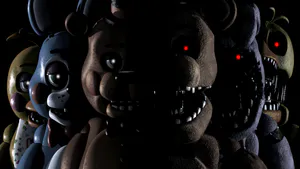 tadcfnaf
 Captain Uni
 SporkoBug
 MintRolls
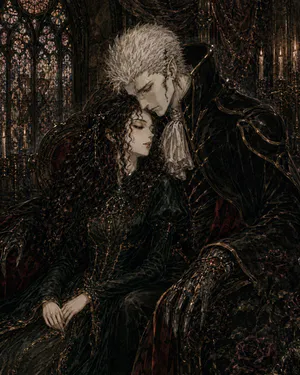 Deadline
 JFK
JFK Mole
Mole