Dinh AaronMk
 Member
my beloved (french coded)
STATUS: As an American [user could not afford rest of post] 1 yr ago
- Last Seen: 10 mos ago
- Joined: 12 yrs ago
- Posts: 7860 (1.75 / day)
- VMs: 13
-
Username history
- Dinh AaronMk 12 yrs ago
-
Latest 10 profile visitors:
-
Most recent →
 AliceAbigail,
 Scrawl Banditta,
 Wilted Rose,
 mickilennial,
 Ekreture,
 Supermaxx,
 erikh
erikh
Status
Recent Statuses
1 yr ago
Current
As an American [user could not afford rest of post]
6
likes
3 yrs ago
Never spaghetti; Boston strong
3 yrs ago
The last post below me is a lie
1
like
3 yrs ago
THE SACRIFICE IS COMPLETE. THE BOILERMEN HAVE FRESH SOULS. THEY CAN DO SHIFT CHANGES.
2
likes
3 yrs ago
Was that supposed to be an anime reference
Bio
Harry Potter is not a world view, read another book or I will piss on the moon with my super laser piss.
Most Recent Posts
@Vilageidiotx
Christmas shopping, work.
@Lauder
Do up an app, post it, and then watch as I say I'll get to it but spend three days not doing it.
Christmas shopping, work.
@Lauder
Do up an app, post it, and then watch as I say I'll get to it but spend three days not doing it.
@chayden13
My first complaint is that you seem to confuse what would otherwise prevent a major epidemic with a way to escape food shortages. In short, low population density would be more preventative in avoiding large-scale plague that it would in avoiding a food shortage. And people dying "in the hundreds" for lack of it would be low.
And based on what I know about agriculture in the region there wouldn't be much to support large populations anyways, or probably not as you seem to be claiming initially. The only real "farmed" staple foods would be beef and potatoes, and good luck getting the former around without refrigeration. Hunting itself doesn't sustain large populations and is too inconsistent a food source for society that looks and acts like modern society. At best or worse, if hunting and foraging the wilderness for deer and berries is going to be the main food source besides lobsters in coastal Maine then your nation is probably going to look more like Native American society than a centralized constitutional monarchy.
@Pepperm1nts
I know we discussed it on Steam, but for everyone else could you add disclaimers about the tanks and choppers being short lived as they were?
My first complaint is that you seem to confuse what would otherwise prevent a major epidemic with a way to escape food shortages. In short, low population density would be more preventative in avoiding large-scale plague that it would in avoiding a food shortage. And people dying "in the hundreds" for lack of it would be low.
And based on what I know about agriculture in the region there wouldn't be much to support large populations anyways, or probably not as you seem to be claiming initially. The only real "farmed" staple foods would be beef and potatoes, and good luck getting the former around without refrigeration. Hunting itself doesn't sustain large populations and is too inconsistent a food source for society that looks and acts like modern society. At best or worse, if hunting and foraging the wilderness for deer and berries is going to be the main food source besides lobsters in coastal Maine then your nation is probably going to look more like Native American society than a centralized constitutional monarchy.
@Pepperm1nts
I know we discussed it on Steam, but for everyone else could you add disclaimers about the tanks and choppers being short lived as they were?
@Wernher
You weren't supposed to post in the character tab first. And I skimmed over your app and I'm not sure you changed anything about the hydro power.
You weren't supposed to post in the character tab first. And I skimmed over your app and I'm not sure you changed anything about the hydro power.
I decided to post what I had anyways. Enjoy it.
Ethiopia
Northern Oromia
When the roads became unpaved, the dangers of the summer rains came full bear. On the unprotected highways the dirt and gravel of the sandy clay-packed roads lifted and turned to mud, washing alongside the car as it cut through the storms that rolled across the Ethiopian highlands. Hills washed into farm-filled valleys and where shallow holes had lay unattended to there now lay in wait ponds the size of lakes that broke the travel.
If it could be taken, they would drive around. The single-speed whipper blades of the ancient vehicle desperately washing away the solid walls of water through the constant heavy rains that pounded the high-country in summer. It slowed travel, and to make matters worse the truck could only travel a steady pace of forty miles an hour in good conditions. And the back-country, and the highland summer monsoons only worsened it. At times, Sen Zhou would pull the car over and let the rain fall, waiting for it to break and give them visibility and time for the water and mud to drain away so she can claim a few last hours of driving.
The room in the cab was tight. Zhou, Yu, and Jong sat uncomfortably tight with the young Ethiopian student. It had been a battle among them, even starting out to determine who would be where and was the cause of much suffering and shuffling until they had got it almost right.
Zhou, having had enough driving the newly purchased and slap-dashed maintained truck had no intention at first to drive it to Lake Tana. She had sat packed in just behind the gear lever, and by position shifted the truck through it three gears as they climbed the hills. The mechanics in the airfield had managed to tighten it, and it no longer needed a mile of space to do its job.
But Yu – who was driving – turned out to be a sloppy driver and nearly caused an accident with a mule cart on the way out of town. Shuffling him to Zhou's position very nearly gave the small crew a lesson in the effects of motion-sickness and it was hardly a block out of the capital they again changed positions, putting him at the passenger window.
The Ethiopian student soon came to occupy his seat, and soon himself needed to move. Unrelaxed and tense – or so he claimed – his hands had a tendency to wander and Zhou had on more than one occasion force him to move his hands from her leg. He obliged sheepishly, but as soon as they hit a pothole they would be back, and the story continued. He switched with Jong, who though being such a wide young man forced Zhou nearly against the driver's side window. But it was the closest they came to perfection, given the cards they were offered.
The cabin was sweaty and hot, a stifling humidity hung in the air even despite the heavy rains. Cracking the windows helped only a little by circulating the air but did nothing to keep heavy rains from not coming into the car. Matters were made worse when Yu went to lit up for a cigarette, and the dry, ashen bitterness soon filled the cabin. Rain or not, Zhou ordered him to put it out or step outside before everyone was asphyxiated by the cheap tobacco.
In the back a green tarpaulin covered the truck bed and fluttered in the wet wind, sending whirling whips of water when it rained behind them and flicking off residual water when it wasn't. Under, strapped secure to the bed were the basic supplies they imagined they needed where they were going. Guns, ammunition, food, and fuel. Dufflebags full of the soldier's personal gear also rode in the same mass of equipment. And underneath it in a locked steel boxes environmental suits packed in anticipation of the possibility of Spanish chemical use as they traveled close to the front of the war.
Before the party crossed over into the Amhara state, they stopped for lunch.
The gravel of the road cracked and popped as the tires rolled slow over the road and off to the side. The red-brown clay still glistened softly from persistent summer rains but was otherwise dry, and for the choice of time and place to stop the skies were blue and clear of clouds. The road as it were was empty and quiet as the four riders stepped out and groaning uncomfortably stretched their sore aching limbs as they looked about.
The highlands here dipped sharply into a deep wide gorge, flush with green from the rich summer-rains. Over the horizon the mountains and cliffs of the high plateaus of central Ethiopia sheered the Earth and rose into the blue sky, creating walls that ran infinitely into the rolling mountain labyrinths of the country-side. In the middle, an even deeper chasm was carved into the stone and the sounds of rushing water poured out from the rough serpentine course of the Blue Nile as it drew the provincial borders of inner Ethiopia.
As Yu and Jong began digging into the supplies for their cache of rice, Zhou walked up to the edge of the steep rounded drop to the river below.
Unlike its name, the Blue Nile did not run blue. It was full and brown of sand and sediment laden water that rolled over itself as it ran through its swollen banks. The summer rain had impregnated the river, and I t ran high enough to swallow and drown the misshapen bushes that had grown too close to the edge as it made its swift and violent course west and south.
A bridge crossed the gap, a spindly-framed wooden bridge supported by rough stone and concrete pylons whose advanced weathering looked ready to break the architecture. The bridge was not grand, nor was it modern. The wood was old and worn, clear tire-tracks run shallow groves across the boards from years of traffic and it looked ready to sway and dance in the wind. Further, it was narrow, maybe just big enough to except a large truck. Zhou's stomach ached and twisted in terrible horror as she looked at it, and she immediately worried about having to cross to the other side.
“As soon as we cross, we've only three-quarters of the journey ahead of us!” the student they had brought as a guide to collect his family exclaimed in excitement.
Zhou turned sharply, catching up as he walked up to her. His wrapped tightly around his chest as he smiled nervously. He looked up at her, and then down at the ground. Raising his gaze to look across the river gorge, where mesa cliffs loomed over the crossing and where the road continued its meandering highland crawl between the banks of a tributary stream and a rocky cliff face.
The countryside was rich with trees and grasses, thick shrubs lined the river and the banks as much as they did the road. The air was rich with the whine of insects and the calls of birds. Somewhere in the distance Zhou thought she could hear the cackles of hyenas but dismissed it as a fantastical trick of the mind.
“Why are you in Addis Ababa and not with your kin?” asked Zhou, trying to broach friendly conversation. It didn't feel right with her and she regretted the decision outright. But she was too slow to retract the question as he answered anyways.
“To get an education!” he exclaimed with excitement, “There is nothing for me at home but to herd goats, and there is no better way to support my people.” he said this with a wide proud smile, “I am to become an engineer, if all things work out.”
There was a lost sense of hope in his tone of voice. One that wanted the future he desired for himself, but one that also admitted with regret that things were now complicated, to put it in the lesser of terms. Even Zhou was unsure if China would allow him to continue his training in Chinese universities should he end up as a long term refugee if things went sour fast, and for a long time.
“But, what about you. Why are you so far away from your kin?” he asked.
Zhou didn't answer him. She wrapped he hands in front of her and continued to gaze down at the rain-swollen rapids below her. She couldn't claim to know much about Africa and its rivers. She knew hazily the Blue Nile would drain into the Nile somewhere, but didn't know where. She wasn't sure either if they would cross the Nile as they would the Blue Nile. It seemed to her to be something to expect. But she didn't want to answer his question. She responded with her own.
“What's ahead of us?” she asked flatly.
“Oh...” the deflated student responded, sheepishly. “More highlands.” he said, almost regret. He was deflated with his answer. “We'll come on the small town of Dejen soon after the bridge. If we keep up the pace we will be there by nightfall, this is all-to-slow going.”
“I can't help it.” Zhou said, “We can't help it.”
“I-I understand.” the student responded, worried. “There... There are Muslims who live in Dejen. Have you ever dealt with Muslims?” he asked this concerned, almost a little afraid. At asking the question he looked to almost want to hide.
“I have, a little.” Zhou answered. She recalled her tour through the Philippines and the Muslim villages on Mindanao's south-western coast, as well as trying to give them aid after what had been forced upon them when they arrived. Even then though, their relationship with them was tenuous. And while China had the Hui, she could not recall ever really interacting with them. She supposed in the end there would be nothing to worry about.
The student nodded cautiously.
From behind them the voice of Yu called out, “found the tea!”
“And the rice?” Zhou called back, turning on her heels.
“Still looking.” he shouted back.
“Perhaps I'll help.” the young man said nervously, turning back to the truck.
Zhou acknowledged him with a impatient nod and turned back to the river. Being a little more alone now, she could begin to appreciate the awe and extremes of this country. She wondered just how the Spanish could seek to subjugate Ethiopia and began to doubt their mission plan.
Drink.
The capitalist bourgeoisie are in control of society, wat do to promote evolution of society?
The capitalist bourgeoisie are in control of society, wat do to promote evolution of society?
Name:
Republic of New York
Location:
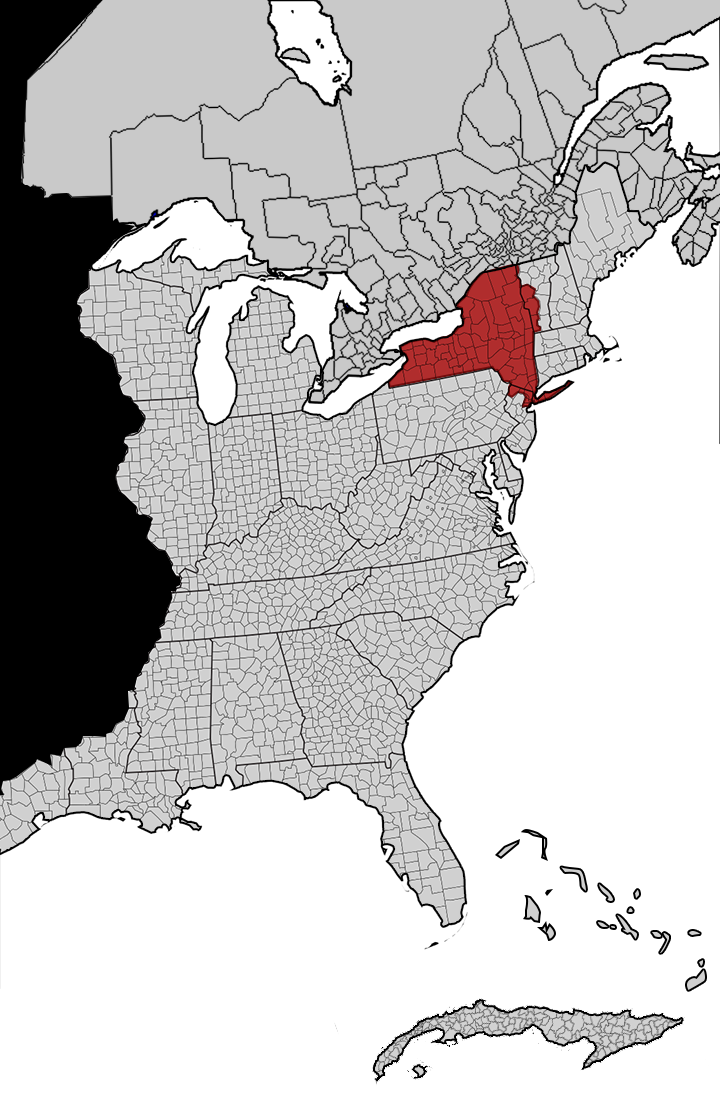
History:
The fall of the US financial institutions following the eruption of Yellowstone and the straining of public and private equity came as precursors to the wider systematic collapse that followed. When the final deed was done the scope and severity of the rippling disaster meant that not even the best assurances and insurances by the government and other groups could hold up society. And when the ash fell over New York and the power shut down a rush to consolidate swept the nation as much as the area.
While it was not violent, the people recognizing the danger and actively trying to help one another get through the darkened and colder days the crippling end brought a slow march to the precipice. With the end of mass modern transport of goods and services fresh food in the major urban centers such as New York City began to fall violently short and the major metropolitan jewel of the United States buckeled and heaved from the stress. The failure of local health services to keep up with the sick and injured broke finally when medications and the advanced modern means to treat people failed to work through lack of resources of ultimate lack of power when all things ran out.
The effect on the city was like that of a plague sweeping over that no amount of shelter could soothe. With food having ran out local solidarity fell in to desperation and the city of New York fell to crippling gang-based violence as local war erupted over meager resources and the access to the pantries and storage for the few unspoiled caches of food. For the city, those who held the food held the power and people starved on the whims of man.
Outside, things were rough, but did not necessarily reach such crisis proportions. While crop failures in New Yorks agricultural areas failed due to ash-related damages and live-stock was crippled or itself succumbed the small size of small towns created stronger solidarity among themselves and they held on together. It could have been if the crisis carried on under this state, then things would have worked out alright. But the continuing crisis in New York City boiled over well beyond the metropolitan area and soon threatened the country-side when armed raiders sought to side-step the new inner-city barons by seeking stocks and farms outside.
The response to this sudden new threat came in the form and voice of strongmen from New York's other major – albeit small in comparison to New York – cities and towns who promised protection from New York's fiery invaders if they paid. But the US dollar was dead, the material commodities were sparse among the people. And so they paid with what they had: land. In quick response land-barons emerged from the ash and consolidated themselves in an informal alliance in response to the wild and disorganized threat posed by New York. Following them were the more rural land-barons who had began to consolidate their own power in much the same way and on the same pretenses. Some small, some large.
The war that followed was not so much one in a formal right, but vigilante skirmishes by upstate New Yorkers against the low-state ex-urbanites raiding inland. Large-scale engagements never happened, and the war – as it had become known – was more a series of skirmishes that chased the urbanites back to the shadowy towers in New York were they stay, afraid of the deer rifles and shotguns of the levees the land-barons raised.
The threat of urban raiders was not over permanent, and many of this new aristocracy recognized that. And so they saw to a second consolidation of power, and meeting in Albany, New York formed a congress in which the men met, discussed, and drew up plans for an active and powerful force against the powers that be in New York City.
Some eight years after the eruption of Yellowstone, the Federal State of Albany was declared in response to the continued threat of New York. Its influence spanning from the edge of the New York metro area to Buffalo and Niagra the Albany state was formed on the pretenses of:
That every male owning land, collecting rent in some manner from another – whether in agricultural surplus or commodities – was entitled to membership of a Grand Assembly.
Membership to the Assembly was hereditary, passing down from father to sons provided these sons held rentable land and had tenants.
The Assembly met four times yearly to build and pass upwards a federal plan if otherwise local issues were deemed among them to be a broader state-wide issue.
The permanent House of Landholders formed an upper house, elected from members of the Grand Assembly to replace a member of the House should he pass.
The House of Landholders is the legislative decider for federal plans.
Membership on – like in the Grand Assembly – is for life, and is only given access to by men elected to the position by the Grand Assembly.
A chief executive is additionally elected to rule for life as military chief and to enforce the laws of the realm.
A bench of life-long elected judges from the Grand Assembly is to also be formed.
The hope in the Congress' plan was to form a government of stability and permanence to counteract the perceived anarchy of New York City. And in its way the Albany government worked that way and performed its job well. The situation in New York City eventually resolved itself when an urban warlord assumed power, christening himself as “The State-Emperor”, after the tower he housed himself in.
The consolidation of power in New York sparked heated rivalry between the two as both believed they laid claim to the former state of New York. The rivalry spurred an active hot war that lasted some five years, ending in Albany's favor; but were incapable of annexing New York City itself.
In time, the first State-Emperor died twenty-three years after the eruption of Yellowstone. The second assumed power and staked his power on the claimed discovery of the old US Federal Reserve of gold under the city. While he refused to show anyone from the outside this gold, he acted through his agents to extend lines of credit to the broader world and to the State of Albany, in exchange for agricultural surplus.
By this time, Albany was producing an abundance of food surplus from the soils richly infused with volcanic ash and life was moving along in comfort and conservative predictability. A real economy was developing and the Albany state needed assistance and credit to operate on its grand schemes. Forays into Vermont were being made by the military on insistence from the Grand Assembly to broaden the base of the land-barons and their children, and the military expeditions needed to be paid for.
While cynical of the sudden discovery and what he saw as an unstable time for New York City, then-president Chuck Vanderman complied with the offer on insistence from the House of Landlords and they applied for credit with New York City.
The situation became suspicious for President Vanderman who saw what he believed was an almost infinite extension of credit by the city and he ordered the situation investigated. It took five years for fruits of the espionage work to bare fruit, but it was inevitably revealed that the State-Emperor held no such reserves. Or not at least to the degree he claimed to have been holding.
Breaking the news sent New York City into a panic and it descended into chaos as the State-Emperor was stripped of his title and civil war erupted. Deploying the Albany's military, Vanderman sent the state into war again and this time they occupied the entire city, seizing what small supply of gold the State-Emperor actually had.
The theft of the meager reserves of New York and the deposition of the meager government of the city proved a fatal blow, and after Vanderman was able to seize total control of New York City, but not without a near total purge of much of it, crippling its ability to raise arms. New York City, Manhatten island, and Long Island all fell into the hands of Albany. The seizure of New York was soon followed by the seizure of northern New Jersey for much the same reasons as parts of Vermont.
The holding of Albany called for a re-branding of the state, the Grand Assembly met and proposed to the House of Landlords a proposal to rename the Federal State of Albany to The Republic of New York. The proposal passed and was signed off by Vanderman.
Despite New York City now again being a part of New York State, the city itself was something of a blight on the whole. The ravages of disaster had not weathered it well and despite the blockade by land by the Albany state droves of the population had disappeared to either death or migration by sea to richer land. The Republic of New York found itself owning a large population in a large desolate geographical area impoverished, undernourished, and under-educated. An entire generation had grown up in a city marred by pseudo-tribal conflict between the Burroughs.
And like many things, the Grand Assembly ignored it. Overlooking the people they saw instead the benefits of effectively mining the city to cut it down to a size more in proportion to its population and to use the abundant second-hand resources for its own ends. In the case of this dream, the old citizens of New York City were human resources to acquire, move, and refine the recycled materials to use elsewhere. Socially, the people of New York were considered, “a worse sort than unproductive tenants”. The cosmopolitan nature of New York had moved upstate and into Albany in full.
Still, New York gave the Republic a port from which to operate a navy and designs were proposed for a merchant elite to begin moving mercantile business back to NYC. In the generation after this slowly gave rise to a new class of member to the Grand Assembly, the urban land-lord merchant who counted as his rentors the subsidiary merchants renting space in the factories that became the new centers of the old Burroughs.
To raise the value of an importance of New York as well as extend the markets of all involved designs were proposed and met to rebuild and refurbish the Eerie Canal for trade purposes west-ward. With its completion, the New York Republic was able to win the influence of and dependency of upriver, Great Lake societies through ownership - and the Republic's discretion in its use - of the Eerie Canal.
Republic of New York
Location:
History:
The fall of the US financial institutions following the eruption of Yellowstone and the straining of public and private equity came as precursors to the wider systematic collapse that followed. When the final deed was done the scope and severity of the rippling disaster meant that not even the best assurances and insurances by the government and other groups could hold up society. And when the ash fell over New York and the power shut down a rush to consolidate swept the nation as much as the area.
While it was not violent, the people recognizing the danger and actively trying to help one another get through the darkened and colder days the crippling end brought a slow march to the precipice. With the end of mass modern transport of goods and services fresh food in the major urban centers such as New York City began to fall violently short and the major metropolitan jewel of the United States buckeled and heaved from the stress. The failure of local health services to keep up with the sick and injured broke finally when medications and the advanced modern means to treat people failed to work through lack of resources of ultimate lack of power when all things ran out.
The effect on the city was like that of a plague sweeping over that no amount of shelter could soothe. With food having ran out local solidarity fell in to desperation and the city of New York fell to crippling gang-based violence as local war erupted over meager resources and the access to the pantries and storage for the few unspoiled caches of food. For the city, those who held the food held the power and people starved on the whims of man.
Outside, things were rough, but did not necessarily reach such crisis proportions. While crop failures in New Yorks agricultural areas failed due to ash-related damages and live-stock was crippled or itself succumbed the small size of small towns created stronger solidarity among themselves and they held on together. It could have been if the crisis carried on under this state, then things would have worked out alright. But the continuing crisis in New York City boiled over well beyond the metropolitan area and soon threatened the country-side when armed raiders sought to side-step the new inner-city barons by seeking stocks and farms outside.
The response to this sudden new threat came in the form and voice of strongmen from New York's other major – albeit small in comparison to New York – cities and towns who promised protection from New York's fiery invaders if they paid. But the US dollar was dead, the material commodities were sparse among the people. And so they paid with what they had: land. In quick response land-barons emerged from the ash and consolidated themselves in an informal alliance in response to the wild and disorganized threat posed by New York. Following them were the more rural land-barons who had began to consolidate their own power in much the same way and on the same pretenses. Some small, some large.
The war that followed was not so much one in a formal right, but vigilante skirmishes by upstate New Yorkers against the low-state ex-urbanites raiding inland. Large-scale engagements never happened, and the war – as it had become known – was more a series of skirmishes that chased the urbanites back to the shadowy towers in New York were they stay, afraid of the deer rifles and shotguns of the levees the land-barons raised.
The threat of urban raiders was not over permanent, and many of this new aristocracy recognized that. And so they saw to a second consolidation of power, and meeting in Albany, New York formed a congress in which the men met, discussed, and drew up plans for an active and powerful force against the powers that be in New York City.
Some eight years after the eruption of Yellowstone, the Federal State of Albany was declared in response to the continued threat of New York. Its influence spanning from the edge of the New York metro area to Buffalo and Niagra the Albany state was formed on the pretenses of:
That every male owning land, collecting rent in some manner from another – whether in agricultural surplus or commodities – was entitled to membership of a Grand Assembly.
Membership to the Assembly was hereditary, passing down from father to sons provided these sons held rentable land and had tenants.
The Assembly met four times yearly to build and pass upwards a federal plan if otherwise local issues were deemed among them to be a broader state-wide issue.
The permanent House of Landholders formed an upper house, elected from members of the Grand Assembly to replace a member of the House should he pass.
The House of Landholders is the legislative decider for federal plans.
Membership on – like in the Grand Assembly – is for life, and is only given access to by men elected to the position by the Grand Assembly.
A chief executive is additionally elected to rule for life as military chief and to enforce the laws of the realm.
A bench of life-long elected judges from the Grand Assembly is to also be formed.
The hope in the Congress' plan was to form a government of stability and permanence to counteract the perceived anarchy of New York City. And in its way the Albany government worked that way and performed its job well. The situation in New York City eventually resolved itself when an urban warlord assumed power, christening himself as “The State-Emperor”, after the tower he housed himself in.
The consolidation of power in New York sparked heated rivalry between the two as both believed they laid claim to the former state of New York. The rivalry spurred an active hot war that lasted some five years, ending in Albany's favor; but were incapable of annexing New York City itself.
In time, the first State-Emperor died twenty-three years after the eruption of Yellowstone. The second assumed power and staked his power on the claimed discovery of the old US Federal Reserve of gold under the city. While he refused to show anyone from the outside this gold, he acted through his agents to extend lines of credit to the broader world and to the State of Albany, in exchange for agricultural surplus.
By this time, Albany was producing an abundance of food surplus from the soils richly infused with volcanic ash and life was moving along in comfort and conservative predictability. A real economy was developing and the Albany state needed assistance and credit to operate on its grand schemes. Forays into Vermont were being made by the military on insistence from the Grand Assembly to broaden the base of the land-barons and their children, and the military expeditions needed to be paid for.
While cynical of the sudden discovery and what he saw as an unstable time for New York City, then-president Chuck Vanderman complied with the offer on insistence from the House of Landlords and they applied for credit with New York City.
The situation became suspicious for President Vanderman who saw what he believed was an almost infinite extension of credit by the city and he ordered the situation investigated. It took five years for fruits of the espionage work to bare fruit, but it was inevitably revealed that the State-Emperor held no such reserves. Or not at least to the degree he claimed to have been holding.
Breaking the news sent New York City into a panic and it descended into chaos as the State-Emperor was stripped of his title and civil war erupted. Deploying the Albany's military, Vanderman sent the state into war again and this time they occupied the entire city, seizing what small supply of gold the State-Emperor actually had.
The theft of the meager reserves of New York and the deposition of the meager government of the city proved a fatal blow, and after Vanderman was able to seize total control of New York City, but not without a near total purge of much of it, crippling its ability to raise arms. New York City, Manhatten island, and Long Island all fell into the hands of Albany. The seizure of New York was soon followed by the seizure of northern New Jersey for much the same reasons as parts of Vermont.
The holding of Albany called for a re-branding of the state, the Grand Assembly met and proposed to the House of Landlords a proposal to rename the Federal State of Albany to The Republic of New York. The proposal passed and was signed off by Vanderman.
Despite New York City now again being a part of New York State, the city itself was something of a blight on the whole. The ravages of disaster had not weathered it well and despite the blockade by land by the Albany state droves of the population had disappeared to either death or migration by sea to richer land. The Republic of New York found itself owning a large population in a large desolate geographical area impoverished, undernourished, and under-educated. An entire generation had grown up in a city marred by pseudo-tribal conflict between the Burroughs.
And like many things, the Grand Assembly ignored it. Overlooking the people they saw instead the benefits of effectively mining the city to cut it down to a size more in proportion to its population and to use the abundant second-hand resources for its own ends. In the case of this dream, the old citizens of New York City were human resources to acquire, move, and refine the recycled materials to use elsewhere. Socially, the people of New York were considered, “a worse sort than unproductive tenants”. The cosmopolitan nature of New York had moved upstate and into Albany in full.
Still, New York gave the Republic a port from which to operate a navy and designs were proposed for a merchant elite to begin moving mercantile business back to NYC. In the generation after this slowly gave rise to a new class of member to the Grand Assembly, the urban land-lord merchant who counted as his rentors the subsidiary merchants renting space in the factories that became the new centers of the old Burroughs.
To raise the value of an importance of New York as well as extend the markets of all involved designs were proposed and met to rebuild and refurbish the Eerie Canal for trade purposes west-ward. With its completion, the New York Republic was able to win the influence of and dependency of upriver, Great Lake societies through ownership - and the Republic's discretion in its use - of the Eerie Canal.
© 2007-2026