Sidarid religion has no centralised clergy or priesthood in the sacerdotal sense. Instead, they have druids known as
Wynden (pl.
Wyndyn, sing.
Wynd)).
Due to their close association with nature,
Wynden are believed to be able to control the weather and shape-shift into animal form – whether this is true is uncertain and most likely stems from
Wynd practice of wearing animal skin or horns or feathers during rituals so as to invoke the animal’s power.
Wyndyn are a rather diverse group – young, old, men, women, rich, poor, esteemed background, or relatively humble. They have traditionally made up the most powerful class of Sidarid society, though ever since the establishment of the
Rigachd their traditional authority has been somewhat tempered by the sweeping powers of the directly elected
Duthchas with the
Bhaenrhig at its head. The
Wyndyn are free to marry – the concept of celibacy being utterly foreign and ludicrous to the Sidaric peoples.
Wyndyn often marry other
Wyndyn or clan lairds.
The
Wyndyn underwent severe persecution by the Kratorians and Anvegadians during their occupation of Sidara, for they both feared and were jealous of their extensive power and influence, ability to incite rebellion, and their religious sway. Sacred sites where
Wyndyn generally gathered were attacked and destroyed, and many
Wyndyn were slaughtered. The most famous such attack was on Isle a’Cheimbyc in 109 CE against a large assembly of
Tweiwynden, which was so brutal that the event became known as the Rape at Byc. Still, the
Wynden persevered and so too did the religion.
Wyndyn are of three types. These are non-hierarchical; simply different types of
Wyndyn who carry out differing duties. The three types are:
- Tweiwynden – So-called ‘clan druids’.
- Arwyndyn – So-called scholarly druids, they are split into a number of holy orders.
- Machwyndyn – So-called military druids.
TreiwyndynClan
Wynden - known as
Treiwyndyn (sing.
Treiwynd -, whose expertise and learning is handed down from one clan
Treiwynd to another over generations, have the greatest interaction with people on a daily basis.
Treiwynd instruction, unlike that of
Arwyndyn, is secret and takes place in caves and forests. Preserving ancient tradition, all religious learning is done orally and in no other way;
Treiwynd lore consists of a large number of orally transmitted ‘books’ learned by heart, and so
Treiwyndyn are known for their astounding feats of memorisation. It can take up to twenty years of instruction for a
Treiwynd to complete their studies.
Treiwyndyn are present at births to bless newborns, carry out
prophetic and divination rituals and give oracles, and are also important religious leaders in the clan hierarchy, legal authorities, adjudicators, preservers of clan tradition, lorekeepers, medical professionals, teachers to the young, and - traditionally - political advisors (indeed, the authority of
Treiwyndyn has been such that they have caused feuding armies to turn back and put their weapons aside in the past even against the will of clan chiefs or warlords, and a custom exists that a soldier must hand their weapon to a
Treiwynd on demand, even if they happened to be in the midst of battle).
Treiwyndyn are generally responsible for organising and leading worship at stone circles or monuments as well as sacred groves, and also prepare and offer animal sacrifices and lead various rituals. During legal disputes, a
Treiwynd is nearly always the arbiter, or the leading member of a team of arbiters. They are exempted from military service and from the payment of taxes though in the past, before the emergence of the
Machwyndyn as specialised military
Wyndyn,
Treiwyndyn generally accompanied armies (particularly if they were marching against occupation forces).
Treiwyndyn, unlike other
Wyndyn, hold great immediate power on the lives of individuals, clans, and the nation itself.
Treiwyndyn play a critical role in the selection of a
Bhaenrhig through a ritual called the
Hyscadal (‘the Bull’s Vision’). A ritual from the Sidarid age of gods, heroes, and great
Rhigs who ruled the Isles from shore to shore, this ‘Great Divination Ritual of State’ was reinstated during the early reign
Bhaenrhig Roinseach after the Episode of the Malcontents (1593-5 CE) so as to solidify her position and bolster her legitimacy beyond challenge. Used to determine who the rightful
Rhig would be, the
Hyscadal requires a
Treiwynd to eat of the flesh of a freshly-slain bull before sleeping enwrapped within its yet-bloody hide so as to divine, through dreams, who the rightful
Rhig would be. This ritual usually takes place in a cave on Caer Seihdhar. If the
Treiwynd does not have a vision, he is sewn within the bull-hide and placed under a high waterfall to aid him in having it. The
Treiwynd in question could theoretically see anybody in his vision, from the lowliest farmer to the most senior members of the royal house. To date, however, the visions have always revealed that the rightful monarch is a member of the royal house. It has not always been the eldest child of the reigning monarch, sometimes it has not even been a child of the monarch, but it has always been within the royal house. Following this ritual, the members of the
Duthchas have the opportunity to cast their votes on whether they wish to elect the one nominated by the vision. It has always been the case that the opinion of the
Duthchas mirrored the vision. The
Treiwyndyn, then, have tremendous influence and immediate power.
Treiwyndyn also have the capacity to strip a person of their rights, barring them from religious ceremony and all clan matters and so rendering them an outlaw without clan or purpose. The
Treiwyndyn must have a legitimate reason when they do this, but they are the only ones capable of doing so.
There are various holy orders which produce scholarly Wynden - known as Arwyndyn (sing. Arwynd) - dedicated to study and research. They differ from the Treiwyndyn in numerous ways – they, for instance, have for over two-thousand years enjoyed a rich writing tradition. The written language of Arwynden, known as the Eirwyncanan, is a secret language that differs from the written and spoken Sidarid language. It can also be spoken and, interestingly enough, signed with one’s hands (in fact, it is believed that Eirwyncanan as sign language preceded both the written or spoken language). All works authored by the Arwynden have traditionally been in this secret tongue, and all their written, spoken, and signed communications to one another are in it, meaning that their world is completely inaccessible to laypeople and even other Wynden. Over the course of the last century this has changed somewhat as Arwyndyn have elected to engage with the mainstream academic and scholarly scene through the publication of journals in Sidaric and carrying out joint research projects with mainstream universities. This, however, remains a small percentage of their output, and it is thought that there are a plethora of secret journals written in Eirwyncanan that the Arwyndyn make public only in Arwynd circles.
This secret language is believed to have developed during the ap Morig occupation with the goal of preserving Wynd and general Sidaric lore, magick & spells, law, customs, history, literature, political challenges, and so on. While it likely has done so, it has undoubtedly meant that the Arwynden have become the powerful arbiters of which customs have been and will be preserved and which ones will simply be allowed to slip from communal memory. The Arwynden do not have a complete monopoly in this regard, however, for their reclusiveness and general lack of participation in daily rituals – left to the Treiwynden – means the latter have ample space to contest and challenge Arwynd designs.
During the period of dual Kratorian and Anvegadian occupation (~0 CE to ~450 CE) Wynden of all stripes were actively persecuted and active attempts were made to have their books burned. However, the Arwynden of the times were not concentrated in Arwyndenolthighein (sing. Arwyndenolthigh; ‘Arwynden Universities/y) as they are today, and so were easily able to disperse deep into Sidara’s forests, or into the mountains, or to independent clan-lands, preserving the great majority of books. Those that were burned or somehow lost were usually rewritten by groups of Arwynden who had memorised them.
Interestingly, though the Arwyndyn only ever corresponded with one another in Eirwyncanan, not only did they (and do they) correspond with outsiders to their order in the Sidarid tongue, but during the period of occupation they also corresponded with various Kratorians and Anvegadians in the respective tongues of the latter. Such letters – many of them discovered in archives during the liberation of the Isles and since preserved by the Arwyndyn – reveal deep philosophical interaction with foreign ideas and theology, as well as political commentary on the justice of the Sidarid struggle and the injustice of Kratorian and Sidarid ambitions. It is clear that Arwyndyn quickly gained access to various Kratorian and Anvegadian works, mastered the respective languages, and were able to engage generals, philosophers, and theologians in written argumentation.
The second Anvegadian occupation of Sidara saw a far greater attempt to uproot the Wyndyn entirely, but by that point the Wyndyn had experienced over five-hundred years of uninterrupted development and strengthening, and the strategies of survival and growth of which the Wyndyn availed themselves were beyond anything the Anvegadians – mighty imperial power though they were – could deal with.
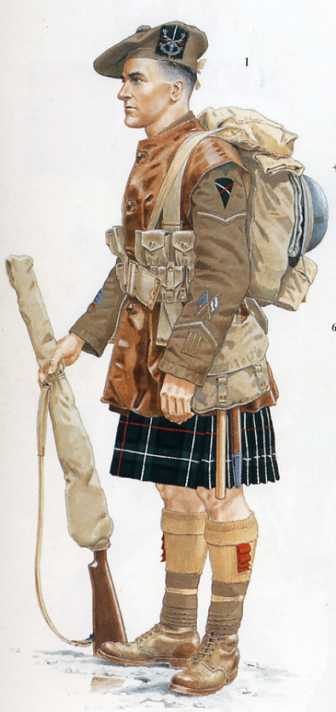
MachwyndynEach military regiment has a special platoon of military Wyndyn known as Machwyndyn (sing. Machwynd). The Machwyndyn carry out various military and divination rituals, bless troops before battle, prepare battle banners and standards, and also carry out medical duties and play a role in enforcing military law and discipline (a vital duty given the tendency of Sidarid soldiers towards insubordination).

 Frettzo
 Vec
Vec Lord Zee
 Double Capybara