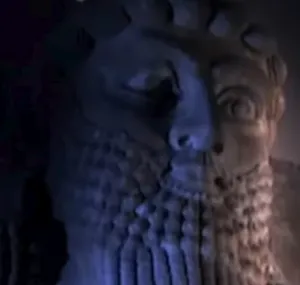
@Cyclone RE: Sharhush
Compelling concept. Three structural issues to resolve:
Firstly, Sarhush believes the strong naturally dominate, yet he blesses rulers. Every intervention proves his philosophy wrong—if they needed help, they weren't naturally strong. You could, instead, reframe blessings as tests: "I grant you one advantage; if you cannot turn it into lasting dominion, you were never worthy."
Secondly, Burning every tree and destroying all wilderness doesn't build civilization but causes famine and ecological collapse. Even brutal empires practiced resource management. Change "destroy nature" to "subjugate and exploit nature ruthlessly." This comes off with the same intensity and ruthlessness, but remains functional. After all, a god of Civilization who advocates destroying the natural resources civilization needs is self-contradictory. It's like a god of War who wants all weapons melted down.
Thirdly, right now Sarhush only opposes things (democracy, kindness, nature). Give him a positive vision, like monuments piercing the sky, dynasties spanning millennia, cities so magnificent mortals willingly serve. This makes him ambitious rather than merely spiteful.
I disagree on your takes regarding the first two points. Both had some consideration and deliberate intention on my part.
He is absolutely hypocritical and short-sighted. I want it to be a plotpoint where he causes some sort of famine and collapse by encouraging total destruction of nature. There are many examples of civilizations that did obliterate their environment and bring themselves to ruin (Easter island is the most famous example, but I've read a book called "Collapse" by Jared Diamond that covers a more pertinent example of some early Mayan city-states that did destroy their civilization and cause civilization-ending famines, droughts, and erosion after they did mass deforestation of their surroundings). This is highly in theme for Sarhush as a Mesopotamian-inspired deity too, as in that mythos the natural world is viewed as something fundamentally perverse and to be conquered.
As an aside, this tendency of his will likely prevent the creation of anything too drastic like a world-spanning empire and limit his influence to a multitude of smaller places. Of course I think there's room for actual character development where he eventually learns after he destroys a few civilizations this way and/or some other characters try to talk sense into him.
As in for the second point and him not obeying his own stated philosophy, declaring that "the strongest prevail and the unworthy fail" only really works in hindsight and it's by the same lens that he'd rationalize (the probably many) instances when he tries to prop up some nation but the effort is thwarted by another god blessing their rivals or enemies. But I think the roleplay example shows his nature well; often his "blessing" is not a literal blessing but more like approval. The point is that he'll give "advice" and tell mortals what to do, but it's not like he'd conquer places for for them or give them superhuman abilities etc. The closest he might come to that would be handing out the Mes for things like better weaponry or revolutionary military tactics, and even then I'm not sure he'll do that proactively so much as he would as an arms race with other gods that give out useful technologies or advantages to the ones that they like. It depends on how the IC goes. If technology and setting seem stagnant and we want to get out of the stone age/bronze age somewhere, it's easy enough to have that happen due to Sarrhush proactively handing out a few Mes.
Regarding the last point, I do agree with what you are saying. The story about building an Ashurbanipal-style monument to celebrate the destruction of a city was supposed to show that he valued something like attempts at permanence and legacy. I didn't intend for him to only be "anti-XYZ" and never proactively trying to promote things on his own, but I'll be more explicit and add a few lines stating as much if my intention didn't show.