Name: Kel'ta
Status to Humans: The Kel'ta tend to see humans as painfully attached to bloated systems of governments and causes so large that they are far removed from any actual individual impact. This is exacerbated by the massive difference in lifespans. Outside of that, it is impossible to determine a generalized outlook from so individualistic a species.
Life expectancy: In terms of biology they are functionally immortal as far as anyone can tell but they tend to 'socially' die every two or three hundred years. Generally, by the time they're biologically five or six thousand they simply lose interest in living and drop dead.
Genders: Kel'ta clans do not have a concept of gender. While individuals who come into contact with other species might adopt a role for themselves the vast majority of Kel'ta don't.
Full Description:
Physical AppearanceThe
Kel'ta are a carnivorous humanoid species. Their skin tends to range in color from red to yellow to orange but it is common for them to stain some or all of it in a different hue. Both males and females of the species bear horns and have six limbs: one pair of legs and two pairs of arms, a set of which usually remain folded behind the back and hidden by clothing when not in use. The Kel'ta tend to stand taller than other species with the average height being 7'4" in the Imperial system. A hardy species built for climbing the crags of their homeworld the Kel'ta are capable of feats of strength such as bending metal or crushing rocks in their bare hands. The nails of their fingers and toes are harder than human keratin, capable of being gouged into stony cliffs for use as makeshift pitons.
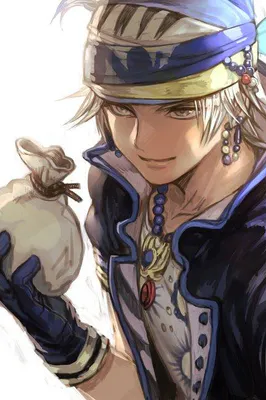
Artist: PhobsCultureKel'ta culture is highly individualistic in nature, to the point where the rarely used 'we' is usually replaced in conversation with "Myself and them". The Kel'ta put a premium on the ability to go anywhere and do anything. To ensure that this remains possible even after decades of being slowly tied down by habit and bonds with others they practice a tradition known as the Social Death. After a certain amount of time spent living one life (usually three centuries or thereabout) a Kel'ta will abruptly drop everything and move. Sometimes they say goodbye to acquaintances and sometimes they don't but every Social Death results in the Kel'ta forming a new personality with corresponding likes, dislikes and attitudes while also changing their physical appearance. The physical change can range from simply styling their hair in a new way and adopting a different form of dress to extensive body modification so that there is no trace of the previous version.
There is no word for country in the Kel'ta language, neither is there any for nation, kingdom, empire or state. They lack a unified religion or code of law, rejecting anything that would bind them into one political entity. The closest they get to any sort of overarching structure is their tradition of so-called 'false families.' When not traveling alone the Kel'ta move in groups as small as two and as large as a few hundred, forming temporary clans with a shifting membership. Kel'ta will eventually undergo a social death and leave their current clan wordlessly and wander until they find another to be a part of for another few centuries. This constant shifting of allegiance means that clan feuds, while still deadly, won't last thousands of years.
Since the advent of interstellar travel Kel'ta have been leaving their homeworld to live out new identities among the stars, joining with one of the spacefaring clans or simply setting out on their own. In either case they tend to pick itinerant professions. Mercenary, scout, smuggler, merchant, pirate and performer are all fairly popular trades for roaming Kel'ta. Despite what is often assumed by those with little knowledge of the culture Kel'ta are perfectly capable of working in groups and taking orders from superiors. However, they rarely if ever see themselves as being a part of the gang or company that has brought them on board, preferring to be referred to as auxiliaries.
Reproduction and FamilyThe Kel'ta are one of the few species of vertebrates that are synchronous hermaphrodites, each member has both male and female reproductive organs. This is an evolved trait that compensates for the harshness of the Kel'ta's homeworld. Since each Kel'ta can sire or carry young there will never be an imbalance in sexes, making it easier for the species to carry on to the next generation.
When a Kel'ta pairing decides to propagate they'll agree on who is the carrier. That half of the pair is essentially confined to the home for fourteen months, the strain of pregnancy making the already rough environment of Kel extremely dangerous. Any intensive physical labor such as hunting or scavenging will be handled by the other partner.
Once the whelp is born both partners are, at least in theory, tied to the family unit until it's matured into an adult. This takes roughly fifty years, the first half of which it spends as a helpless infant before rapidly maturing. The parents teach the offspring the basics of survival and whatever trades they practice during that iteration of their existence so that the child has a basis off which to build an identity.
It's not uncommon for one or both parents to undergo the Social Death at this point, the successful raising of a child often seen as a good note on which to end. The First Self will generally live out its life in the clan it was born into, getting a feel for adulthood in a familiar environment. Eventually they'll become restless, change themselves and head out to continue the cycle elsewhere.
-------------------------------------------
Type of society: Clan-based, loosely structured. The Kel'ta do not use money among themselves, trading only in goods and services.
Technological advancement: The planet Kel is a graveyard of some ancient civilization, ruined ships and war machines buried in the sand and imbedded in stone crags. Whether the Kel'ta are descendants of this lost society or entirely unrelated matters little to them when there is valuable tech to be harvested. Due to their nomadic lifestyles homeworld based Kel'ta lack mass production or mass industry but make up for it in mechanical artistry. They refurbish, replicate, repair and retrofit gear dug up from the dead civilization and adapt it to suit their own needs alongside the same ancient methods they've been using for millennia. It isn't uncommon for hunters to use scent-dogs to track large game which they then bring down with plasma weaponry while cybernetically augmented warriors make use of personal railguns and knives carved from the ribs of some creature.
Whether it's a sled pulled by beasts or burden or electrically powered scout bike Kel'ta creations are of high quality.
--------------------------------------------
Miscellaneous: The Kel'ta are biologically immortal due to their rapid production of the enzyme telomerase. This protects their DNA from denigrating over time which in turn allows the regeneration of cells to continue infinitely. While it's impossible for one to die of old age disease and severe trauma will still kill a Kel'ta as they would any other species.
 Fish of Oblivion
 Finetales
 Not a Sayan
 Inertia
 Fetzen
 FourtyTwo
 PrinceAlexus
 Neziul
 Scrawl Banditta

