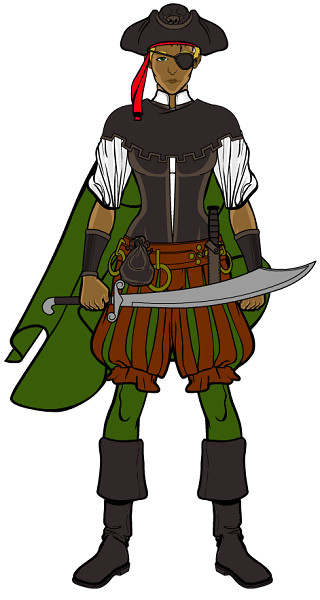
For those wondering, yes, dwarves of all genders and sexes have beards. At least the Dinnin kind.
I like to imagine they're born with stubble.

 Sigma,
abcbcb,
Sigma,
abcbcb,
 Enigmatik,
 Timemaster,
 abnormallory,
 Gerlando,
 Scrawl Banditta,
 Snowdrops
For those wondering, yes, dwarves of all genders and sexes have beards. At least the Dinnin kind.
Made a few edits, so want a quick thumbs up before I go ahead and slap these back in the character section.Malleck 'Freepaw'
Race, Age, Time in the Caravan:
Malleck belongs to the Ainok- a race of humanoid canines indigenous to Alywne's savannahs and deserts, with significant variety between individual specimens. A quick way to irritate almost all of them is to mistake them for Gnolls, their bitter enemies. He's young for most races, at 20, but reached maturity five years prior, and has been travelling with the caravan for three years.
Appearance:
Malleck has dusty fur, blotched with natural camouflage in hues that range from sandy khakis to deep blacks, with a noticeable cross pattern that stretches from his muzzle to his nose, the crossbar reaching to the ends of his brows. He has a shaggy plume of hair that's been braided and tied with baubles and other accessories in an attempt to tame it, and bright amber eyes with black sclera. He stands at around 5'5", a normal height for Ainoks, with the typical tight-wound muscle. His fur serves double duty to both cool him in warm environments and warm him in cool ones, meaning he usually eschews more clothing than a simple tunic, covered in straps and bags to help him carry anything he needs on the road.
History & Personality:
The Ainok are a semi-nomadic people who live as a periphery ally of the desert's great Dinnin kingdoms. Travelling throughout the dry seasons, Ainok clans, usually made from extended family units settle into temporary pastoral settlements during the wet season to reap the benefits of nature's sudden flourishing. A true-blood Ainok through and through, Malleck has grown up with this cycle- from his time as a pup on his mother's back to an adult of fifteen, expected to be able to hunt and provide for his family.
But, Malleck always sought out more than this. He was born under the light of Otota the dancing star, his paws always itched during the wet season, eager to be on the road again, eating up the dusty miles. He bid farewell to his family when he was sixteen, departing alongside a merchant caravan returning from trade with one of the Great Clans deeper into the desert. Although he had had brief interactions with outsiders before- the Ainok are no strangers to traders, caravaners, hunters and even the occasional hostile band, this was the first time he had been truly exposed to different cultures and ways of thinking, and he loved it.
He drank in the diversity and the uniqueness, adding their tales sand stories to his own mind, and whenever he could take the opportunity to tell them and retell them at the fire, enhancing his own tales as he did so. It is one thing to have a firm grasp of a single method of storytelling- quite another to begin to understand the universal traits that sapient species use in their myths and legends, and to weave them together.
Soon after the caravan arrived in settled lands however, one of the guards informed him that there was an even better option out there. The Pilgrim's Caravan was, coincidentally, in the same city they were, and with thanks to his previous travelling companions, he joined up, bringing with him his stories, while being always eager to learn more.
Motivation:
Malleck is a classic example of someone filled with wanderlust, and travels both out of a desire to see the world and to imitate the passage the Dancing Star of Otota makes across the skies. He knows not when his wandering will end, or if it even will at all, but is more than happy to stick with the Pilgrim's Caravan for as long as it stops his feet from itching.
Skills, Strengths and Weaknesses, and Tools:
As an open and gleeful follower of Otota, Malleck is expected to be able to bring cheer wherever he wanders. to this end, he has immersed himself in the entertaining arts- music, singing, storytelling and dance. He can work his magic with only a willing audience, but any instrument is obviously a boon. A not-insignificant part of his memory is dedicated to the countless tales he's heard and repeated across his pilgrimage, but for all this knowledge, he is undoubtably rather 'book dumb.' Coming from an oral culture, Malleck can neither read nor write, and he has neither inclination nor patience to dedicate himself to learning how to do so. He also cannot swim and easily and violently becomes motion sick, preferring to walk if at all possible over sitting in a caravan or boat.
As with most long time travellers, Malleck can defend himself- after all, he comes from a community of hunters and herdsmen, frequently in conflict, but fighting against other sapients always sat ill with him. It felt wrong- dirty, almost undivine in a way, and so instead he much prefers to laugh off an insult than to take a swing. For self-defence, he prefers anything that can extend his reach and put some distance between himself and his foe- be that a spear, stave or simply a sufficiently long and durable stick. When it comes to magic, Malleck's powers are extremely limited- he is neither a shaman nor wizard- although he practices the Ainok's typical astronomical fortune-telling and can produce a few minor illusions, mend a broken rope or help seal a small cut, anything greater than this is beyond his abilities.What They Most Want:
They'll figure it out at some point!
If They Had a D&D Alignment, It Would Be:
Chaotic Good
Three Likes:
The sound of laughter, a well-cooked meal, a new story to learn.
Three Dislikes:
Gnolls, betraying his trust, being unable to see the stars at night.
Do They Follow Their Heart or Their Mind?:
Heart! Part of the job, honestly.
Worst Fear:
Forgetting
Favourite Color:
All of them!
Most Like The Animal:
'Dog' would be pretty stereotypical, but also wrong. Malleck's more like a songbird of some kind.
Favourite Time of Day:
Deepest night- where the stars shine the clearest, and the fire seems that much brighter.
How They Dress:
As minimally as possible so other peoples aren't offended. He has fur for a reason.
Favourite Season:
The dry season! What do you mean most places don't count a 'wet' and 'dry' season?
What Gods/Spirits/Whatever They Worship (If Any):
The Ainoks of the savannah worship the stars- which come into view so brightly and clearly each night when the sun sets. They believe that these stars are each Gods in their own right, and that those born under the light and influence of various celestial bodies are favoured or disfavoured by these Gods. Malleck was born under the light of the so-called 'Dancing Star,' otherwise known as the Goddess Otota. One of the brightest stars in the sky, Otota is also unusual in that it is never stationary, swaying across the sky from night to night. Because of this, Otota holds a special place within the Ainok pantheon as the Goddess of gaiety, enjoyment, fertility, pleasure, and so on and so forth. Malleck considers himself a staunch follower of Otota's light, and it is under her auspex that he travels.Ainok do not traditionally use last names, as by and large they stay within small familial groups, and even during interactions between groups, misunderstandings are easily avoided. 'Freepaw' is a rough translation of the Ainok term for a wanderer who has willingly left their family, distinguishing Malleck from a banished and disgraced Ainok.Gadri Abzan
Race, Age, Time in the Caravan:
Dwarf, 237 years old, caravaneer for some 70-odd years.
Appearance:
Gadri stands at a squat and broad 4'6", with the powerful muscles and roughened hands of a craftsdwarf. They complete the look with a heavy toolbelt and many of their own crafts dotting their appearance. To accompany this, they usually don a padded and reinforced turban, covering up short-cropped hair. As with all dwarves, they lovingly take care of their beard, which is carefully braided and knotted around silver rings. In the forge they don a thick apron, heavy duty gloves and sturdy boots, which they trade for finer robes and heavy khohl when out and abour.
Many of the intricacies of Dinnin-dwarvish appearance can easily be missed by those who are not used to the desert-dwelling branch of the race, from how they braid their facial hair to the precise location of jewllery and clothing folds. To those in the know, the braiding of their beard and the cut and manufacture of their clothes tell that Gadri is a tetra- a 'third gender' that Dinnin-dwarves recognise, believing some to be closer to the stone that formed the race than others. Additionally, they are clearly not only a craftsman, but one of the rare scriptsmiths, a unique dwarven trade- as evidenced by the words intricately woven across much of their jewellery.
History:
Gadri's story begins in one of the holds of the Great Clans that litter the desert who settle within valleys and crevasses among great mountains in order to minimise the effects of the ancient Covenant made between the Dinnin and their God. The dwarves who lived in these territories were slowly incorporated into the Clans, being neither strictly Dinnin, nor exactly Kaffin, much as the Ainok are.
It was here, as part of Clan Abzan, that Gadri was born. Apprenticed as a smith at a young age, they grew up in the hold, working with steel and flames, directing the kaffin that laboured under the watchful gaze of their betters, and being brought up in all the ways a true dwarf was supposed to behave. Their skill with smithing earned them the attention of a scriptsmith (what other dwarves would consider 'runesmithing,' although using the Dinnin script rather than an indiginous dwarvish one, lending it certain unique attributes.) This was no small thing- becoming a scriptsmith takes a significant portion of a dwarves young life- lasting almost a century, including several decades of their dwarvish adolescence.
Hard, delicate and precise toil forged a dwarf meticulous over details and extremely proficient in their craft, but alas, Gadri was not destined to bring honour to their clan and forge great crafts for the emir. Instead, fate took a different path. As so often happens with the delicate web of politics that make up the Holds, skullduggery and backstabbing reared its ugly head up, and as the mess settled, Gadri's hammer was stained with the blood of a fellow Abzan.
Kinslaying, regardless of reason, is a dire crime within the Holds, and although their skill as a scriptsmith was enough to save their life, Gadri could no longer stay in the holds. The back of their right hand was marked with a heavy brand and they were cast out of the hold.
Personality:
Gadri is a dwarf. A rather dwarfish sort of dwarf, although one tinged by their Dinnin faith and life experiences on the road. They abstain from intoxicants (other than coffee and nutmeg, both of which are rare to encounter on the road,) dedicate themselves to their craft, and are generally rather taciturn and stoic. Despite this, they've travelled with the caravan and had a long enough life to be a valuable source of information.
As any craftsdwarf ought to, Gadri is protective of the unique skills that their species have developed, but eager to share the fundementals of working with steel and silver. When in the forge they are strict, serious and focused, expecting orders to be followed quickly and correctly, and harsh on those that dissapoint them, although they'd argue this is the best way to learn.
Motivation:
An exile from their people, Gadri has no real home to turn to. For them, the almost seventy years they've spent within the caravan makes it as good as their home. One day, perhaps, they would like to wash the blood from their hands and return to their homeland... But until that day comes, they serve as the caravan's premiere smith and metalworker.
Skills, Strengths and Weaknesses, and Tools:
A dwarven smith is always in high demand no matter where they go, and Gadri happily serves as the Caravan's main arificer. Most of the time, this is little more than mending wagons or repairing old tools, but they also tinker with some of the metals purchased along the road, turning them into new crafts that can fetch a higher profit than just their base ingredients. In addition, they take great pride in maintaining any weapons or armour entrusted to them, and those willing to pay the dwarf's (sometimes extortionate) fees can find themselves with some truly beautiful pieces of art. In order to facilitate this work, Gadri's wagon has been extensively personalised and customised to turn it into a true rolling smithy, able to be set up and taken down in only a few hours, less if others assist them with it.
Even with all this though, Gadri is still falliable. Most obviously is their position as an exile - something they've kept carefully disguised from all but a tiny minority among the caravan. Then there is the natural peccadillos of dwarves - slow over long distances (but natural sprinters) water-averse and prone to nurture grudges for decades.Like all dwarves, Gadri is unusually magically resistant- both to the hostile effects of magic cast upon them, and for the purposes of channeling magic themselves. Dwarves are not immune from magical effects- a fireball still scorches them and some can indeed channel arcane power, but dwarves as a whole have instead developed their own system of bending the immaterial to their will- Scriptsmithing. Known by several other names- runesmithing, glyphcrafting, and so on and so forth, the core of scriptsmithing is the same. With strike of hammer and bloom of flame, dwarves can imbue items, thereafter elevated to 'artifacts' with potent magical power. Each scriptsmith goes through decades of their life training in scriptsmithing- from days as a journeyman apprentice, writing and reciting the words, to a proficient student, capable of wielding the hammer themselves, to finally a fully qualified smith, each hammerblow pulling from sources beyond to fill their crafts with power.
By now, Gadri is a more than competent scriptsmith, capable of forging great artifacts for others, should they have the time and ingredients to do so. The very finest of scriptsmith crafts are made from the legendary 'starmetal,' believed to be leftover fragments of ancient Gods that came before the Light. In its raw form, starmetal is fantastically magically unstable, throwing out wayward energies that sicken and even kill those handling it unprotected- but the dwarves, with their natural resistances, are able to forge and refine it, creating artifacts with a beautiful damascene finish. Fantastically rare, Gadri has only three precious artifacts made from this stuff- their hammer, chisel, and a single ring, each one with its script woven with their own hands.
Scriptsmithing's potential, in the hands of a master smith, is almost unlimited. So long as one knows the words with which to express their intent, a scriptsmith can create anything from wondrous automata to staves capable of stopping a rampaging oliphaunt dead in its tracks. Alas, such a thing requires a dwarf far more ancient and far more competent than Gadri, whose crafts, while still potent, are greatly limited by not only their resources but also their age. One simply does not become a master scriptsmith in a century or two.What They Most Want:
A grand piece of starmetal, to return home.
If They Had a DnD Alignment, It Would Be:
True Neutral.
Three Likes:
Nutmeg-infused coffee, a roaring forge, a well-made craft.
Three Dislikes:
Politics, their beard being mussed, the biting cold.
Do They Follow Their Heart or Their Mind?:
Once, their heart. Once.
Worst Fear:
Never returning home.
Favorite Color:
The damascene sheen of starmetal.
Most Like The Animal:
The humble termite. Hardworking, fastidious, and capable of raising crafts that will long outlive themselves.
Favorite Time of Day:
The early morning, with a fresh-brewed cup of coffee, and a freshly-awoken forge, a day of work stretching ahead.
How They Dress:
Like the merchant that they are.
Favorite Season:
Autumn - before the nights become freezing in the desert, but where the midday sun is cool enough to allow forgework.
What Gods/Spirits/Whatevers They Worship (If Any):
Although the dwarves of the Dinnin mountains traditionally worshipped their own pantheon, increasingly they've turned to the way of the Concord, and the faith of the Light.
@Tortoise, I have no time, sadly.
I'm happy to hear that you've recovered. The original RP had a lot of promise and garnered a lot of interest, and you disappearing was a heartbreaker. I find myself in a busier than usual season for RPing, since I'm currently in two extra RPs compared to my usual none, but I'll like to give this another shot. However, I would not be applying as Hoogarth if so. As much as I liked that idea, I'm already playing several fools in other RPs, and I've recently had a better idea cooking that I wanted to put into practice somewhere.
@Tortoise'Alas, she's not coming back but GALAXOR is.Galaxor Stoneclaw
Race, Age, Time in the Caravan:
Stoneclaw Giant, 78, 0.3 years in the Pilgrim's Caravan.
Appearance:
Galaxor is smaller in comparison to most other Stoneclaw Giants, standing at 3 metres in height. His skin has a grey-ish, stone-like texture, and his hair is a rugged auburn. He bears tribal tattoos across his arms and chest, a mark of his clan. Galaxor's eyes are a piercing shade of grey, and he often wears rugged, grey-toned clothing adorned with furs and bone ornaments.
History:
Galaxor hails from the remote Giant's Spire, a high mountainous region. He is a member of the Stoneheart Clan, known for their affinity with mining precious gems from the depths of the Giant's Spire mountains. The Stoneclaw tribe has always lived in relative isolation, focusing on their mining operations and the protection of their mountain home. Galaxor, however, felt a deep curiosity about the world beyond the Spire. He yearned to explore the world and gather knowledge that could potentially aid the Stoneclaw tribe as they considered opening their borders to foreign traders. With the blessings of his clan, he embarked on a journey with the Pilgrim's Caravan to achieve this goal.
Personality:
Galaxor is a cheerful giant, known for his boisterous nature and kind heart. Despite his imposing size, he is jovial and friendly, often the life of the party among the caravan travelers. He has a deep connection to the earth and nature and values the sharing of stories and experiences. Galaxor's words are loud and lively, his actions adventurous, and he carries himself with a spirit of curiosity and exploration.
Motivation:
Galaxor's motivation in joining the Pilgrim's Caravan is to explore the world, experience its wonders, and learn more about its people and cultures. He wants to bring back this knowledge to his Stoneclaw tribe, which is considering opening its borders to foreign traders. Galaxor's journey is driven by a deep desire for exploration and expanding the horizons of his people, ultimately aiding them in their transition to a more open and diverse society.
Skills, Strengths and Weaknesses, and Tools:
Galaxor's giant heritage grants him immense physical strength and resilience, making him a formidable protector. He’s also a born miner and knows his stones quite well. His size and strength make him an ideal guardian in perilous situations. However, his sheer size can sometimes be a hindrance in more delicate or confined spaces. Galaxor wields no traditional tools but relies on his natural abilities and, occasionally, a massive stone-tipped club as a last resort.
What They Most Want:
To explore the world and bring back knowledge to the Stoneclaw tribe, helping them consider opening their borders to foreign traders and embracing the diversity of the outside world.
If They Had a DnD Alignment, It Would Be:
Neutral Good
Three Likes:
1. Drinking and celebrating with fellow travelers. 2. Stories of legendary heroes and guardian spirits. 3. Being the life of the party and embracing the joy of adventure.
Glad you're feeling better, Tort!
Knossos Dreamwalker
Race, Age, Time in the Caravan:
Human, 72, 17 years with the Pilgrim's Caravan
History:Knossos is a man who was born to a small village family in the humble farming village of Aktí within the Kingdom of Ordos, a coastal nation with a large eastern coastline and access to the sea since seemingly time immemorial. A kingdom that had little access to the outside by land, save for a pair of crucial northern and western mountain passes respectively dubbed the "Chióni" (Greek for "ice", aka the 'northern pass' out from the nation's northern border) and the "Fiume" (Italian for "river", named such due to the great river flowing alongside the pass down a steep cliff as one passes through it), it had been in the middle of various issues or conflicts over the years as well as notably involved at sea. Yet even with having the sea so accessible, the growing of crops and rearing of livestock was still very much important. Indeed, this would be the task the family of young Knossos had taken up for many generations within the inner land region of the kingdom proper.
At birth Knossos's surname, as was his family's already, continued on in the same old local tradition of one's surname being taken from the work and job they had. However, this surname was not without nuance either. Farmers would add differentiating spellings or emphasis in their surname to separate themselves, or even use different words related to their occupation that by tradition made their heritage clear. Likewise, this made record keeping in the kingdom easier and more accessible, though it also brought about legal cases of 'who claimed what surname idea first' at times as well (inevitably). Yet with this all in mind it would make the 'easier' or more straightforward surnames that much harder to get ahold of...usually only held by nobility or very old family lines indeed. In the case of Knossos' family of birth, Faermer (a corruption of "farmer") was their particular surname and made them one of the oldest families to live in their area. A family that, indeed, had stuck about stubbornly as mules and long tilled the land and lived in the same spot in the central region of the kingdom since before the kingdom itself had even been born into existence.
So long had they been around they were among those in the kingdom's population who still possessed what is called an "Ancestor Stone", a practice from even pre-kingdom times that saw family members were buried around or underneath a great stone or boulder rolled down from the mountains to one's home. Such a stone marked one's place of settlement and the center of their property, and the effort of getting one was seen as a labor that showed respect to one's ancestors and the land itself. The larger it was, the more awe-inspiring and respectable it was seen to be. In that vein the Faermer Family was known more notably...having the largest one in their region of the kingdom, rumored to have been brought down by an ancestor granted strength by a spirit living within the boulder to help him on his way. From this, it is said the family was ever bound to this spirit that watched over the bodies of their dead and the land of their descendants. Further, upon Ancestor stones the names of the dead ancestors would be etched, and burials would continue to radiate out from the stone at the 'center' of this impromptu graveyard but would always remain pointed back at it...to point the dead back to those who came before so their spirits may join them in the afterlife.
Meanwhile, Knossos' first name was selected for the constellation he was born under. Whilst the first names of children would originate from anything ranging from figures in legend, to places they were born, to those who the family or parents wished to honor in their lives or pay respects to, and so forth, trends in this naming structure trended toward certain lines of things depending on one's place and status of birth. Farmers and Woodcutters and such would usually use more land and terrain-focused names, whilst those such as scholars and magic users might get names based on famous authors or constellations or other phenomena that sounded fancy and sophisticated to use as a name, etc. So in this vein Knossos' own name was something of an oddity, only chosen when a passing magic scholar was hosted by the family on a journey to the north and assisted in his birth when one of the local midwives or the village doctor would not be able to make it in time. So grateful were Knossos' parents that the traveling magic scholar was given the chance to name him out of respect. No small honor to be sure, no matter one's class! Thus the newborn was named for the constellation locals called 'Knossos', which looked like a king sitting on a throne, named for a great and wise king who once ruled the region in legend and solved a series of 'unsolvable riddles'. Indeed a great warlord of the Minotaur species, an army in tow, had arrived from across the sea and balked at the strength of the inhabitants of the region. The future king of the region then approached him boldly, despite others holding back in fear as the enemy raided the coast, said that, "what we have not in arms, we have yet in wisdom". Amused at this, the monster challenged this young man to a game. Three divine riddles, handed down by the gods of the warlord's homeland, would be given to the young man. None had ever solved them, but any who did would be granted great fortune and blessing on their bloodline forever for their wit and wisdom.
...Safe to say, the future king would win this contest and a divine revelation would come down upon the assembled group present at the contest. It was such that the warlord would withdraw from the region to attack another place out of respect for the gods of his own people. This future king would then become a greater leader, possessing almost supernatural wisdom and gifts in whatever he put his mind to. He would thus be named the "many-gifted", or "Knossos", and eventually gain enough influence and power to found a capital in the same place on the coast he'd won the contest with the warlord. It would be in this same place the very throne of his future palace, and the throne of all future kings that would rise even when the Kingdom of Ordos formed, would be reverently placed...and where the constellation of Knossos, said to be the king's immortalized spirit in the stars, watches over and grants wisdom to rulers of the land on the same day each year that the contest was won by the original Knossos. Even with the fact the Kingdom of Ordos' line was once invaders who blended in with locals, they would outright forcibly marry into them the last of the old king's bloodline and keep the tradition in order to assert authority as well as gain the seemingly palpable supernatural benefits gained from it (which is actually real tbh).
With all of this in mind, Knossos seemed poised merely to inherit the family farm and land in life. He had nothing going for him otherwise, and he felt a restlessness within him from a young age. Indeed his young mind would wander to things greater than himself and the old stories, and his parents were often sore with him or given myriad headaches simply trying to deal with him. In the end they would not need to worry, however, as the new village doctor to arrive at the village when Knossos was just five would begin to influence the boy in a different direction. Secretly a member of a cult dedicated to an alien being from a far-flung dimension/plane dubbed "iL'Thris the Deep Lord", whose home was a warped and corrupted ocean that spanned seemingly across infinity and whose true form was imperceptible to mortals and caused them to descend into madness. This cult's founder was the one mortal the Deep Lord had shown its true and aberrant form to, being curious about mortals after a one in a billion chance it would ever take notice of another dimension/plane at all, but the chain reaction resulting from this had led the maddened cult leader to form and cult and begin spreading it in secret...with maddened plans to one day overthrow the kingdom and summon a great monster to ravage the land. Said cult would influence Knossos until he was ten, after which he was taken away and assumed dead in the woods by his home as the cult prepared him more rigorously for adulthood in their ranks after faking his death. By the time he turned twenty one, he had learned all the magic of the cult that he could absorb (acquired from iL'Thris) and reached the upper ranks of the cult and then been infused with part of iL'Thris as other upper-ranks had (iL'Thris taking pity on their 'fragile mortal lives', thinking this was their request for help in that sense and it seeking to be merciful to help the seemingly 'good friends' of the one it had made contact with). All went according to plan, though, at least until the time when the long-foretold "Day of Summoning" came along.
The ritual kicked off, and disaster came, but a brave band of heroes that had formed and begun to rise amidst the pre-ritual period would take the fight to the cult before destroying them in a climactic final battle. Neighbors of the Kingdom of Ordos had even sent in reinforcements to help in order to avoid the spread of chaos deeper into their lands. Such was how terrifying and drastic the effect and impact of this all was. What would follow is the lead hero of the group of heroes marrying the kingdom's princess, who was about his age, and the Kingdom of Ordos rebuilding as it bloodily purged out the remnants of the cult. Among the scant few people, able to be counted on one hand at the very most, Knossos managed to survive and flee by land to a land far away. Somehow. Even he questioned harshly how many died and how his escape happened to work out despite the odds...yet in the end the reasons did not matter. He had lived and survived another day, but the cult had not.
But what of the enlightenment the cult had promised? What of the power, the truth, everything? Something like the cult, yes, it had to be true. But if this route to truth did not manifest for them, perhaps the next would? Yes! Another had to work! It had to. There was no other way, it was all he'd ever known. So he would have to find another route! Yes! Truth lied beyond the veil of any of this, it had to, and he would find it for the benefit of all this time!
Thus Knossos would desperately claw his way to a land far away from his own, that being of the desert Kingdom of Khamsin in the vast and expensive Khamsin Desert. An ancient land that had begun as a cradle of civilization on the far northwestern coast of its continent, placed right on the equator, it had been inhabited at first only by the ancient Iwiw (a jackal-like canine beastman race) who had built up the origina Kingdom of Uat there between the fertile Nilei and Ma'at rivers coming in from the northwestern coast to build up a civilization of their own. The Uat civilization lasted over three and a half thousand years before it would be broken and put under the yoke, though some such foreign-conquering rulers would maintain some of the land's practices and such to help maintain power, and the land saw civilization there going from fledgling kingdom in super ancient times to ancient empire to being subjugated by others and breaking free each a few times over each. Yet ultimately the Khamsin region itself would go about being shattered quite catastrophically into fragments and five centuries of disasterous chaos by a short-term but vast expanding empire from the far north (as punishment for involvement in a certain foreign war). It saw the region vastly depopulated *but not entirely mind) of its usual natives, scattered in diaspora due to disaster or slavery or the like, many sub-races go literally extinct, and then eventually a group who had controlled areas of land around the capital rising back up to found the new "Kingdom of Khasmin". This kingdom has persisted until now as a modest but notable kingdom by current times, a growing power with a great strength in its wealth and trade without a doubt. A kingdom known for its mix of ancient ways and modern innovations and so forth, and a melting pot of trade and harsh landscape and so forth, the Kingdom of Khasmin was a pale call of the original Kingdom of Uat in ways to be sure. Even so, it was more stable, advanced, and enduring than it had ever been before as a 'breadbasket' of past nations.
Yet it was within this new Kingdom of Khamsin proved to be where a new cult was found by Knossos, a group dedicating themselves to an Ancient Great Demon Lord named Ashtara who sought to take the region and transform it into a microcosm of where she had come from: A ravaged, demonic plane that to her and her followers would be transformed into a paradise. Or at least such a 'paradise' is what she promised. A paradise free of struggle, war, and turmoil. Nothing but the best pleasures of life and beyond, and for all eternity. Despite his former affiliation, he did join the cult and manage to rise the ranks to an extent once more as he pursued things with a new zeal. From Ashtara, he as well as other mid-rank and higher-up members would be granted to drink of some of her blood (and the higher-ups took in some of her essence to boot). Yet for how Knossos was concerned, only partaking of her blood infused him and others with a demonic dark magical power that allowed them to partake of certain magics. Conjuring/summoning demons, making use of curses, casting red energy attacks of tainted demonic magical energy, and conducting blood rituals would become the things he could do using this 'gift'. Yet it would be when this cult tried to rise up and cast their big 'summoning ritual' to bring forth their patron that things would eventually turn as they locals and a plucky band of mercenaries-turned-heroes would rise up and smite them back. Barely manifesting an arm of their patron to try to crush the heroes, Ashtara could see the writing on the wall and merely withdrew after it was clear the cult could not keep it up. The higher-ups who had absorbed her essence binding them to her in a way drinking her blood did not, would be sucked up by her alongside the dead bodies of deceased cult members as 'reparations' for her plan not succeeding. Those living members left behind, Knossos included, were pursued and killed and slain and put to the sword. Knossos was only thirty three years old at the time, and barely scraped through the desert with his life before collapsing at an oasis.
His strength in convictions was beginning to waver, but despite it all his desperation to find what he sought pushed him to travel far away once more as he sought another group. One more shot. Another route to truth, before he got old enough and died where he stood. He had to. By all the powers that were, he...he...if he didn't, then what would all of this be worth? The deaths, all in vain? Sacrifices, all falling on empty ears? No. No, he could not let it be. And thus he traveled to find the final group he'd end up joining.
In a land far in the northern hemisphere, farther north than he'd ever been in his life before, he came across a group seeking the power of an ancient civilization called the Vilkyn. Once a people who in rather ancient times owned the territory the group has set up in, in fact having originated from there in days long gone, the Vilkyn race and civilization had collapsed over a series of centuries and disasters and such that had brought them down into extinction. Yet according to some of their old records, something of great value lied where their capital had once been. Formulae to create unique crystalized mana gems, a unique creation differing from 'crytalized mana' or the like, and devices as well as magically-wrought constructs which were made to be powered and even partly shaped by these magical power sources...among which was one meant to revive the race from the dead that hadn't been able to be activated in time during the capital's fall over two thousand years ago. The group having been funded by a wealthy noble of a nearby kingdom, one who sought this power to use it for himself, they plucked away at things as Knossos joined on at first as a simple 'expert in obscure magical arts'. Then as the group became more obsessed and cultic, driven by a desire for power and made promises by the noble of becoming immortal, Knossos would see himself more and more involved as he sought to study the Vilkyn magical arts and records. He would gain the magical knowledge the group sought, at least, before eventually the group was caught by the kingdom the noble came from as the noble himself was outed by some means. The group lost all funding, an attempted half-activation of the great Vilkyn device saw a botched raising of undead that now inhabit the Vilkyn ruins and surrounding wastes there, those who were in the same kingdom as the noble were killed, and Knossos barely escaped with his life by braving the undead and making his way out in a different direction than most took.
...Even so, he could collapse on the ground of a vast northern forest to the southwest of where the group had been set up at the old Vilkyn capital's ruins. An old path merchants on rare occasion took was right before him, and yet his strength gave out seeking to make it onto the road itself. Collapsed in a bush next to it, his vision blurred, his wounds continued to worsen, and he would pass out expecting to finally die. His resolve to find 'truth' in the only way he'd known how, so indoctrinated into it he had become blind, would too finally break as his body did. Truth? He sought truth, but this path was not it. This way was not the one. And what had he done? Run about seeking all of this like a fool for decades of life? He, a fifty-four year old, was going to die here. He would not see the power of the Deep Lord transform the world into a utopia as the first cult had promised. He would not see a glorious paradise form as the second cult had promised. He would not see power and riches and glory in mortality as promised by the third and final cult he'd joined. Nothing. And so as he felt himself drift, the aging man would scoff at himself and allow himself to drift away.
But this was not to be his fate, it seemed.
Waking up in a shrine to the god Drothur (God of Travelers, Merchants, Wanderers, Transients, Homeless, and Foreigners), Knossos found himself cheating death once more. At least, this time it was so without his own choice in the matter. A passing cleric of Drothur had found him, the clothes on his back, and his magical satchel containing all his things, and brought them to the shrine. Telling the confused and utterly depressed man they had been guided by a dream to take that road, in particular even seeing the location they had found Knossos in, the cleric said that the had felt the hand of their patron deity upon him. But why? Knossos would wonder this and ask as he was forced to heal up for some time, talking about everything to the cleric as they tended to him personally, but wasn't handed over to anyone else in the meantime as Drothur's will was seemingly to help him recover. The same cleric who had helped him would leave, returning to travel as was their calling, but would leave him with a parting message when he asked one last time the question that burned so brightly in his mind: "Why?" "Why save me? Why care for me despite all the things I've done?". The cleric merely responded, with a smile, that:"My lord Drothur saw fit to save you, even one who seems to have long lost his way in life and done much in pursuit of many self-blinding and destructive paths. Most do not survive this sort of life, among those who have been in such a place as yourself that is. And yet you have come to see your own folly. The veil of ignorance has come up from your eyes, and this is a most precious gift indeed.
I believe...you are being given a chance. A great rebirth of purpose. An opportunity to take a new path, to pave a new road, now that you have been able to realize what so few like yourself have ever been able to.
Eh? As for my own personal reasons? Heh. I would not dare leave a lost wayfarer such as yourself to die in the wilderness...never again. I have made my own mistakes in the past, but I seek them not ever again.
So for forth, oh man named Knossos! Oh walker of dreams long broken! Go with my lord's blessing upon you, and see your new path to its very end without regrets! I shall see you there at the very end, my friend."
And so the cleric left.
Once a year had passed since Knossos having been brought to recover at the shrine, he would remove himself from the shrine and local area. Indeed, he would find himself joining the Pilgrim's Caravan as it was preparing to leave the location around where he'd been cared for throughout the prior year. Claiming to be a magical scholar of sorts, he would take his occult expertise and magic and skills and set about to make the world a better place in any way he could. He would also seek to gather knowledge along the way to this end. Ultimately on the road, and for the next fifteen years, Knossos would peddle his knowledge to assist others as an 'occult expert'. He would care for those dealing with haunted places or cursed items. He would be hired by nobles to investigate ruins, examine eclectic and rather niche 'magic items' for them, or try to assist with afflictions and issues caused by non-standard magical sources or origins. Such was his purpose. He would even buy up cursed items or such to 'contain' them safely, and for that he gained some reputation of a good but also wary sort. He even assisted areas with more 'zealous' beliefs investigate certain matters relating to his expertise and skills, if only to work with the law and try to form an amicable relationship with such groups to avoid trouble on his part. At the same time, however, it isn't as if he is without potential to get into trouble due to what he is skilled in dealing with. His skills have been of use to the Pilgrim's Caravan itself at times as well, making him a staple of the last decade and a half in regards to certain matters if nothing else, and yet to date he knows the danger never goes away. The next plot, the next oddity, the next obscure magical issue, the next place that could potentially be where he runs into his past again, whatever it may be...
...but he will see his new chosen path to the end, no matter what!
Personality:
An older man usually of a calm, jovial, or relaxed type of mentality and way he holds himself. Even so, he inherently possesses a sober patience and calm in or outside of his work as well. He is generally well-spoken, and is well-read to a sometimes troubling extent when it comes to his area of expertise, but one won't find him being usually unfriendly to others unless they seriously manage to tap into his anger r get him to really not like them to a notable enough extent. Knossos is very meticulous about his work and frankly passionate and serious about it to boot when it comes down to it. Attempting to snatch anything of his is something he will more than sternly lecture someone else on, at the very least, though he truly loathes those who fumble about with the occult or such things with no regards for their lives or others’. Outside of his work, one can find him willing to share a hot meal or drink with others and even have a laugh and talk and such...or a shoulder to rest on if they need to unload something painful or so forth onto someone else. At his heart children do have a soft spot with him as well, due to what happened to him in his own childhood (or lack thereof to an extent due to what happened in his own childhood), and at his heart he truly is a kind man who seeks to do the best he can in regards to himself and others with nothing but sincerity. Yet it is also that same sincerity that sees his anger and other negative emotions being that much more hot, poignant, and fierce whenever they manage to peek out from behind the veil of his usual demeanor.
Whilst he is not of the mind that he knows everything, he’ll amidst that as bluntly as possible with a laugh if asked, he is still a very much knowledgeable man whose talents go as deep as the years of his life have gone on long."What is better? To be born good, or to overcome your evil nature through great effort?"
-Paarthunax, Skyim (2011) ((And this is a quote that IC would be something Knossos would actually think to say to be honest)
Motivation:
To assist others regarding matters of the occult.....in a sense, be a ‘guiding light’ to help them understand or deal with or even avoid danger from such things. De-cursing items, storing away dangerous occult objects/relics, advising or counseling people on how to deal with occult matters, keeping tomes of occult knowledge and scrolls of otherworldly wisdom away from others by taking them himself, etc. Admittedly he does charge for his services, mostly so he can afford to get supplies and materials for his work along the way, though based on the client he has been known to adjust his running prices at certain times based on what the client can actually afford to pay him in the first place.
Likewise in this main goal he gets to travel and see the world, something he’s come to enjoy raiding along with the Caravan over the last decade and a half. Perhaps his goal is also evidence of seeking redemption of some kind for the years of woes and miseries he created or participated in prior, to atone for his once-evil life by seeking to do good with what he knows and can do, though he’d deny such a thing if asked about it or it was implied toward him or such.
Skills/Strengths:
-Occult Expertise (Occult Magic/Occult Knowledge): To be more specific about this area, his whole thing here and in general runs on the premise that even in a world of fantasy and magic and monsters and so forth existing there are ‘outliers’ even within the realm of magic itself. Obscure or unique magical arts/practices, forbidden or frankly taboo spells that were spells developed or discovered, magics tied to beings from abnormal otherworlds mages don't usually or haven't made contact with as a standard practice, socially/culturally unacceptable magical practices/arts, etc, along those lines. This realm of things is where Knossos’ expertise falls into the lines of, though even he admits he doesn’t know everything. How could he? He is just one man. What he does know has come from decades of experience and personal study, both during his cult-joining days and since then afterward, and his travels with the Pilgrim’s Caravan has assisted him in this by exposing him to new places and things to study and acquire and so forth along the way.
In terms of applications, his capabilities are more varied than they are specific. He can summon and command tentacled or oceanic-like beings from the space iL'Thris comes from, as well as summon and command demons from wherever Lady Ashtara came from. He can conjure unique magical/twisted alien waters from an alternate dimension to use to attack others, doing so in things like water jets and barriers and so forth, and unleash/conjure unusual black demonic fire that it would take magical means (or a lot more buckets of water than should be required normally for a fire) to put out. He is further steeped in curses and the mechanics of them and things such as cursed objects/items, and has knowledge of some tribal or obtuse/obscure/fringe magics from across the area’s he’s traveled through or learned from in the last one and a half decades.
In terms of outright skill and experience and self-discipline he's akin to a veteran old wizard working up in a tower or at some prestigious magical school somewhere in the world, but this is also his one greatest strengths to boot.
-Magic-Infused Body: His body has aged outwardly to the point he looks to be an old man in his 60s before stopping, but internally the quality of his body is still easily at the level of a prime 20-to-30-something year old due to what it has been infused with. He, in other words, isn't as old inside as he is outside. His mind is still rather sharp, his body can handle the exertion, and so forth that a human in their 20-to-30-something prime could without a doubt. That and some minor regeneration capabilities that allow him to heal from a wider range of things than normally is possible and slightly increases his passive natural healing rate to boot.
His durability isn't beyond that of a normal human being, he isn't Wolverine in terms of healing speed or anything ridiculous like that (heck no), and so forth. But whilst his lifespan will be inevitably extended by an unknown amount of time, an extent even he has no idea of the length of, he will eventually in the longer term die of old age with everything just giving out due to the raw amount of time that has passed. Even then it isn't 'eternal youth' that he has either...really just slowed aging in regards to the quality of his body (but not his aesthetic appearance).
-General Survival Skills: Cooking, cleaning, foraging, handling weather, making a fire, creating basic or functioning shelter, fishing, and similar things are array of generalist survival skills he’s refined from necessity over the decades and years before and even during his caravan years. He’s a very well-seasoned hand in this regard without a doubt.
Weaknesses:
-He has no armor to speak of, and his physical capabilities are still very much human. He is just as mortal as anyone else to boot when it comes to being able to be killed.
-No weapons skills to speak of. Best he could use is maybe his knife, but eve then that is just for survival and travel and such general-use purposes.
-Whilst some of his magical capabilities and occult knowledge do overlap with actual standard magical practices or categorizations, don't expect him to know standard magic stuff and standard-type spells and so forth. His knowledge is nuanced and eclectic and frankly niche in nature, so whilst some overlap in how things are categorized and work can occur he is no scholastic wizard who got a proper magical education from some magic university or so forth. He can probably identify some things from being on the road for so long, and doing his own research, but he's no wizard. He's just your friendly caravan-traveling occult expert and magic user.
-Removing his Magic Ring. Knossos' body was fused with part of an alien being and outright demonic power it now produces and can tap into. To any sort of zealous paladin, trained mage trying to detect magical sources, and the like, he stands out like a gigantic bonfire being lit up in the middle of total darkness. It is impossible not to notice him, as in being among the sorest of sore thumbs in terms of standing out in this way.
To this end, he commissioned and purchased said Magical Ring (see "Tools") that hides his magical presence/energy from detection by others. Second to the magical bag he carries his things in, it is the second most expensive item he openly wears or carries on himself. Despite obsessively wearing it all the time on his right hand, no matter what he is doing or in the middle of, it also isn't a perfect thing. High-tier, high-level, and top-tier types of magical detections spells or magics can see past his protection and pick up on him. Likewise, again, if one manages to get the ring off of him that is not good news either for him.
Of course in some areas, this ring might not be needed if no one can detect magic there. But especially in major cities or capitals or areas with magical schooling he has to keep this ring on.
-Due to the above weakness, he also has an inherent weakness to specifically holy magic(s). Healing magic of a holy sort still works on him, he isn't some full demonic being or so forth, but it leaves him feeling odd and lightheaded as an end result. Meanwhile offensive holy magic does hurt him extra to a distinctly noticeable extent. Barriers of holy magic that protect from monsters or demons or such, etc, do not keep him out since he's not fully anything of the sort. On the other hand such things, depending on potency, do make him anywhere from uncomfortable to feeling a sense of passively-throbbing pain or potentially worse depending.
Tools:
-Traveling/Professional Work Clothes (see the appearance picture at the top of his app)
-Water Skin (not seen in picture but he wears it around normally)
-Knife (for cutting rations and food and such, or whittling, or whatever general use thing it could be used for)
-Magical Ring (Hides the magical energies and such within him from being noticed by magical detection methods. This works all the way up to even a moderately strong sort of magical detection capability at most.)
-A Bag of Holding expy type object, one he has had enchanted and reinforced and put more money into than anything else he wears or the like. It stands out like a sore thumb with him, made to last beyond a lifetime and then some, but does look about as well-traveled with all the work done to it. He can withdraw whatever he wishes out of the bag, but if damaged badly enough he has to get it repaired to access his things again. At the same time, between enchantments and runes and materials used to reinforce and augment it, this magical bag can be returned to his person or even into his hands with a thought and is harder to break than most things in the world. This is because he has put a lot of money into it over the years from his mercantile pursuits, as well as some back when he was in cults due to having had this bag as far back as then when he bought it for himself after fleeing the destruction of the first cult he was in.
It took all he had to get the back itself back then, in its original condition no less, but since then it has been a literal staple he even keeps on his person at all times even when bathing and sleeping and otherwise...maybe he's a tad too careful about the thing actually. He is touchy about this thing, and the investment he's made into it alone is, ah, not exactly normal for a person to do.
With this it contains: Food rations, regular clothing, a backup water skin, myriad occult-related magical tomes/scolls, various mundane books related to both the occult and other subjects, clothing from when he was in those three cults in the past, magically-contained cursed items or other such dangerous objects, and all of his money.
Other:
-His surname, "Dreamwalker", was self-appointed and has stuck since. Inspired by the clerics parting words to him and his own reflection back on his own life. A poetic touch, as it were, which also makes him sound rther fancy and well-versed in what he knows (which he is well-versed in regardless of name anywho).
-NOTE: As far as the caravan knows at most, he's a roaming magical scholar who got experience on the road over many decades and is specialized in the occult. Was interested in such magic, and left his hometown to pursue his interest on the road. Wants to help people. Never said where he comes from, told his life story, etc.
-Yes, Knossos' homeland is based in some 'rough' part on Italy/Greece/the Mediterranean in terms of naming and such. No, I have not worked this all out. No, as of submitting Knossos' app I cannot say more than that at the moment.
-His height is 5'10". Height for the height chart, stats for the stat throne. Or something. Idk I am ripping a 40k meme quote here. XD
@Tortoise I get the feeling our characters have some kind of dynamic or enmity
Jason Miller
Human, 24, Less than a year:
Appearance:
Jason is tall and lean, standing at exactly six feet tall. He does a lot of time doing physical labor on his family’s farm, and while he is not as big as his dad is, he still has a slender build with defined muscles that he is proud to show off. He spends plenty of time out in the sun, and thus has a tanned skin complexion. He has a boyish face, though he still possesses a firm jaw. He has a small nose, and large, expressive almond shaped eyes, which are a bright electric blue color. He has short dirty blonde hair which is always a mess, and frankly he likes it that way.
He dresses fairly simply. His family isn’t rich, so they don’t have nice clothes. Besides, fancy outfits are impractical for farmers anyway. To be honest, he spends most of his time shirtless. He’s seen books with pictures of how mages dress, and adapted the style to suit his own tastes. He wears a sleeveless light blue hooded cloak. He leaves it open all the time revealing his chest and abs. As bottoms he wears a pair of matching blue pants, that are held up by a beige belt. As footwear he wears a pair of sturdy beige boots that are comfortable to walk around and work in.
History:
Jason was born into an average family. The family worked on a farm. His father did all the physical labor that running a farm involves, his mother sold the stuff they produced on the farm at the market as well as ran the home, and Jason and his twin brother, William were expected to help out around the farm. They lived a fairly average life. Jason and his twin brother were very close. The two played together all the time, and got along great. They rarely fought, and when they did have a disagreement, they made up fairly quickly. Jason’s parents hated magic. They believed that relying on a dangerous and unpredictable force could lead to nothing but trouble. For a while, the brothers shared those feelings.
One day, while the boys were playing one day, away from the eyes of their parents. In their playing, William got hurt. He tried diving into a lake, and ended up cutting himself on a rock. Jason panicked. His brother was hurt, he had no idea how to make him not hurt anymore, and more importantly he didn’t want to have to tell his parents that his sibling got hurt on his watch. Fortunately for them, an older gentleman happened to be passing through. He saw what happened, and helped out. The man was a doctor. He used mysterious magic and his own medical knowledge to fix the boy right up. After that, the boy’s opinions on magic changed.
Life continued on after that, but now something was different. Now Jason was fascinated with magic. It had saved his brother, and now he was curious about what other things it could do. Whenever he had free time away from doing farm chores, Jason did all he could to learn about magic. He read every book on the subject he could get his hands on, and at night would practice spells. He wanted to learn the mysterious magic that man used, but at some point discovered he had more of an affinity for lightning magic, and soon changed course. He wasn’t sure what he was going to do with this power, but it was still cool all the same.
At some point, William left to go on his own journey. He wanted to become a knight, and help out his country. Jason stayed behind to help out on the farm. For a while the brothers exchanged letters. Then, the communication stopped. Now, Jason is going on an adventure to find out what happened to his brother, and possibly learn more about magic in the process.
Personality:
Jason is a farmer. He is often seen selling stuff at the local market, and does plenty of work on his family’s farm. He actually doesn’t hate farm work. It’s exhausting work yes, but at the end of the day there is nothing more satisfying than a job well done.
Jason has a fascination with magic. He greatly appreciates good displays of magical power. It started as a curiosity about the subject. Ever since the disappearance of his brother, grew into a desire to gain power for his own needs.
Jason is brave, daring, and extremely determined. He can be very impatient, wanting to get stuff done as soon as possible. As such, he will often charge straight into danger, and often prefers to zap first and ask questions later. As such, he can be reckless and get himself into danger if he thinks he is right. Jason is also very blunt. He says exactly what he thinks no matter who he hurts. He lacks patience for people he deems to be slow.
Jason can be very stubborn, and it’s difficult to get him to admit when he’s wrong about something. He can also be hostile to people who have different opinions than him. He doesn’t like to accept help for things he knows he can do on his own. He’s confident in his own skills, and believes he can handle his own problems himself. The upside to this though, he doesn’t give up easily when things get hard. He also has no problems giving help to others when they need it.
Motivation:
3 things. To find out what happened to his brother, Learn more about magic, and find his own adventure.
Skills, Strengths and Weaknesses, and Tools:
Lightning Magic: Jason has an affinity for Lightning magic. He can summon lightning for various purposes. Including shooting electricity out of his hands, and delivering lightning punches. That’s pretty much the extent of his magic.
Farmer Skills: Jason is familar with all the ins and outs of running a farm. Planting and tending to crops, raising livestock, etc.
Cooking: Jason has learned how to prepare the food he grows on the farm.
Hoe: When magic doesn’t work, Jason whacks enemies with his trusty farming hoe. Not as potent as an actual weapon, but it does hurt!
Tagging those who had an approved character in the first iteration.
Birch "Cricket" Oakenstorm (@OddnessApproved)
Jason Miller (@Crimson Flame)
Myra (@lotusthevoid)
Ilyana the Half-Human (@Expendable)
Jormon Bjarg (@Sanity43217)
Scrapheap Metalmaster (@XoXKieroBombXoX)
Mergoux (@Overlord Thraka)
Kurama (@Timemaster)
And, because I seem to write nothing without them, I'm of course tagging:
@Enigmatik
@Lady Lascivious
@Crusader Lord
Hi Tort! How goes things, oh tortly one?
@TortoiseYou're BACK! <3
@Tortoise - glad you're feeling better.Ilyana the Half-Human
Race, Age, Time in the Caravan:
Half-elf, 29, 2 months
Appearance:
Ilyana is below average height for a half-elf, standing at 5' 3" with short-cropped sandy blonde hair and dark tanned skin from her time at sea. She's thin and wiry, but looks youthful, so sometimes mistaken for a boy. One cannot help but notice the pink scar that divides her left eyebrow and travels down on an inward slope to her cheek. The artificial eye she wears on the left has an amber iris that contrasts with her natural jade green right iris. She has an eye patch she wears to hide the socket when its out.
One looking closer can see signs of other scars, and perhaps a peep at her skull tattoo on her chest neatly transected by another scar running from her right shoulder to her left hip. Few would ever see what looks like a second naval just under the ribs is actually a scar from a puncture wound, but anyone who rubs her back may feel the raised ridges of the scars from her flogging. Her right palm has an "L" branded there for "Leshere (thief)".Born on the 13th of Uktar in a brothel, where her mother took shelter. Unfortunately she died shortly afterward, so nothing is known of her human father. She was raised by the the staff of her Aunt Pol and Uncle Glyberos' house, largely ignored by the family, including their eldest daughter Sylna and their youngest son Keras.
Many visitors assumed the young girl was a child of one of the staff, as she would be frequently seen doing various servant chores. But when Marquis Muleho, friend to the judge and frequent visitor, discovered she was their neice, her Aunt and Uncle, deeply embarrassed, moved her to a private room and forbade her from doing any more domestic work. They also hired a private tutor to address her neglected education.
Marquis Muleho showed up one day with a spell book that he brought for Aunt Pol to examine, leaving it in the library. Later, when it was discovered missing, her uncle, his face burning red, went to her room first and found the burned out cover in her fireplace. Keras, who'd been checking her chest of drawers, turned around and presented the jewels that had adorned the cover. Glyberos flogged her until she confessed to taking the spell book (she hadn't), then used his authority as a judge to have her branded and imprisoned for five years.
It was in prison that she learned how to be a thief, a necessary skill to survive in that place. During her third year, diseased ravaged the prison and she spent long hours tending to both guards and prisoners before finally succumbing to illness herself. While she couldn't say for sure, there were times afterward that guards and the other inmates gave her some grudging respect and the ocassional blind eye.
On her release, now fully an adult, she was immediately pressganged into the Royal Navy as a sailor, handed over to the crew of galleon The Golden Falcon. The next four years were spent in hard labor. Crew were not permitted ashore except in the company of an officer, who was authorized to execute them on the spot should they attempt to desert.
Her five years in prison had already inured her to the lack of privacy under close quarters. When Ilyana slung her hammock, it was in the middle of the group, rather than on the edges. She also realized that the thief mark on her palm would make others reluctant to trust her, while others would use it as an excuse to rob her blind by claiming she stole their things. Ilyana therefore kept most of her money on the ship's books, avoided gambling, taking care to mark her few possessions and to keep careful receipts with witness signatures.
In her fourth year at sea, the Golden Falcon was one of a squadron of ships whose job was to blockade the harbor entrance to contain the ships of the Pretender. Under cover of darkness, the enemy launched some of their ships with skeleton crews to go out with the evening tide, creeping up unaware on the blockading ships before setting them alight before escaping as the fireships, drawn out by the tide, smashed into the blockading ships. In the confusion, the Pretender and the remainder of his fleet made their escape. Ilyana was the only survivor from the Golden Falcon.
Desperate to pull some sign of victory from this disaster, Ilyana was hailed as a hero for her survival - but instead of being released from service, her wounds were treated and she was transferred aboard the galleon The West Wind. Because of her 'lucky' status, she was given the 'honor' of leading the boarding crews - which led to the loss of her left eye in battle. It was the first of many battle scars she'd earn aboard the West Wind.
An arrow wound messed up her stomach - and wasn't helped much by the diluted healing potions they'd been supplied with, which made her very queasy and sick all over the place at the least sign of stress. They finally decided to discharge her from service in the Royal Navy, giving her a handful of medals, her silvered cutlass and dagger, the scarred leather cuirass she'd wear in battle, and all of her back pay on the books.
Personality:
Ilyana is always wary and reserved, keeping a weather eye not just on the horizon but the other pilgrims as well. In an open room, she prefers to have her back in a corner. A bit of a loner, she can be quick to anger, especially if pressed. Her speech is often blunt and profane, much to the dismay of others.
She works hard at being self-reliant - at sea, it's hard to find something left ashore. She's always ready to lend a hand, but Ilyana avoids seeking help from others. Many assume it's her pride holding her back, but really it's to avoid debts as not everyone seeks repayment in coin. She knows well the reputation that half-human girls have among her people.
Ilyana is also aware what people will say about a known thief in their midst, so she keeps a careful inventory on her ledgers, recording each sale or purchase to fight any claims on her purse or property.
Motivation:
Finally free, she decided to join the pilgrimage, since that would mean crossing over wide stretches of dry land that didn't pitch and roll from the sea and the wind, and allow her to see something other than a lot of water from horizon to horizon.
Skills, Strengths and Weaknesses, and Tools:Animal Handling - good with donkeys, ponies, horses.
Archer - average skill with shooting a bow and arrow. Works best with a bow and arrows.
First aid - experienced in the basic treatment of wounds and illness. Needs bandages and medicinal herbs.
Lockpicking - some experience in the opening of locks without using a key. Usually reqires lockpicks, although some tools can be improvised on the scene.
Navigation - sufficient ability to navigate using a map, compass, and/or sextant to get to their destination. Maps, compass, sextant required.
Rigger - Experienced with ropes, knots, blocks and tackle, and rigging. Requires rope, fid, sail twine, pully blocks, serving mallets, etc.
Sailing - experienced in the basics of sailing. Requires a boat with sails.
Sailmaking - skilled in the crafting of sails and other articles of canvas work. Requires canvas, sail twine, needles, and rope.
Swimming - allows them to cross bodies of water.
Swordswoman - above average skill with her cutlass, especially in close quarters. Requires a bladed weapon.
Strengths
- Right eye can see in the dark like it was dim light
- Right eye can see in dim light like it was bright daylight
- Speaks Elvish middle-tongue, thieves' cant, a few human languages.
- long lifespan (just shy of two centuries)
Weaknesses
- Trust issues
- Bears a thief mark
- blind in one eye when not wearing her prosthesis
- Visibly scarred
- Mixed race with reputation of promiscuity (they grow up faster than elves, so many think they're older than they are)
- Underdeveloped bodyAn artificial eye that carries an enchantment that allows the wearer to see through it as if it was their own natural eye. Does not work in mana-depleted zones.a canvas bag with a wooden bottom and several interior pockets that hold various rigger tools - sewing palm, needles in a needle case, sail twine, serving mallet, fids, wood rasp, metal file, whetstone, various hanks of cords, bundles of oakum, screw eye auger, small hatchet. This also holds her lockpicks, a pouch of tobacco, and a smoking pipe.A gray donkey harnessed to a small cart carrying her few possessions for the trip. Barrels of water, grain, & flour. A chest containing cooking gear, mess gear, lantern, a few flasks of oil, a small tea chest, and few spices. A sea chest holding spare clothes, bedroll, 50' of rope, hammock, some ledgers, a wooden comb, a lockbox with some gold and silver, and a few well-wrapped bottles of her medicine. A couple small casks of rum. A canvas tarp to cover it all while traveling. This also holds her bow, quiver of arrows and her armor while traveling.a bronze stem that unscrews at one end to reveal a dipping pen inside, while a small covered pot on the opposite end has a length of silk wadded inside, soaked in black ink so that it will not spill. It can be tucked into a pocket in the interior of her jerkin or slipped onto the belt.A whistle that makes a shrill sound when blown, can be heard over high winds and far distances. A trained user can make a variety of sounds with one.leather belt pouch holding two rolled bandages, two bundles of dried herbs to use as a poultice, other medicinal herbs.
-----
Optional Details
What They Most Want:
Freedom
If They Had a DnD Alignment, It Would Be:
Chaotic Good
Three Likes:
- A sharp blade
- Rum
- A good smoke
Three Dislikes:
- A dull blade
- Storms
- Hardtack
Do They Follow Their Heart or Their Mind?:
Their mind. Heart's been betrayed too often
Worst Fear:
Imprisonment
Favorite Color:
Sky blue
Most Like The Animal:
A fox
Favorite Time of Day:
Daybreak and the promise of a new day, the sun shining warm on her face.
- Brown tricorne hat
- Red bandana covering her hair
- Cream-colored peasant's shirt
- white bandana tied loosely around her neck
- Lined Brown leather jerkin with her medals stitched on the left breast, a dolphin embroyered in aquamarine beads on the right breast.
- Brown breeches
- Green Hose
- Brown leather boots with the tops folded down
- Wide brown leather belt
- [Nested]
- knife with a broken tip (keeps from punching holes in sails and officers) in a leather sheath
- Fid in sheath
- Belaying pin tucked into belt
- Belt pouch with some coins, flint, small pouch of pipe tobacco.
- Flask containing medicine for her stomach
- Cutlass with a silvered blade and scabbard.
- knotted lanyard that holds a bosun's pipe
- Leather cuirass
- Leather Bracers
Favorite Season:
Summer
What Gods/Spirits/Whatevers They Worship (If Any):
Deep Sashelas - an Elvish god of the oceans who likes to tinker and create new creatures, somewhat flighty. One hears tales about him having affairs with mermaids and land dwellers. Popular deity among Elvish sailors. His symbol is of a dolphin.
I may want to bring in a second character, a wandering priest who's also a cobbler (a not uncommon secondary occupation for this sect)
At this point, I do not care if this RP continues or not. I'm hoping that Tortoise is doing alright. After medical and health issues, Tortoise just disappeared and that has been a reoccurring concern in the back of my mind.


The Stone Clans -
They are giant clans which resides on the tallest mountains in the North. Each clans is made up of 6 tribes that have their own leadership. The clans are all specialized in different crafts and trades. Some are great Earth magic users. Some are miners. Some are traders.
The Clans are lead by the Giant King, a legendary being that is 20 metres tall and it's said to be older than most races. The tribes are all lead individually by tribe chieftains but all answer to one Clan Chief which is chosen from within the tribes that make up the Clan.
Q&A
1. What are the names of the six tribes within each clan, and what are their distinct specialties or crafts?
The Clans are as follows:
The Stoneclaw Clan - They are all warriors of high demand. Some join up as mercenaries while others serve as the military arm of the Clans.
The Stoneheart Clan - They're the miner of the Clans. They live deep within mountains mining different minerals or making space for other giants.
The Stonehand Clan - The Earth Magic masters of the clans.
The Stonefeet Clan - This Clan is composed of smaller giants. They're the trading arm of the Clans.
The Stonemind Clan - They are the thinkers, the inventors, the smart giants.
The Stonemouth Clan- They are the farmers, the caretakers of the Clans. Great Yao Guai sheep and Yao Guai goats are being herded, bred, milked and slaughtered for the clans.
2. How do the clans interact with one another? Are there any alliances or conflicts between specific clans?
The clans all answer to the King and his laws. If there's a dispute between tribes, the Clan leader can be petitioned to resolve the issue. If there is an issue between Clans, it'll be up to the King.
3. Tell me about the unique Earth magic abilities of some clans. What can they do with this magic?
The Stone Shapers model mountains to fit their needs. Rituals lasting decades can be done to raise new mountains or rocks can be shaped in any form they wish.
4. How do the clans obtain the resources they need, considering some are miners and traders? Do they trade with outsiders?
Everything done by the Clans is meant to be used by all clans. The traders only deal with their own unless caravans from the other races reach their lands.
5. What's the history behind the origin of the Stone Clans, and why do they live in isolation?
Ancient Conflict: Many centuries ago, the Stone Clans faced a devastating conflict with a powerful neighbouring civilization. This conflict, known as the "War of the Peaks," led to immense loss of life and resources. This combined with their size made them to be seen with suspicion and fear.
6. How do outsiders view the Stone Clans, and do they have any interactions with smaller communities?
Most nations don't know about the existence of the Stone Clans as they live far from most nations. Those that know of them, prefer to let them be than face their wrath.
Orphic was the style of magic practiced by the Oscana kingdom, and was split into two disciplines - the High Path, and the Low Path.
The High Path is now lost to us, all that remains is the Low Path.
Orphic teaches that there are little known currents of energy flowing in and around this world - in the sky, in the land, in fire, and the sea - and are known as ley lines, that only those with the mage sight can see. Depending on their size and nearness, they can provide a slow trickle or an immense flow of power. In Oscana, many important buildings would be constructed either on a ley line, or where two or more ley lines cross to take advantage of these flows.
A side-effect of this flow of power is that books of magic would often needed to be chained to the shelves - to prevent their escape.
For those on the Low Path, in order to access this power, they needed to convert it into a more stable, usable form, known as Mana. To aid them in this, they would borrow power from a mana reservoir to imbue their staves, then use their staves to draw power from the ley lines to refill the reservoir.
It is very important for the one who takes power from the reservoir to return it, lest it leaches off of them to restore its balance. They, in turn, may try to leach off of others, but this only temporarily quenches their thirst.
Those on the Low Path could then use the mana they collected to power their spells, or imbue items with abilities beyond their simple appearance that almost anyone could use.
The Roulon Empire viewed magic to be reserved for their aristocrat class, and resented this "commoner magic." This, more than anything, lead to their invasion of Oscana. Books were burned, reservors broken. Practitioners of Orphic were declared witches or warlocks, not unlike their own bastard children who showed any sign of magic, and were burned at the stake. In an act of cruelty, the nobles would prolong their victims' agonies by providing them with air so they wouldn't die from breathing the smoke before their flesh began to burn.
Orphic practioners of the Low Path hid themselves, shaving their staves into wands that could be hidden up sleeves. One woman, it is said, hid her stave as the shaft of her parasol, all the while working as a nanny to hide from the empire's witchfinders.
The spells were shuffled into smaller, more specialized books, so that if you knew what line they belonged to, you knew the spells they could cast. Instead of teaching in groups, there would be one master and one apprentice, working in secret. The apprentice's first task would be to copy the contents of their master's book. They would then study them in secret after their master had left to learn how to cast those spells. Later, they would take an apprentice and train them before moving on themselves.
Orphic line mages soon aquired apprentices in other lands, some in which their apprentices could work openly, like some of the Elvish kingdoms. However, most of the Orphic continue this practice of training one apprentice at a time before moving on, even though the Roulon empire has collapsed.
Utterance has been described as a kind of cross-breed between druidism and elemental magic. It is a form of language, allowing one to speak (literally, with their voices) to the non-living aspects of nature, like stone, or sunlight. The obvious use for such a power would be to control natural elements; to tell a fire to cook or to burn down, to teach ice to freeze itself around a threat, to call on rain for the crops. It can do those things, though not so often or effectively as a true wizard might. (Reason being: the elements can say "no" to one using Utterance.)
Instead, the main reason the Uttering Monks study it is for learning from nature. Nature, after all, witnesses and knows many things mankind does not. One who speaks to the stars may learn from them the correct paths to travel, may hear of ancient history those stars' eyes have seen, may be told of great and secret things that happen in the heavens. Those who whisper to the wind may hear it whisper back, telling them of news from far-off lands, of secrets said in a king's chambers while the window was open and the night breeze whistling by. They cannot control the elements with the same precision as a mage, maybe, but a Sayer (that is, one who practices Utterance) knows far more.
And this learning goes deeper than head-knowledge, too. Finally, a Sayer has an Aura. Their Aura is based on the elements of nature they most often speak too, because as you commune with something such as fire, you will find that burning power seeping into your own soul. The Aura a Sayer has is felt almost tangibly around them, and heard in their voice, giving most of them a kind of unnatural charisma. One who speaks to stone seems strong and unbreakable, one who speaks to ice becomes coldly intellectual. All of them feel impossible to argue with. A good Sayer tends to get their way in conversations. Their voice carries much weight.
Known by several other names- runesmithing, glyphcrafting, and so on and so forth, the core of scriptsmithing is the same. With strike of hammer and bloom of flame, dwarves can imbue items, thereafter elevated to 'artifacts' with potent magical power. Each scriptsmith goes through decades of their life training in scriptsmithing- from days as a journeyman apprentice, writing and reciting the words, to a proficient student, capable of wielding the hammer themselves, to finally a fully qualified smith, each hammerblow pulling from sources beyond to fill their crafts with power.
A competent scriptsmith is capable of forging great artifacts for others, should they have the time and ingredients to do so. The very finest of scriptsmith crafts are made from the legendary 'starmetal,' believed by the Dinnin Dwarves to be leftover fragments of ancient Gods that came before the Light. In its raw form, starmetal is fantastically magically unstable, throwing out wayward energies that sicken and even kill those handling it unprotected- but the dwarves, with their natural resistances, are able to forge and refine it, creating artifacts with a beautiful damascene finish.
Scriptsmithing's potential, in the hands of a master smith, is almost unlimited. So long as one knows the words with which to express their intent, a scriptsmith can create anything from wondrous automata to staves capable of stopping a rampaging oliphaunt dead in its tracks. Alas, such a thing requires a dwarf ancient and competent. One simply does not become a master scriptsmith in a century or two.
Vitae, also known as the energy of life is a universal force that dwells within every living being. To use it and train in it, you need to unlock it via meditation, training, and often a life-altering event. In general, the use of Vitae is simple, it enhances the body. Be that it's agility, strength, recovery speed or train of thought. It might make you jump higher, run faster, think faster or recover faster. As a source, it is not unlimited and should not be used for prolonged periods of time, if a being fully runs out of Vitae, they cannot access it for at the very least a month.
The way one trains Vitae is mostly by meditation, by transferring and absorbing the Vitae in the surrounding area one's source can grow. However if one kills a being by draining it's Vitae, the energy gets corrupted, turning poisonous unless repelled or extracted.
Nemeia is a priestess of the moon goddess Valradun. Imbued with divine magic, she commands lunar energy and powers of the moon granted to her by her deep connection to Valradun. Arising from her belief and trust in Valradun, her magic does not depend on formulaic prayers, ancient rites, or any arcane scholarship. Nemeia is a gifted healer, mending injuries and curing diseases through the manifestation of miracles brought forth by her steadfast faith. She weaves powerful protective spells, affording the blessings of the silver moon to those in need. Dedicated to preserving the natural order of life, Nemeia can channel the radiant light of Valradun to drive away the undead or harm evil creatures.
In plain English, Morvanne is a spellcaster dedicated to the various powers who those in the know refer to as the Oblitarchy, and the Tenfold Essences that Obliturges categorise. Morvanne in particular found herself predisposed to the Oblitarch known as the Threshold, associated with the essence of Hypist. This is the essence of the sleeping mind - where experiences become memory and memory engrained, and thus the Threshold is a peculiar thing - gifting and taking away knowledge in equal parts, and reigning over all that has been murmured in twilight.
Because of this, Morvanne is unusually well-educated considering her age in matters both of and not of this world, but this comes with it not only a forgetfulness of her own past, but also with remembering things that are not true, at least not within this Time. Outside of the Threshold, she also dabbles in the essences of Syis and Senopy: Change and Silence. Her lucky escapes and the sudden sickness that took her employer have not been entirely happenstance or accident.
To call upon these powers Morvanne must conduct rituals: long-winded things requiring careful preparation, the right ingredients, and potentially hours of tongue-twisting work to complete. Calling upon an essence requires items, people, times or places strong in that essence: A bloody knife for Ravume, a lover’s assistance for Percus or the deep midwinter for Senopy. For more complex rituals other, occasionally conflicting essences must be called upon and the more powerful the ritual, the more intense the essences going into it must be. A small Hypist ritual might only require twilight, but for the greater rituals… Well, a city on wheels is rather liminal, is it not?
The ‘Gods Before Gods,’ the Oblitarchy are a lost pantheon of deities who have, according to their believers, existed before anything else. Before there was Alwyne there were two of them: The Nowhere and The Glory, consisting of existence and everything outside of it, locked in an eternal dance which neither could overcome. The Nothing however, begot The Sunderer, and living up to their name they slew The The Glory and usurped The Nowhere, and from this calamitous beginning, all other Oblitarchs would rise, each one domineering an aspect of the mortal world that had formed with their struggles.
The Ten Oblitarchs and their Essences are typically depicted around a ten-pointed star, showing their relation to the other Oblitarchs. Clockwise, from the top:
The Sun Divided is the truest form of the slain Glory, heading the triarchy known as the Gods ex Solari. It is the rising sun – a peerless, wrathful, and unforgiving deity that seeks to bring forth the hours of The Glory once again and to gather all other essences within itself, to remake the universe as it once was. Its essence is Ejas, and it consists of the waking mind – higher intelligence, the drive of knowledge for knowledge’s sake, and the unrelenting progress of mortals.
The Chalice is the second of the Gods ex Solari: Once the warmth and comfort of the sun that nurtured life, the Chalice still holds that benevolent spirit. Its essence, Prist, is the only of the ten essences that can be physically touched, for it consists of the physical body – bones, muscle, sinew and blood.
The Threshold heads the diarchy of the Gods Obsucras. The Threshold is twilight – it is soft and dimly lit, existing between day and night, and holds dominion over all that is liminal. Its essence is Hypist, and where Ejas is the waking mind, Hypist is the dreaming mind. It is a master of irrationality and illogic. It holds memories and recognition, half-truths and lies, and shares freely, although not without cost.
The Prism is the other of the Gods Obscuras and one of the more esoteric of an already esoteric lot. Shunning one form, the Prism is ever-changing and ever-formless, refusing to be neatly categorised or pinned down. Much like itself, its essence, Syis, is the constant drive for change and evolution, although it cares little for the direction that this change takes.
The Nowhere is the oldest of the Gods ex Nihi, and is the only of the Oblitarchs to have lasted unchanged from the dawn of nothingness. If the Oblitarchs can indeed dwell in our reality, The Nowhere holds itself somewhere far beyond the comfort of Alwyn, out in the unforgiving darkness where nothing dwells and nothing can ever dwell. It exists in contrary to anything else, and has created only once – its greatest mistake. The Nowhere’s essence is Nihi, and it is true illogicality. Things which must not be known and cannot be known, places where life itself has been banished, never to return, - these are where Nihi is strongest. Those few mortals brave enough to try to master Nihi are known as apocalypsists and almost inevitably meet untimely demises.
The Sunderer heads the Gods ex Nihi, having overthrown its parent and shattered the Glory. It measures itself not on its own merits, but on how effectively it contrasts the Sun Divided, the pair locked in eternal enmity just as the Glory and the Nowhere once were, long ago. The Sunderer’s essence is Ravume, and although often categorised as nothing more than hatred, jealousy, ego and anarchic rage, is far more about contest and competition, thriving where there is conflict, and quick to raise a blade when offended or challenged.
The Silence is an oft-forgotten member of the Gods ex Nihi, which is ironic, for it is the ultimate fate of all mortal life. The Silence reigns in the ice of deepest winter, at the bottom of the darkest caves and in the endless abyss deep beneath the ocean’s surface. Its essence, Senopy, is the quiet death that comes to all mortals not slain in piques of Ravume – old age, sickness, cancer and frailty, those things that linger deep within the bones of mortals that comes out one day to claim them – this is Senopy.
The Constant is the lesser of the diarchy known as the Gods Exertus, and is as much a contrast of the Prism as the Sunderer is the Sun Divided. It not static, but instead driving ever-forward, an unrelenting force that refuses to allow others to slow or divert it. Its essence, Effiv, is willpower and fortitude, and sheer dogged determination – the drive to climb the highest peaks and cross the deepest valleys for no other reason than that they are there, and therefore should be conquered.
The Flame heads the diarchy of the Gods Exertus, and is one of the most intimately mortal of all the Oblitarchs. The Flame is ingenuity and skill, progress not for progress’ sake, but for improvement and inspiration. Its essence, Emiv, was there when mortalkind first learnt to make sparks to tame the flames, and has been there for every subsequent step of the way. It is technology, learned skills and craftwork, and it will only grow stronger.
The Delight is the last of the Gods Ex Solari, and is the rawest form of the Glory – its explosive force, its pulsing rhythm, its undulating colours. Its essence, Percus, is lust and gluttony, sloth and pride, but also delight, love, happiness and all the other of the myriad emotions that swell a mortal’s heart.
The Uttering Monks, and those marshlanders whose villages are sprinkled amidst their monasteries, worship the ancient god Eld Frowen. They teach that it was him who Spoke all things into being at the beginning of time, and their practice of Utterance is but a pale imitation of that great act. Eld Frowen sits in the Unseeable Throne at the center of the earth, far underneath the sunlit lands, and He is still Speaking today. Every word that He says keeps the world in motion, keeps the sun rising every morning and breath in our lungs. All the universe is like a story told by Eld Frowen. (In fact, Uttering Monks often call the world of Alwyne "The Great Story.")
Other gods and deities are seen as Echoes of Eld Frowen's words, which form when the words He says echo off the walls of the great cavern that is his throne room, being changed and distorted in the process. Every other god is therefore an echo or a perversion of something Eld Frowen once said.
In art, Eld Frowen is often depicted as half man, half fae, and either blind or eyeless. Blind, because the monks teach that He is a bit of an absent creator, "an unmovable mover," who keeps the universe in motion but does not otherwise interfere in people's lives or the events of history. In a sense, He is a god both blind and deaf, neither watching over the world nor much hearing prayers- only speaking His great story, ad perpetuam.
Fãrryn, goddess of the sea. She appears as a young elvish woman with wavy blue hair who reminds you of a playful dolphin. She has deep-set eyes the color of milk. She has an Amazonian build. Her skin is white. She has thick eyebrows and small hands. Their icon is a conch shell.
Fãrryn possesses two powerful items - a magical conch shell that allows her to control sea creatures; and Kŷiriŏn - a magic boat that can go anywhere at command (it is actually her son from a drunken trysk with a sailor, her father Ievis of the Forest thought her son was a degenerate and transformed him).
A greater goddess, worshiped since the ancient days of Alriel, Valradun is a powerful goddess said to hold sway over the moon and celestial bodies that shine in the sky of Alwyne. Over the ages, the domains she is believed to control have grown in number, and at present she is recognized as influencing a wide range of areas. Valradun's nature, appearance, and mood all change in turn with the phases of the moon. She is generous and freely bestowed gifts and blessings on mortals. She also makes few demands of her followers. When beseeched by her clergy, she is said to readily respond.
Drawn by teachings that emphasize compassion and gentle guidance, her faithful are a diverse group, and come from many walks of life. According to words of Valradun, all on whom the moonlight falls are welcome to join her.
Valradun is believed to control the ebb and flow of the tides. She is said to bring comfort and safety to those in need during the night. She shines light over the darkness, holding evil at bay through moonlight. Some learned scholars argue that Valradun has become the moon itself, infusing the moon of Alwyne with her very spirit, so that she can eternally watch over the world. Through the moon, she is thought to control the powers of lycanthropes.
Those who seek her help and favor are many. She is called by those who are lost, aiding travelers lost in the wild and ships drifting aimlessly at sea. Sailors, navigators, and travelers are known to ask for her guidance. Her protection is sought out by those about to embark on dangerous journey. Ever changing, Valradun is venerated by shapeshifters, especially lycanthropes. Regardless of the quality of their heart or their view of their condition, many of those afflicted with such curses see her as the mistress of their nature. Observing the guidance she graciously offers, some engaged in the endeavor of predicting the future, have come to the conclusion that Valradun might rule fate itself.
Although she cares little for the gender of her followers, Valradun is commonly worshipped by women, who look to her for guidance, courage, and strength. A being concerned with life, Valradun is said to love all those touched by her radiant light. She is believed to be able to deliver love to those who seek it honestly and to bless marriages entered in good faith. She is said to intercede during births to ensure the safety of parent and child. Finding beauty in many places, Valradun blesses all things that she finds beautiful, recognizing that sometimes pleasing the senses can be kindness enough. Conventional as she may seem, Valradun encourages her followers to be self-reliant and to discover their own path. She is therefore popular with adventurers, all those who stand apart from others, and chart their own course.
It has even been said that she is one of the few gods worshiped by non-wicked tieflings. Driven by her dedication to the protecting life and confronting evil, Valradun is known to grant visions to people who desired them for good purposes. As such, even those not dedicated to Valradun will often pay their respects to her, in hopes of gaining her favor and aid.
Finally, those born during the full moon are said to be blessed by Valradun and are often encouraged, if not expected, to worship the moon goddess.
Unlike many gods, Valradun does not chain her followers with heavy ultimatums. She is lenient on issues of alignment and religious observe. To her faithful, to follow one's heart and to do the right thing is viewed as more important than uninspired theological musing or the strict performance of rituals. Her worshipers are encouraged to be compassionate and tolerant of others. They are urged to be humble and self-reliant, to use common sense and practicality.
Followers of Valradun seek out her guidance through observations of the heavens and rituals conducted under the moonlit night sky. They believe that life changes like the moon, waxing and waning with each passing moment. Her clergy suggest that there is a natural cycle to all of existence, arguing that there is an unavoidable ebb and flow to every force found in the world. Valradun and her followers view the undead and evil creatures mournfully, believing that while such unnatural forces must be swiftly opposed and defeated, they are not always beyond redemption.
This god of travelers takes the form of a young man. He has a graceful build, with straw-like hair and silver eyes. He has tan skin. He's usually depicted wearing a green cloak, a tan tunic, dark breeches, and sandals. He carries a sack on a pole resting on his shoulder, while the other holds a walking staff.
His icon is a sandal.
He has no temples or priests as such, his clerics travel as he does. When their sandals wear out, they mark the spot with a pile of stones with the sandal pinned on top. Later, the Wanderer's clerics will leave a box with a digging trowel inside, and start building a roadside shelter using the materials around them.
The rule of the box is if you take a useful item from the box, you must replace it with another useful item. Misfortune will dog the steps of those who take from the box without leaving anything in its place.
Clerics learn how to tend to wounds and sickness using herbs, childbirth, and can be called to officiate weddings, births, funerals, or to settle disputes. Each carries with them two lexicons, the Way of the Road, and a personal journal.
Trist is an old, forgetful land, somewhere to the west and somewhere to the north, not terribly far from the Old Marshes. It is a land of stone, earth, and bones, tilled and toiled upon by peasants, ridden hard upon by nobles, and settled extensively by wave after wave of migrant, invader and coloniser. Out in the oldest of its places, villages that once proudly stood for generations have been covered by the silt of time, and in their place are barrows and tombs... Yet in its beating heart stand proud citadels of heavy stone and sloped roofs, gutters near-overspilling from the rain that frequently drizzles down.
She hails from the distant land of Morenia, far to the north, past the fallen Kingdom of Undast, and across the Sea of Bitter Tears. Said to be ruled by the archdevil Ixelja, remembered by masters of the High Art as the merchant of souls, a fell creature known for offering bargains to those faced with inescapable doom. Whether such forgotten recollections are true, is hard to discern, and some explorers maintain that Morenia is simply a particularly inhospitable kingdom.
Mentioned in a scattering of forbidden tomes thought lost to the ages, Morenia is reputed to be a realm of law and evil, once named by the Sage Belynia as one of the uncountable circles of hell